

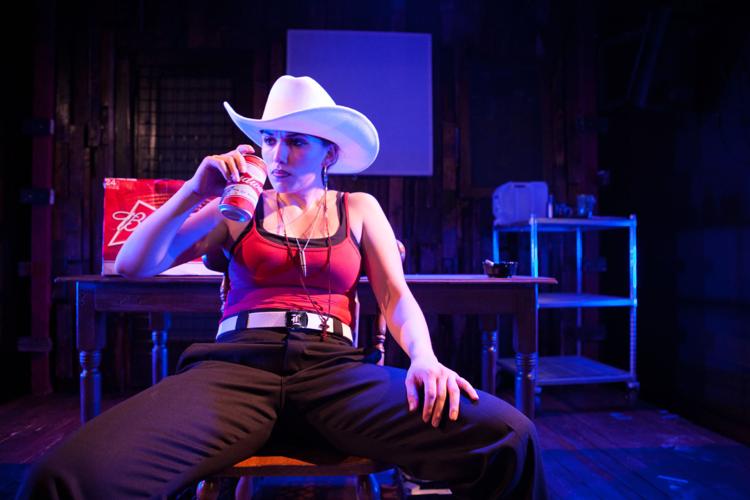
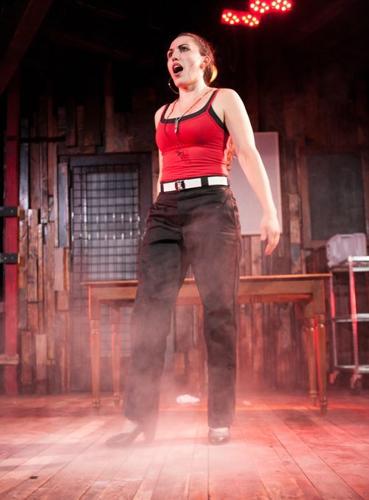
Lisandra Tena didn’t have it easy growing up.
Her mother was a crack addict who abandoned her and her father when Tena was just 2 weeks old. Her father became verbally and physically abusive. She ran away from home at 15, was homeless and found herself on the same drug road her mother was on.
What’s one to do but make art out of the artless?
Tena’s one-woman play, “Guera,” does just that. Borderlands Theater opens it next week, with Tena playing the role she lived and created.
“Guera” was developed while she was a student at Chicago’s DePaul University. In 2012, it was chosen for a solo theater festival in that city. She has since taken it on tour in New Mexico, her home state, and this summer she’ll open it in Los Angeles, where she now lives.
The play is set out like a menu, with four courses: appetizer, soup, entree and dessert. The audience gets to pick from an array of selections in each, making the play both interactive and fresh each time Tena performs it.
People are also reading…
And, she adds, “There’s complimentary chips and salsa.”
We spoke to Tena about the production.
On reliving difficult times: “It is emotionally draining. It takes a lot to get me back in it because of that. When I invest myself, I have to be focused and well emotionally. … I don’t know if one is ever really healed, but it’s important to have dealt with those demons and relive moments like that. Your wound has to be sealed. I have to remind myself to leave the show on the stage. I can’t take it with me. It would cause me damage.”
How the hard times ended: “I was sick and tired of living on the streets. I had a friend, and we use to rap together — I was a bilingual rapper — and he introduced me to the idea that I could go back to school through the Albuquerque Job Corps. … Then I started on my good path. I met a lot of positive people there; a lot of people who wanted me to succeed, so I had a different set of influences.”
Why a show about such a painful period: “I think there are probably many people who went through what I went through — abusive family members, drugs. Sharing (my story) is a way of saying ‘you’re going to be OK; you’ve got to know that this is just temporary.’”
Contact reporter Kathleen Allen at kallen@tucson.com or 573-4128. On Twitter: @kallenStar

Kathleen Allen
Reporter


