

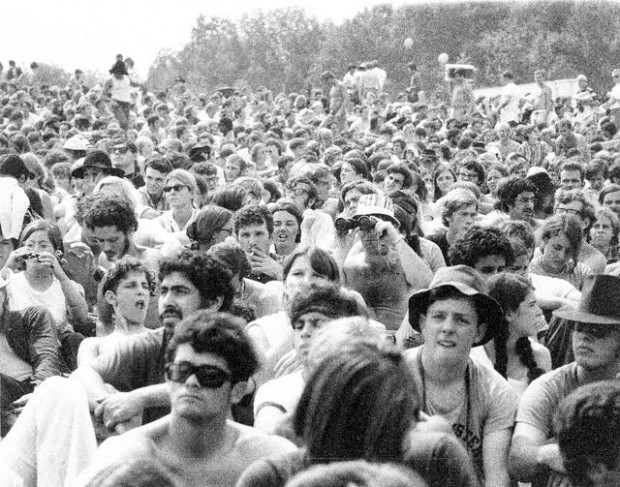
Woodstock, 1969
This is the one that started it all, a cultural high-water mark for the '60s.
It was a truly symbolic statement of the collective ideals of a generation that would later morph into yuppies and rule the '80s.
Still, when Jimi Hendrix played "The Star-Spangled Banner," it pretty much summed up the eternal soul behind rock music in this country.
Altamont, 1969
Security at the free event was supplied by the Hells Angels.
One member of the biker gang later stabbed and killed someone during the Rolling Stones' set. Altamont is significant in its signaling the loss of innocence of the '60s and hinting at possible concert carnage to come at Woodstock '99.
Live Aid, 1985
People are also reading…
This global concert raised millions to help combat famine in Africa. It featured such artists as Bob Dylan; David Bowie; U2; Run DMC; Crosby, Stills and Nash; the Beach Boys; the Who; Madonna; Neil Young; Eric Clapton; and Mick Jagger.
Farm Aid, 1985
Organized in six weeks after comments Bob Dylan made at Live Aid regarding farmers in need, this benefit concert has soldiered on 20 years later, according to its Web site. The first Farm Aid bill in Illinois included Dylan, Billy Joel and Tom Petty. Last year's lineup saw Neil Young, Willie Nelson, Dave Matthews, John Mellencamp and newcomers like Los Lonely Boys play sets in New Jersey.
Lollapalooza, 1991
This is the father of the modern-day music festival.
Lollapalooza took a bunch of modern acts and performers on the road. It almost single-handedly revived music-festival culture for a new generation, which carries on the tradition today with events like Coachella and Bonnaroo.
One staple of Lollapalooza was the mixing of artists who would seemingly never be associated with one another otherwise. The first incarnation in 1991 saw Jane's Addiction play with Ice-T. In 2006, in its new home in Chicago, bands included Gnarls Barkley and Queens of the Stone Age.


