

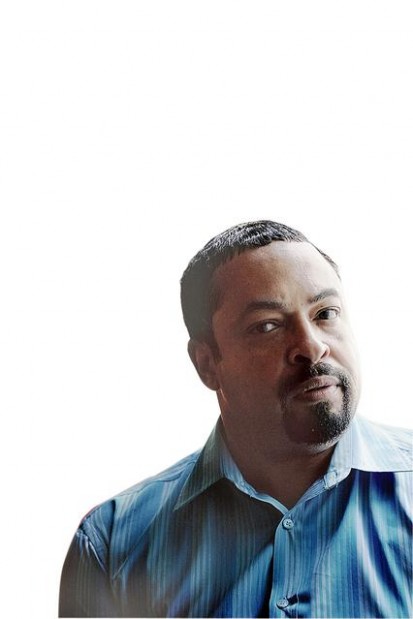
Three years ago, E. Lynn Harris had everything he thought he wanted.
One of the best-selling black authors in history, Harris drove a Mercedes, owned a mansion in Atlanta, had an apartment in Trump Tower and had carved out a prominent place in the Manhattan social scene. The former Dallas computer salesman who, not so long ago, only dreamed of getting published had now forged the way for other black writers to make bestseller lists with entertaining, sexy fiction that rivaled the best efforts of Danielle Steel and Sandra Brown.
Perhaps most satisfying of all, Harris was finally able to give his mother, who'd raised him in Little Rock, Ark., while working as a maid and then in a factory, everything she could ever need.
But amid the accolades, Harris says, he lost his way. For the second time in his life he felt the onslaught of crippling depression, a condition that previously drove him to alcohol abuse and even an attempted suicide.
People are also reading…
"When you experience entitlement for a while, you start to constantly expect it," Harris says. "With some of the things I did, you'd think I was brought up by wealthy parents. One time in Atlanta I was at my place there, which is built on four levels. The air-conditioning in my bedroom went out. I called somebody to fix it and was told they couldn't get there for three days, and my reaction was, 'What? I'm E. Lynn Harris! I don't want to wait three days!' "
After turning out about a book a year for a decade, Harris stepped away from the limelight. He needed a new perspective.
Little did he know he'd find it at his alma mater, the University of Arkansas.
When he was invited to spend a semester teaching writing and African-American literature in Fayetteville, he hesitated, then realized he had to try something different.
"I was at a difficult time in my life," Harris says now. "I had to get away from being a celebrity writer. I wasn't enjoying my success. I was in a bad place with my partner. We were breaking up after a seven-year relationship. I figured I'd rent an apartment in Fayetteville, have my classes and be gone."
He ended up staying three years and is going back for a fourth.
Meanwhile, he'll hit the road in May to promote a new novel — re-energized and ready to reclaim his place as one of America's best-selling authors.
And he'll need that rediscovered optimism to face down critics who have characterized his writing as "smut" that degrades African-Americans.
"I know I write to entertain," Harris says. "But I get people to reading, and that's better than not reading at all. I don't know why people would let that bother them."
Harris says he knows which people to thank for his new, relaxed outlook on life and fame.
"I owe it to my kids," he says, referring to his University of Arkansas students and the members of the school's cheerleading squads, which he has helped coach. (When Harris matriculated at the University of Arkansas from 1976 to '79, he was one of the first black cheerleaders in the old Southwest Conference).
Harris was no stranger to depression in fall 2003 when he drove his Mercedes convertible from Atlanta to Fayetteville. In "What Becomes of the Brokenhearted," his memoir published the previous year, he included a description of a 1990 suicide attempt. In the hospital after surviving the overdose of sleeping pills, he faced the facts.
Though Harris earned a six-figure income, he hated his professional life in computer sales. "Self-destructive behavior," mostly alcohol-related, was wrecking his health. He had decided he would openly identify himself as gay. And he would pursue his dream of being an author.
In 1991, Harris self-published his novel "Secret Life" after being spurned by publishers leery of its gay characters. Unencumbered by job responsibilities — he'd left corporate life behind and was living off his savings — Harris peddled the book in every independent, black-owned bookstore he could find. A copy found its way to Anchor Books in New York City, which offered to publish "Secret Life" in paperback. Its national sales success convinced Doubleday to offer Harris a modest contract for more novels.
"Just as I Am" sold respectably, and Harris' third novel, "This Too Shall Pass," hit The New York Times bestseller list.
It made Harris rich, and a hero to a whole new generation of black writers.
And Harris has caught the writing bug again. His new novel, "When I Say a Little Prayer" hits bookstores in May.
brokenhearted no more


