

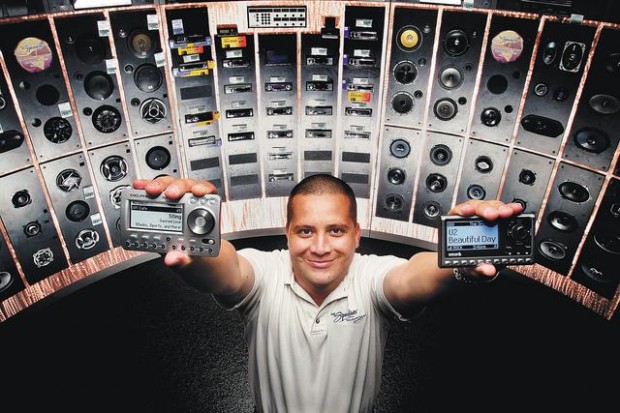
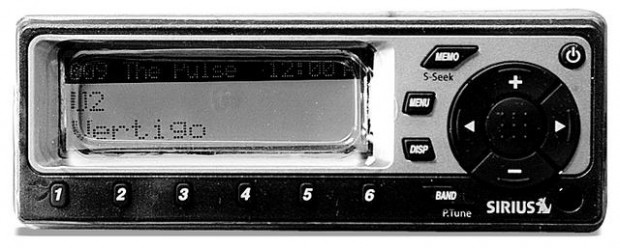
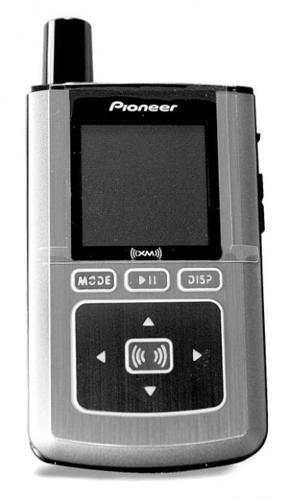
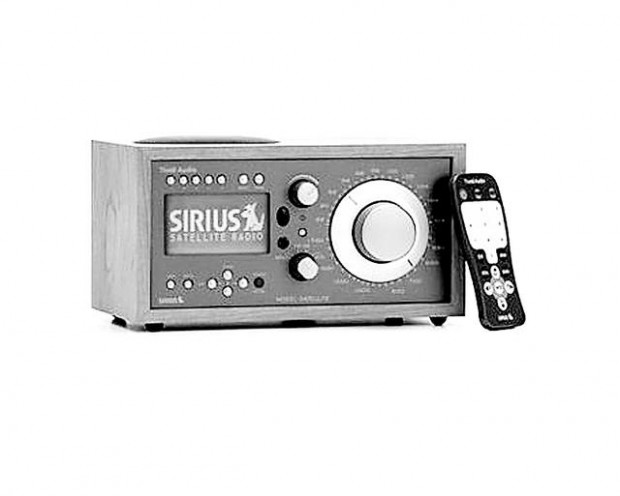

Richard Sparacino makes the four- to five-hour trip to Mexico's beaches once or twice a month, and each time, about an hour into the country, his radio used to blare nothing but fuzz.
If he tuned it just so, he could pick up a Spanish-language station or two. He doesn't really understand Spanish and isn't a big fan of mariachi music or reggaetón.
In early July, Sparacino had had enough of the fuzz and joined the nearly 12 million folks — and increasing daily — who subscribe to satellite radio.
"If I had known how good it was, that there was so much programming and diversity, I would have gotten it a long time ago," said Sparacino, a longtime Tucson chiropractor who runs Naturally Chiropractic on North Oracle Road.
"I believe that satellite radio is the wave of the future," chimed in Dan Neuman, who installs satellite radio systems for Best Buy on East Broadway. "Once they get more subscribers, it's going to be cheaper."
People are also reading…
Sirius Satellite Radio has no market-specific stats on its subscribers, but XM Satellite Radio reported it has 180,000 Arizona subscribers. The Specialists, a Tucson-based chain of car audio stores that ranks as one of the top 10 satellite radio installers in the country, estimates it installs 1,500 units each year, with the ratio of 2-to-1 XM over Sirius, said marketing director Deb Weisel.
Until recently Neuman subscribed to satellite, but he said he dropped it because he couldn't afford it. Both services, XM and Sirius, charge $12.95 a month.
Satellite radio officially got its start in 1992 when the Federal Communications Commission accepted licensing applications from four companies to broadcast on a newly opened spectrum of the "S" band. Only two of those companies — Sirius and XM — ponied up the cash to be taken seriously. Each paid $80 million and got the FCC's OK in 1997 to broadcast.
But it wasn't until Sept. 25, 2001, that XM launched service in Dallas/Fort Worth and San Diego. It rolled out service nationwide two months later. Sirius, which had trouble getting its receivers on the market, launched in 2002.
As of late July, XM boasted more than 7 million subscribers and revenues of $228 million for the second quarter of 2006, according to information posted on its Web site. Sirius ended the second quarter with nearly 4.7 million subscribers — 2.8 million more than it had in 2005 — and income of $150.1 million for the quarter — triple the amount it posted for the same period in 2005, according to the Sirius Web site.
Investors and accountants can sort through the numbers. But the figures make a good argument for Neuman's theory that commercial radio could become a dinosaur, much in the way that cable killed regular three-network TV by the early '80s.
New XM host Dave Alvin won't go that far. Satellite, like commercial radio, suffers from the lack of community, where you can flip on a station and hear everything from reggaetón to rock coexisting in complete and unmistakable harmony, the roots rocker said.
Alvin hopes to create some of that community on "Dave Alvin's 9-Volt." But he downplays the suggestion that his show, which begins Monday, can accomplish that.
"There really is no place anymore where the whole culture goes to get its fix. There's no shared focal point," he bemoaned in a phone interview last month. "You go home and you turn on satellite radio and it's great, but there's 8 million channels. Some of them are eclectic and play a little bit of everything, but a lot of them just focus (on one genre). There's no place where everything comes together. That's the only drawback that I see."
Satellite radio is kind to guys like Alvin and outlaw country singer Shelton Hank Williams III, who rarely get played on commercial radio.
"(Satellite) at least has a lot more open-mindedness, and you can definitely not hear as many commercials and more music of many different genres," Williams said in a phone interview.
The corporate-ordered rotation of the same several songs, punctuated by long stretches of commercials, is not the only complaint about commercial radio. The endless chatter from local personalities, especially in the morning, is excruciating to some listeners.
But it's those personalities — and their views of the local community — that convince Tucson radio personality Brett Miller (Porkchop on the KIIM, 99.5-FM, "Morning Show") that commercial radio isn't doomed.
"People want to know where the accidents are," said Miller, who's graced Tucson airwaves for seven years. "Satellite radio is good for trips and such, but people want local."
GETTING STARTED
So you've decided to jump into the emerging world of satellite radio and you have no clue what to do. Here's a primer:
What's needed?
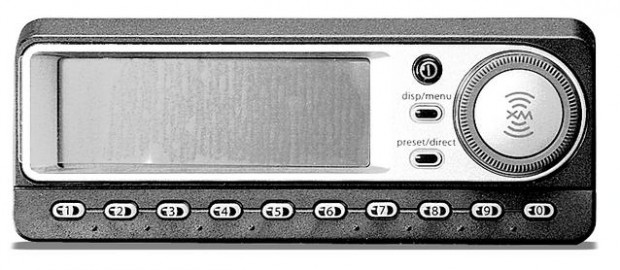
A satellite radio antenna and tuner and a satellite radio-ready deck (or separate control module)
How much are the units?
The systems range from about $50 to more than $300 depending on what you want. There also are portable satellite radio units that go for as much as $400. If you shop online, you can get reconditioned car and home units for as low as $20.
How much will it cost to subscribe?
$12.95 a month
XM charges a $14.99 activation fee by phone, $9.99 online. Sirius charges a one-time $15 activation fee.
How do I install it?
If you want it to be hard-wired into your auto stereo, you might consider going with a professional installer. But installing it so that it's portable — can be moved from car to home — is simple. Attach the magnetic antenna to the rear roof of your vehicle and secure the wire beneath the plastic shield, which glues onto your car. Attach the unit saddle to your dashboard, windshield, console or visor. Tune the radio to the assigned station and you're off.
How's the reception?
Nothing in life is perfect. Dead zones can include tunnels and areas obscured by mountains. But the reception is generally excellent, and any interruptions are usually short-lived.
Which is better, Sirius or XM?
"It's like Dish Network and Direct TV," says Paul Clevenger with The Specialists at Auto Mall. "They're both satellite services that have different channels." That said, you'll likely decide between XM and Sirius depending on your tastes. Sirius has shock jock Howard Stern, Bubba the Love Sponge and country-music outlaw Shooter Jennings; XM has Bob Dylan, Ellen DeGeneres and Tyra Banks. Sirius has more than 165 channels, including music of every genre, comedy and NFL, NBA and college sports. XM boasts more than 170 channels, including 69 commercial-free music channels, an uncensored comedy network and NASCAR races.


