

As it has in most every aspect of life, the Covid-19 pandemic took its toll and left a lasting mark on the Western New York beer scene from breweries that shuttered their doors, to those that have yet to reopen and countless canceled events. And that’s just looking at the physical side of the industry.
Overall, U.S. beer volume sales were down 3% in 2020 and craft brewer volume sales declined 9%, according to the Brewers Association. Due to bars and restaurants mostly being closed to the pandemic, retail dollar sales of craft decreased 22%, to $22.2 billion, accounting for less than 24% of the $94 billion U.S. beer market.
While there was some good to come from the last year – like curbside pickup, enhanced online preordering and ordering, home delivery and expanded canned offerings – the pandemic also fostered a genuine sense of community, sympathy and understanding. In other words, Buffalo showed its true self over this past year.
People are also reading…
"I think we all learned to value the togetherness, empathy and kindness that comes from gathering in communities – big or small,” said Chris Smith, co-founder of Community Beer Works. “As the years wear on, this lesson will inform everything we do at CBW. Financially, as a result of the pandemic, our community more carefully considers the profoundly positive impact our dollars have when spent at a local business. When we invest in and support a vibrant, diverse and sustainable local economy we all win."
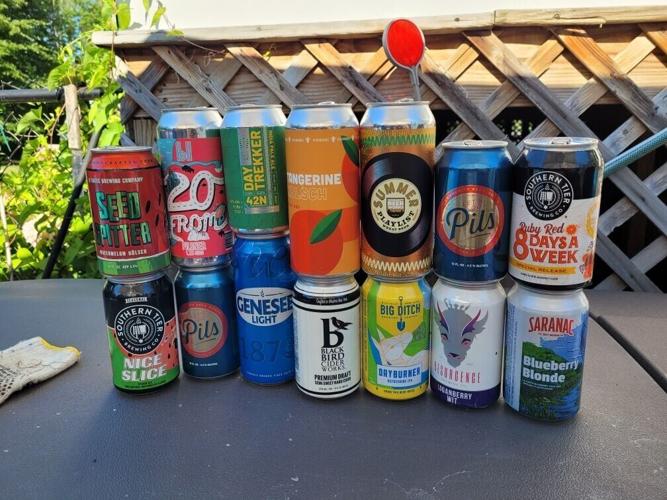
Rusty Nickel Brewing owner Jason Havens points out the pandemic’s adverse effect on aluminum cans with more and more breweries packaging their product for offsite consumption, something, he said, will contribute to steadily rising costs across the industry.
“Cans … what cans?” Havens said. “If you can get enough for what you need, you're lucky. And it's getting harder. Supply and demand in this realm may eventually lead to price increases at the stores. And speaking of price points, you're going to see prices rise over the next several years incrementally I'm sure. Costs on all fronts from materials to labor to utilities and equipment are rising exponentially. There's only one way to manage that as a business. This will be interesting to watch as consumers respond.”
If nothing else, the pandemic forced the creative hands of brewers around the region, including East Aurora’s 42 North Brewing Company.
“The pandemic forced us to be more focused and creative,” said 42 North owner John Cimperman. “There are plenty of things that we, as well as other breweries, implemented this past year that we would have never tried if it weren't for the pandemic. The pandemic also demonstrated the loyalty of the craft-beer consumer. Without their loyalty the past 14 months, we would not have survived. I truly believe the local brewery scene is stronger than ever.”
Others agreed.
“I think that the beer scene is in a way better place than it was pre-pandemic,” said Thin Man head brewer Rudy Watkins, adding that the market is focused on the "holy trinity" – New England IPA, Fruited Sour and Adjunct Stout. "But I think everyone in town spread their wings in terms of styles over the last 16 months. Part of that was certainly brewers being able to experiment as the demand for draft slowed to a trickle, but the customer showed that there is demand for both traditional styles and exciting new flavor profiles."
Hamburg Brewing owner John Russo said the pandemic allowed brewers more room to experiment with the liquid in their tanks.
“I personally believe the local beer scene is stronger than before from a quality and innovation standpoint,” he said. “It gave us at Hamburg a new outlook on a few things and brought some more fun into our beer doing numerous smaller batches."
Resurgence Brewing owner Jeff Ware sees both sides. “While the pandemic was brutal for all of us, it introduced a number of new faces to our business as well,” he said. “It has also helped our region's breweries come together more and collaborate even more than we had.”
But he also said it's too early to tell if the beer scene here is better off or not, especially the on-premise side of the business, explaining that "release" culture is one of the things most affected.
“While people are definitely coming back to taprooms and bars, many establishments have not reopened and may never," Ware said. "The pandemic changed one-off release culture a bit. I think new releases are now an expectation rather than something special to wait in line for. While I do not think line culture is dead, it is certainly not what it was before the pandemic. The relationship is a little different with our customers. There is an expectation of a certain quality as a whole and our customers will shop across all of our beers as long as we maintain that quality expectation.”
Pressure Drop head brewer Karl Kolbe echoes Ware’s sentiment that it is too soon to tell where things stand.
“I’m still on the fence of where the industry is,” Kolbe said. “Is it better for the consumers? Yes. There is an amazing amount of creative high-quality beer flowing through the market. Is it better for the breweries? Time will tell. It’ll be a much longer timeline to see how all this shakes out.”


