

SELLS — Tohono O'odham basket weaver Rhonda Wilson does not consider herself a professional artist.
It's in her blood, a skill handed down to her from her grandmother, who learned from her grandmother.
"It's just something that I do; it's just a part of me," Wilson said last week while sitting at a long table filled with American Indian artwork in a conference room at the Tohono O'odham Nation's Economic Development Authority offices. "It's not what defines me."
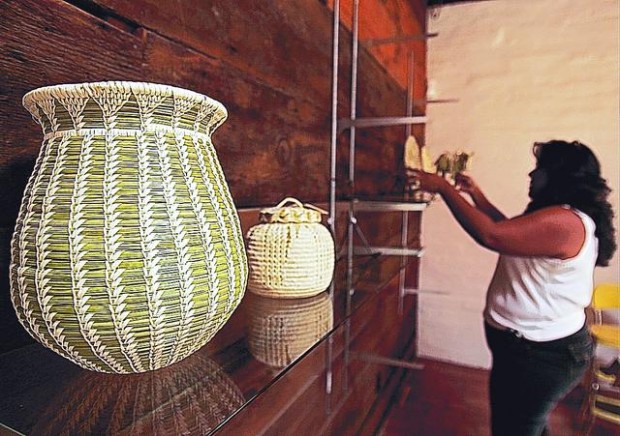
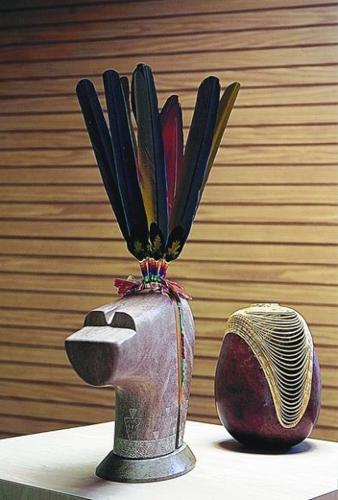
Her works will have a place among other handmade, meticulously crafted baskets, sculptures, paintings and jewelry by some of the region's elite American Indian artists at the new Tohono Village Trading Post in Tubac. The gallery, an enterprise of the Tohono O'odham Nation, opens Saturday with special events that include artists demonstrations, basket dancing and traditional native music and foods.
People are also reading…
The gallery will present American Indian works by pre-eminent artists who have created a name for themselves throughout the world, artists like Navajo stone sculptor Lance Yazzie and his father, famed stone and bronze sculptor Larry Yazzie. Celebrated O'odham basket weaver Terrol Dew Johnson has several pieces on display, and New Mexico jewelry designer Elloise Padilla will showcase her serpentine and turquoise necklaces, each piece of which was handcrafted, said Travis P. Nabahe, CEO of the development authority.
Nabahe's office was the driving force behind the trading post as a means of diversifying the Tohono O'odham Nation's economic base. It is a small step, one that he admits won't bring the tribe riches beyond belief. But it is a sound financial investment that will afford American Indian artists a chance to sell their works for a more equitable split than they might get at a non-Indian-run gallery.
"It's really hard for native artists to work with galleries," noted Wilson, 38, as she stroked the soft beadwork on one of Padilla's necklaces that she was displaying for visitors. "To trust someone is one thing that native artists have a hard time with."
"I don't go to an artist and say, 'I've got to make a gross profit margin, so you need to set this price,' " Nabahe, 37, explained, noting that artists for the most part set their own prices for their works. "We are a for-profit business, so we're not in it to lose money. But you can do a business venture and be profitable, and at the same time be fair to the native artists."
Wilson, who previously worked in the grass-roots service organization Tohono O'odham Community Action, will manage the daily operations, commuting at first from her home in Sells to Tubac. As of last week, she hadn't quite figured out what route to take, but those were minor details. She has a firm grasp of the big picture, having spent the past several months with Nabahe traveling to shows and galleries around the Southwest and meeting with artists.
The gallery went from vision to reality in six months, Nabahe said. He said the location is key; he envisions that Tubac will one day be Southern Arizona's version of the upscale artist community of Sedona.
"This is a unique business model; the artists, the owner and the management are all native. There's not too many places like that," he said.
PREVIEW
Tohono Village Trading Post
10 Camino Otero, Tubac, in the heart of the artist community.
• Hours: 10 a.m.-5 p.m. daily.
• Opening weekend events, Saturday and Sunday: Demonstrations, music, basket dancers, native foods.
• What you'll see: Authentic American Indian art, from sculptures to paintings to fine basket weavings and jewelry created by some of the Southwest's pre-eminent American Indian artists.
• Details: 1-520-349-3709.


