

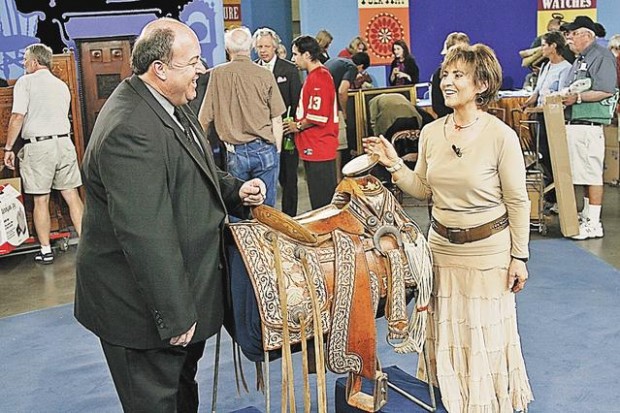
When you hear the term "reality television," chances are you think of wannabe pop singers, bug eaters and globe-trotters — not art, culture, history and family values.
But those things, too, are a part of the reality-television universe, in the form of "Antiques Roadshow."
Since debuting in 1997, the traveling fair where folks can have their family heirlooms and garage-sale treasures appraised has become the most popular prime-time show on PBS, averaging 11 million viewers a week. That's a number any broadcast network show — other than ratings behemoth "American Idol" — would love to have, and audiences half that big have been enough to declare a cable network show a hit.
And there have been two important developments. The first is the Internet.
" 'Antiques Roadshow' has really grown up with the Internet," says Bruce Shackelford, an expert on tribal arts who has worked as an appraiser for the show since its first season. "We've got computers now, and cell phones. In an instant we can check and see what the last 10 or 20 similar items sold for, or we can e-mail a picture of the object to a dealer and get his input.
People are also reading…
"The market has changed radically because of the Internet. But it's also changed because of 'Antiques Roadshow.' "
That brings us to the other important development, the show's success. Just as people read in awe news stories about someone winning a multimillion-dollar lottery or hitting a game-show jackpot, "Antiques Roadshow" has embedded itself in our pop-culture consciousness and created another scenario in which someone, anyone, could strike it rich and have their 15 minutes (or seconds) of fame. Watching someone discover that an old vase or end table was, in fact, some rare and valuable piece created that little subconscious portal of possibility.
But how does all this appraisal stuff work?
Anybody can say anything, right? It wasn't that long ago that people were convincing one another that certain Beanie Babies were worth hundreds of dollars.
"Actually, I'm more of a bubble burster," says Shackelford. "I have to tell somebody that what they think is a valuable object really isn't. More often than not, a rock is just a rock."
Except for those times it isn't, like the time a woman brought in a rock that she said her grandfather always claimed was an old Indian gaming stone.
"She didn't care how much it was worth, which wasn't all that much," Shackelford says. "She just wanted to know if her grandfather was telling the truth. And she was happy to learn that he was."
"AR's" appraisers work the way any reputable appraisers do: They draw on their decades of experience, consult current references and now, with the aid of the Web, check out what's going on in the relevant markets — who's bought and sold what and for how much. All of this is distilled into a dollar-range estimate.
The difference, of course, is that instead of performing that appraisal over days or weeks in the relative calm of a gallery or museum office, "AR's" appraisers have a few minutes and are performing in front of TV cameras.
"Let's be clear," says David Lackey, an "AR" appraiser whose specialities are pottery and porcelain. "What we're giving is not a real appraisal. It's not written down; you can't take it to your insurance agent and say here's what it's worth.
"What we provide is a free verbal, nonresearched appraisal."
That may not sound like something you can bank on, but here's the funny thing about what's driving a lot of the excitement: It's not about the money. It's about the story.
"Most people either have a story they want to hear or a story they want to tell," says John Buxton, another tribal-art appraiser. "They either want to know the story of their object — where it came from, how it was made, what its significance is — or they want to tell you the story of how it came to be in their possession."
There's a lesson a lot of reality-television producers could learn from: The key to "Antique Roadshow's" success isn't the money all these old pieces of furniture and objets d'art might bring in a sale. It's the stories they inspire.
On TV
"Antiques Roadshow" airs at 8 p.m. Mondays on PBS.


