

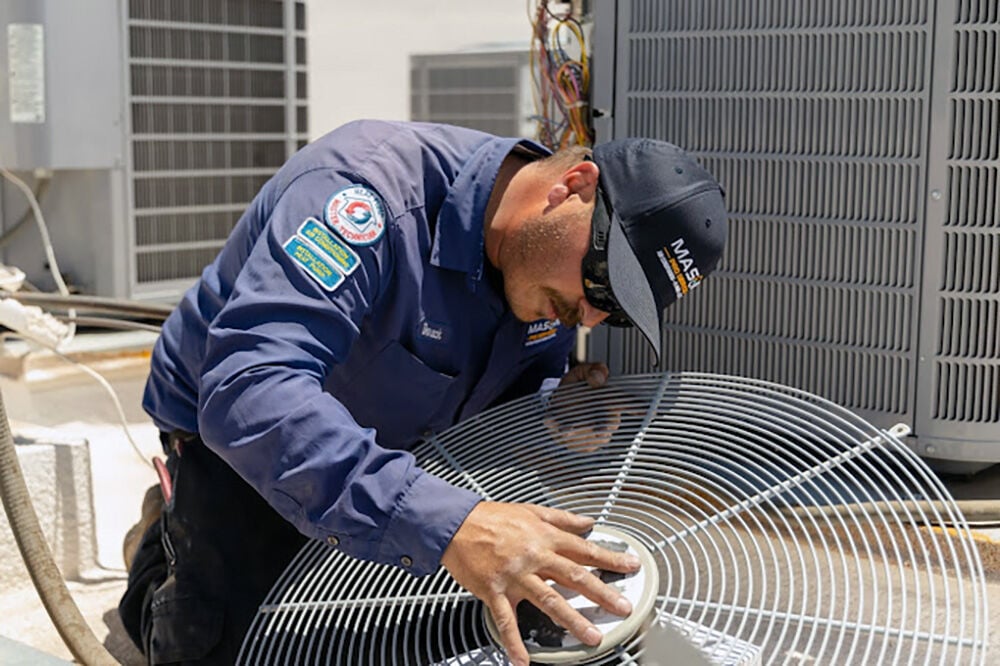
There are many ways you, as a consumer, can choose to purchase various construction-related products and services for your home. Websites, mailers, and even website-based suppliers make it possible to buy everything from screwdrivers to air conditioning units. While buying directly from an online company may give you the impression that you are saving money, there is often room for error. There is a risk of making the wrong choice on larger products without a skilled salesperson or technician to guide you in answering the right questions. There may be hidden fees and limited return policies as well.
With the summer months rapidly approaching, we explore some of the potential pitfalls you might face when purchasing heating and air conditioning products or services from remote suppliers.
The main takeaway for the homeowner is: A lower-end system installed with excellence will likely outperform a higher-end system that is installed poorly.
People are also reading…
Beware the ‘Pick Your Own’ Product
Some companies will sell a product with little or no information from the consumer, leaving out the necessary predesign analysis to purchase the right unit for your home.
Plenty of online companies will be glad to sell a unit that will not be what you want or need.
In addition, rebates from local utilities such as TEP add a cost-saving component to your HVAC choice that is often overlooked and not part of the online sales process.
A reputable contractor will:
1. Send a trained tech to your home to assess your HVAC unit properly. There is no such thing as a “rule of thumb” when it comes to selecting the correct size HVAC unit for your home. The only way to know what the correct size unit is by performing a Manual J heat load calculation. The online seller cannot provide this calculation without being on site.
2. Make an initial assessment as the foundational step to choosing the right unit. This assessment analyzes your home’s heat loss/gain. The analysis examines windows, doors, wall insulation, and home orientation to the sun which then determines the correct size unit for your home.
3. Assure the connections are correct — it is extremely important to have the correct size duct connections to match up to your new unit. A remote salesperson will not be able to see what is needed and ensure that the system can move the proper amount of air as the manufacturer designed it. Using the wrong-sized connections would be like putting the wrong size tires on your car, which will cost you more money to operate and reduce the life span and comfort.
4. Research rebates from utility companies. There are often rebates available from utility companies. A good contractor will know which ones will apply to their customers. The utility companies that offer these rebates know that the correct size unit will reduce electrical consumption.
5. Schedule the installation with their own team. It is most beneficial to have the company that sells you the equipment be the same as the company that installs it. Having a third party install the equipment does not assure you that the correct steps of installation will be taken. Additionally, whoever installs the unit is now your warranty company for the next two years. Do they have the correct technicians to warranty any repairs or are they just an installation company? Will they be in business the duration of your warranty?
Some cautions to consider for design and install:
Permits
Check to see if a building permit is required when changing an existing system for a new one. Most building departments require a permit to ensure compliance with new regulations and industry installation standards.
Design
1. Refrigerant Requirements. New mandates by the federal government, fueled by wanting to have less impact on climate change, are focused on the type of refrigerant an air conditioning system uses. It is essential to install the new refrigerant correctly. The performance of your old AC unit that has R-22 or R-410A will now be different with the new refrigerant.
2. Sizing. It is critical to know what size system you need and have the correct equipment match up. For example, a 4-ton system capacity will vary depending on the brand and equipment match up. Knowing this makes sizing your system more like a custom system, not a rule-of-thumb system.
Install
The installation process is intricate. Proper installation ensures that your new HVAC unit will perform efficiently. And the warranty is contingent on installation according to very specific specs.
Proper installation includes:
- The solid connection between the new unit and the existing ductwork. We recommend a hard metal ductwork connection with properly installed joints. Beware of the installer who only uses duct tape to make the seal.
- Specific placement of hangars. When new equipment is installed in an attic, the hangers used and where they are placed are important.
- Connection of copper lines. When brazing the copper lines following manufacture specification is extremely important and one key element is purging dry nitrogen in lines to eliminate oxidation and creating contaminants.
Before you sign on the dotted line
Before signing the contract, ask about follow-through or quality control.
The follow-up should be scheduled for 2-5 days after installation. In the follow-up inspection, the contractor can confirm if the system is at manufacture refrigerant specification or if they will need to add additional refrigerant.
Another reason for waiting 2 to 5 days after the installation is it allows the system to run and bring your home to the correct temperature. When homes are 85 degrees or higher inside, the manufacturer does not have charts to follow and ensure it is charged correctly.
A closing reminder: An HVAC system is a big investment. There is a lot of risk in cutting corners — again, a lower-end system installed with excellence will likely outperform a higher-end system that is installed poorly.
Join Rosie on the House every Saturday morning 8-11 on KTAR 92.3 FM and on KNST 790 AM from 10-11 a.m.
Do you have questions about your house, home, castle or cabin? Reach us by phone at 1-888-767-4348 or email info@rosieonthehouse.com. Follow us on Facebook, YouTube, and Instagram.


