

In “Yes Is Better Than No,” readers met a Tohono O’odham family that has left the reservation and is now trying to understand the ways of their new neighbors in town.
“The Circus of Dr. Lao” was part Western, part science fiction, and so ... different ... it won a National Book Award for Most Original Book in 1935.
“The Bean Trees” established Barbara Kingsolver as one of the most important authors in America today.
Three very different books from three different eras, but with one noteworthy thing in common: Their setting was Tucson, and they became part of the rich literary tradition that has attracted storytellers to the desert for more than 100 years.
People are also reading…
For being a relatively small place, the Old Pueblo has been the setting for a surprising number of popular books.
Tucson has an uncommon number of published authors, as well, and last week we asked many of them — as well as others from the local book community — to help start a list of noteworthy “Tales from Tucson.”
Their suggestions are below, and we would welcome more. If you have your own favorite Tale from Tucson, send it to bookmarks.arizona@gmail.com. Our extended list of homegrown titles will appear in this space in the spring.
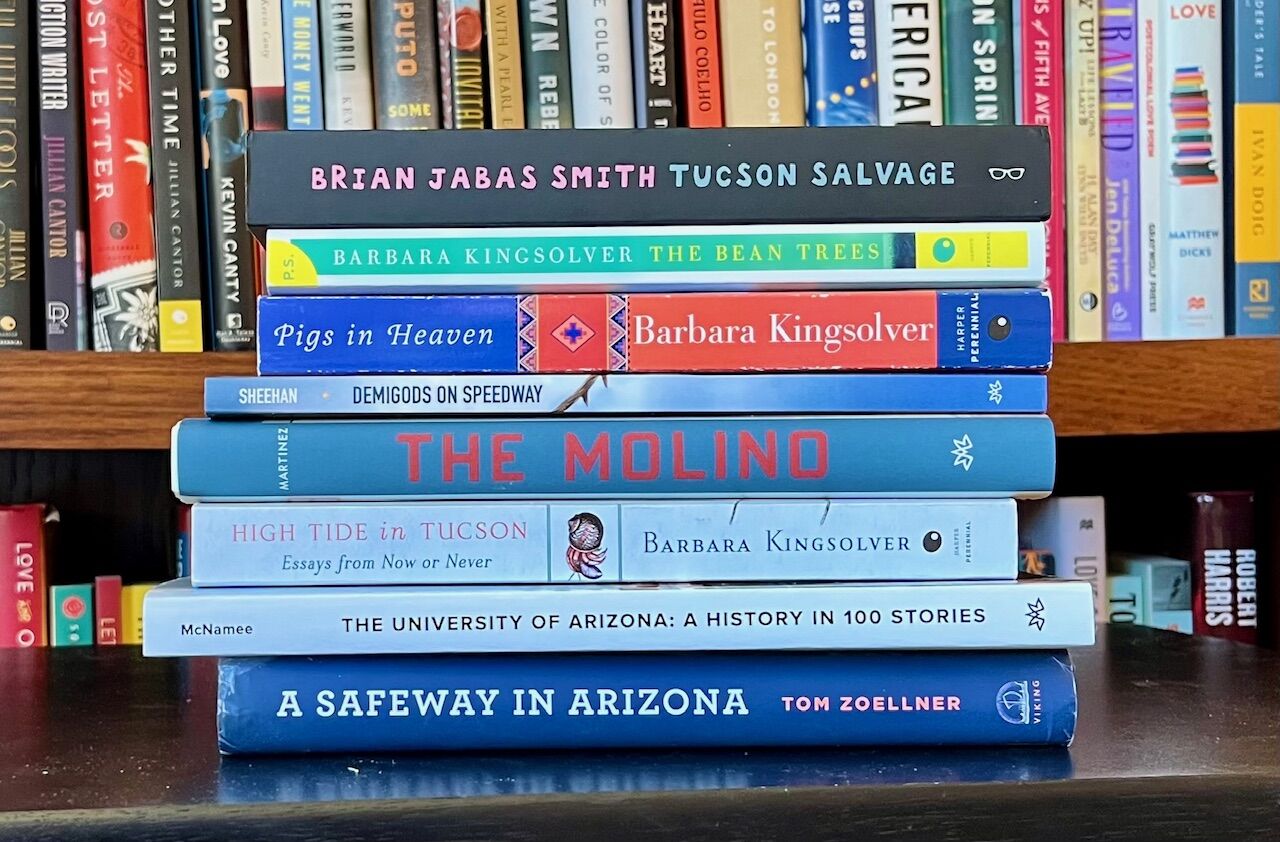
Some of our Tales from Tucson.
"Demigods on Speedway" by Aurelie Sheehan is a collection of stories that touch both the character and characters that could be found in recession-era Tucson in the early 2000s. It is witty, real, literary and accessible. — National Book Award finalist Lydia Millet, author of "A Children’s Bible."
"Yes Is Better Than No" by Byrd Baylor is the story of a Tohono O'odham family living in Tucson, where they’ve learned that saying yes is always better than no when talking to white people. Published in 1977, it is a funny, entertaining, insightful account of cultural misunderstandings. — Richard Grant, author of "Race to the Bottom of Crazy."
"Dark Madonna" was written by a Tucson schoolteacher named Richard Summers and published in 1937. Reading it makes you feel as if you’re walking through the streets of the Old Barrio, sitting on a stoop to hear a story or chat with your neighbors. The book is art, but it’s history too. It remembers a Tucson that disappeared a long time ago. — Gregory McNamee, author of "Gila: The Life and Death of an American River."
"The Molino" by Melani Martinez is a beautiful story about family, food and the giant molino that ground corn for her family's tortilla business downtown. This is a great Tucson story!” — Alison Hawthorne Deming, author of "Stairway to Heaven."
"The Circus of Dr. Lao" was written by Charles Finney, a Tucson Citizen editor, when a dusty Old Pueblo was beginning its transition into a 20th-century city. Finney depicts Tucson as a place called Abalone — as it “Ah, Baloney.” We meet chimeras, dragons, magicians and land developers. Finney won a National Book Award when it was presented by the American Booksellers Association. — Bruce Dinges, former editor, Journal of Arizona History.
"Birding With Benefits" by Sarah T. Dubb is an adult romance set in Tucson. I'm only about a third of the way through, but it's fun and sweet and a great antidote to what's happening in the real world right now. — Lori Alexander, author of "A Sporting Chance."
"Don't Skip Out On Me" by Willy Vlautin is a true Western, with muscular prose and surprising tenderness, a book that sticks with you long after you finish reading. I’m a huge Willy Vlautin fan. — Jessica Elisheva Emerson, author of "Olive Days."
"Almanac of the Dead" by Leslie Silko was published in 1992, and was a story of two cultures, two times, resistance and ruin that still resonates today. The main character returns to the Southwest in search of her missing child and connects with a famous psychic in Tucson. — Robert Houston, author of "Bisbee ‘17."
"La Calle" by Lydia Otero takes us to la calle, the heart of downtown Tucson, before and after Mexican American residents were displaced under the aegis of "modernization." We meet the people, hear the stories and learn about the forces that reconfigured the city.” — Abby Mogollon, University of Arizona Press.
"Her Prodigal Husband" by Becky Masterman incorporates much of today's Tucson, from neighborhood cafes to deer sightings at Saddlebrooke. It opens with a tragedy at an upscale home in the Catalina Foothills. It’s a brand-new mystery set on our home turf. — Anne Hillerman, author of "Lost Birds."
"Tucson Salvage" by Brian Jabas Smith was on my TBR pile for a long time, and I’m glad I read it. Brian takes us to a Tucson a lot of us don’t see and shows us the struggles of people we may never meet. — Becky Masterman, author of "Rage Against the Dying."
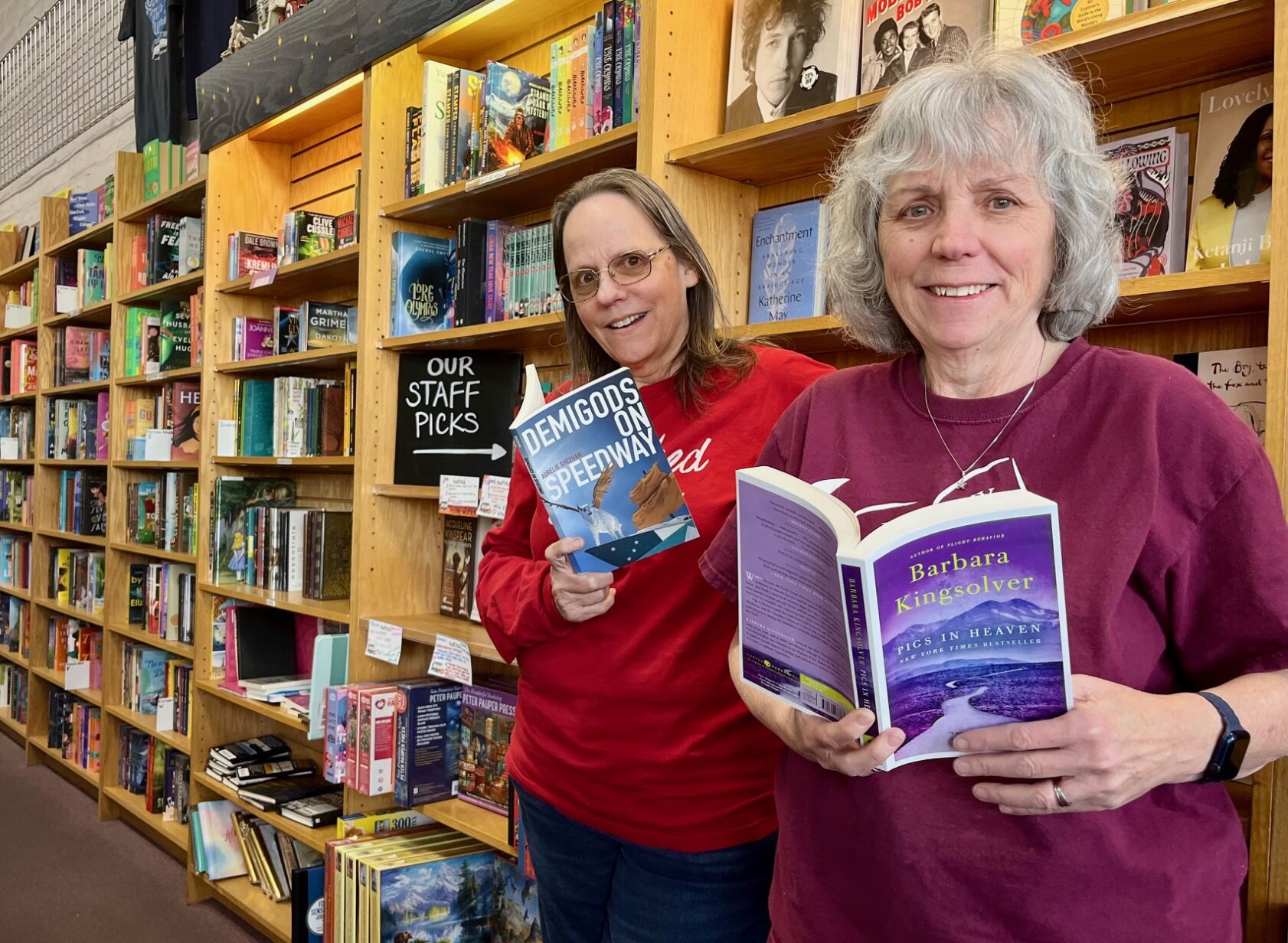
Tricia Clapp and Bobbe Arnett, co-owners of Mostly Books on East Speedway, study two of the books on our list: "Demigods on Speedway" by Aurelie Sheehan and "Pigs in Heaven" by Barbara Kingsolver.
"Pigs in Heaven" by Barbara Kingsolver is the sequel to "The Bean Trees," and I like it even better. The story of Turtle and her adopted mom just never gets old. — Tricia Clapp, co-owner of Mostly Books, 6208 E. Speedway.
"The Sonoran Desert: A Literary Field Guide" from Eric Magrane, Chris Cokinos and Paul Mirocha is an anthology of poetry about the plants and animals of the Sonoran Desert. The selections are as diverse as the place we all live. — Abra McAndrew, Tucson Festival of Books.
"The Arizona Triangle" by Sydney Graves is everything I love in a mystery, a whodunit with past secrets and layers to peel back. And the main character works for an all-female detective agency in Tucson!” — Shannon Baker, author of "The Desert Behind Me."
"High Tide in Tucson" is more than a collection of stories about Barbara Kingsolver’s life when she was living here. It a memoir written as she was transitioning from an academic life to life as the bestselling author we see today. — Lynn Wiese Sneyd, LWS Literary Services.
"Double Wide" was Leo W. Banks’ first book, and it’s still one of my favorite Tales from Tucson. It’s the story of a one-time major league pitcher whose career explodes to the point he winds up in jail … and a small trailer park outside of Tucson. — Tom Tronsdal, Tuesday Night Book Club.
"Chicken Every Sunday" by Rosemary Drachman Taylor is a Tucson tale about the residents of her mother’s boarding house. Published in the 1940s, the book was adapted into a movie that premiered in the Fox Tucson Theatre in 1949. — Helene Woodhams, Arizona Daily Star Southern Arizona Authors.
FOOTNOTES
- "Seeds of Discovery," a new entry in Lori Alexander’s series of STEM biographies for young readers, was released last week. This time, the Oro Valley author features Barbara McClintock, a key figure in modern genetics who later won a Nobel Prize.
- Author and former UA professor Tom Holm is now the Pima County Public Library’s Writer in Residence. He will be available to help local writers through mid-April. To make an appointment or learn more about the Writer in Residence program, visit library.pima.gov/writer.
- Books by Tucson authors Richard Grant, Melani Martinez and Gregory McNamee are among those that have been honored as 2024’s Southwest Books of the Year by the Pima County Public Library. To see the full list of selections, visit library.pima.gov.
- Poet Terrance Hayes will read from his latest collection Thursday evening, Feb. 13, at the University of Arizona Poetry Center. The program will begin at 7 p.m. For more information, visit poetry.arizona.edu.
Browse previous Bookmarks columns and keep up with news from the Tucson book community by following Bookmarks Arizona (@BookArizona) on X, formerly known as Twitter.


