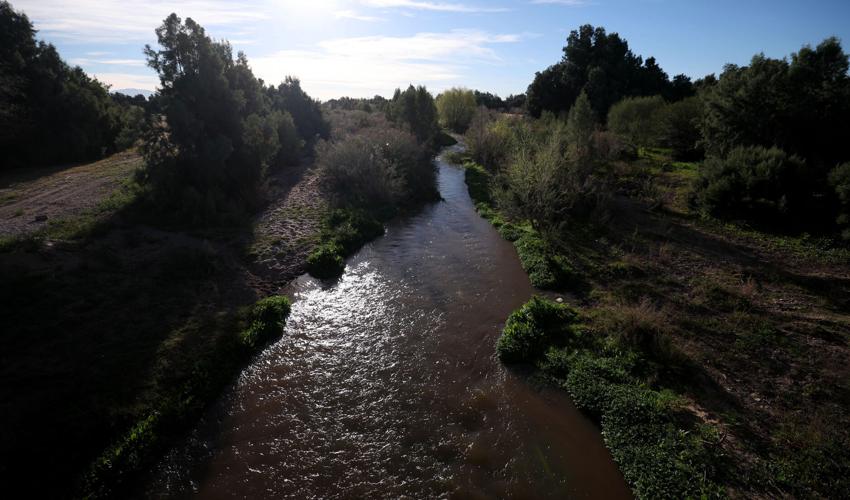
Treated wastewater flowing under a bridge far northwest of Tucson spells lost water and lost money for the city of Tucson and the Tohono O'odham Nation.
The effluent flows steadily down the Santa Cruz River under the Trico Road bridge as it begins the final leg of its journey through northern Pima County from the county's two big sewage treatment plants at Sweetwater Drive and Ina Road.
Maybe 3 river miles downstream of the bridge, the effluent enters Pinal County; the Santa Cruz flows south to north. After the water crosses the county line, Tucson and the U.S. Bureau of Reclamation, which together own 90% of the effluent, and other Tucson-area entities can no longer grab the water.
That means they can't use it for their needs, and also can't sell off its rights to other water users to raise money, in the form of long-term storage credits that allow the credit owner to pump groundwater elsewhere. The Tohono O'odham Nation also loses out when the effluent leaves Pima County because the Bureau of Reclamation legally is supposed to manage it on the tribe's behalf.
People are also reading…
Every year for the past decade, an average of about 11,000 acre-feet of effluent passed under the Trico bridge and headed into Pinal County.

Treated wastewater in the Santa Cruz River flows north of Tucson. Once that water crosses into Pinal County, Tucson-area entities can't the effluent enters Pinal County; the Santa Cruz flows south to north. After the water crosses the county line, Tucson and the U.S. Bureau of Reclamation, which together own 90% of the effluent, and other Tucson-area entities can no longer grab the water for their needs. Advocates want to keep the effluent in Pima County so it will recharge into the aquifer here.
The effluent lost from Pima to Pinal under that bridge from 2014 through 2024 was about 117,000 acre-feet total. That's a little more than the total drinking water and non-drinkable effluent that Tucson residents use in a year, city and county records show.
This continued loss of effluent is occurring at the same time the region's biggest drinking water source, the Colorado River, is losing ground to drought and climate change. This is an unacceptable scenario to Eric Holler, a retired Bureau of Reclamation engineer and former manager of its Tucson area office.
In the late 1970s, Holler helped design pumping plants for the Central Arizona Project, which today delivers the Colorado River's water across the state, including six plants for the CAP's final leg through the Tucson area. Now retired since 2014, Holler has spent much of the intervening period trying with very limited success to do something about the Santa Cruz River's effluent departing Pima County.
He found himself "shocked" in the last couple of years when he started ruffling through records put together by the Pima County Wastewater Reclamation Department and discovered how much effluent had left for Pinal County since he retired.
Tucson Water officials are also concerned about the effluent leaving Pima County, said John Kmiec, the utility's director.
"It's on the minds of not only Tucson officials but of other local partners on the (Santa Cruz) river," Kmiec said. "How do we ensure the majority of that water stays in Pima County? We want to make sure we have a plan to keep that urban water in the urban environment for anyone’s use."
Flood-control project might help
Now, a massive construction project in the Santa Cruz River being built by the Pima County Regional Flood Control District raises hopes this problem could be addressed, at least in part.

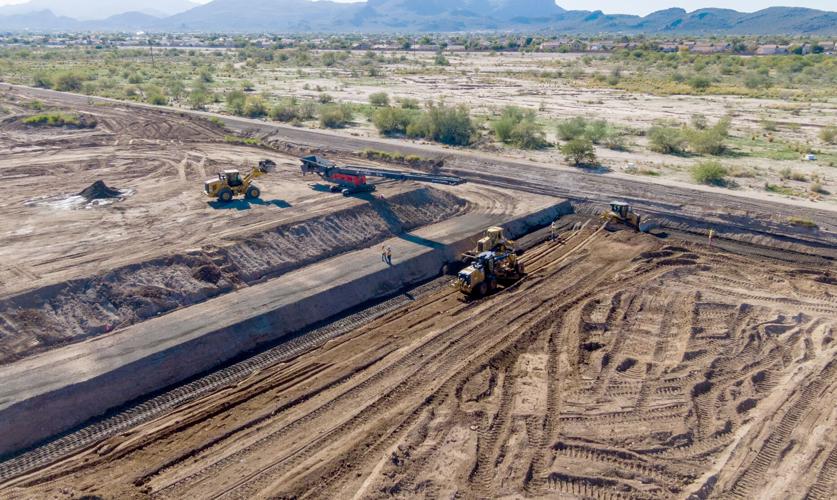
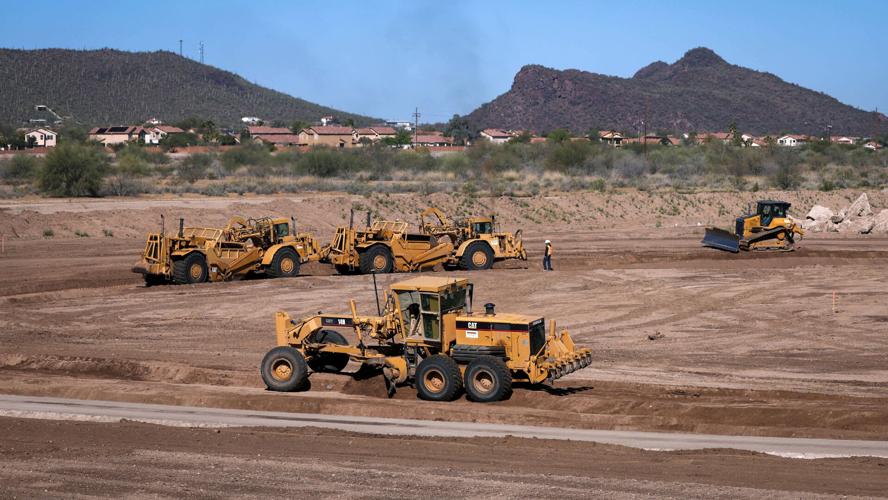
Construction work is underway to put grade-control structures in the Santa Cruz riverbed. The work is primarily meant to provide flood control, but could have the side benefit of promoting faster recharge into the aquifer of the treated wastewater that's put into the river.
The $15 million project's main purpose is flood control, but it's expected to offer a significant side benefit in the form of improved groundwater recharge.
The county project involves building and sinking seven large grade-control structures into the riverbed to keep effluent in the Santa Cruz from cutting too deep in the river channel and undercutting the cement-like bank protection lining the river.
Protecting the riverfront bank protection is seen by officials of several government agencies as a major step toward controlling floods. But these structures will also spread the effluent across the riverbed, increasing the odds that much of it will seep into the underground aquifer rather than flow downstream and out of Pima County.
This ongoing work on the Santa Cruz pleases Holler, raising the possibility of a long-term fix. But he says he's still frustrated it's taken so long for the issue to be addressed.
Change in law altered incentives
This issue has a long history.
Holler said he knew during his Reclamation days that lots of effluent was heading into Pinal. But not much has been done about that for most of the past decade, he said.
He blames what he sees as complacency among officials of several government agencies, due to a complex change in state law that ratcheted up the legal incentives to keep effluent in the river rather than pulling it out.
The law change, enacted in 2019, allows the owners of effluent in the river to obtain long-term storage credits for up to 95% of their effluent that is left in the riverbed. Agencies, businesses and individuals who own those credits can sell them to other parties, who then possess the legal right to pump groundwater somewhere else. Until 2019, they would receive storage credits for only 50% of their effluent when it was left in the river and got 95% if they took it out and put it into recharge basins built outside the river channel.
Before the change, Holler was working with agencies on a plan to put "check dams" in the river to slow the effluent's flow and allow more of the water to infiltrate into the aquifer rather than keep running downstream, he recalled. But after the law changed, people in government lost interest in the idea, he said.
People thought then that because they could now get 95% credits for effluent running down the river, they didn't have to do anything else to make use of those credits, he said. But for the credits to be used, the effluent actually must recharge into the aquifer before it reaches the Trico Road bridge. That's because, as the river is managed, agencies owning rights to the effluent can't legally access it once it passes Trico Road, he said.

Eric Holler, retired Bureau of Reclamation engineer.
Water could be pumped if kept in Pima
Holler remembers getting calls when he was with the Bureau of Reclamation from Pinal County farmers working along the river about 10 miles downstream from Trico Road. They asked, "'Whose water is that?' and I would say, 'It's Reclamation's.'"
Reclamation owns the largest share of this effluent, about 68%. Tucson owns the next biggest share, about 21%.
Pima County owns 2.7%, and the rest is split among Oro Valley and Marana, the Metro Water utility, Spanish Trail Water Company and the Flowing Wells Irrigation District, said Max Disante, division manager for Pima County Wastewater's compliance and regulatory affairs office.
On behalf of the Tohono O'Odham Nation, the bureau sells rights to the effluent to other parties to raise money to help meet its obligation to deliver the tribe its share of CAP water each year.

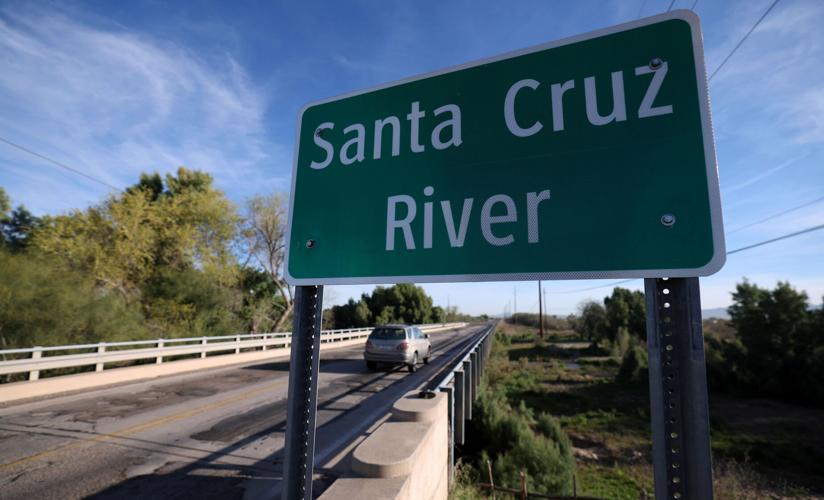
A bridge over the Santa Cruz River north of Tucson, a few miles before the water flows out of Pima County into Pinal County.
"You know how much 100,000 acre-feet of water is worth? That's worth a lot of money," Holler said. "Put a number on it — $1,000 an acre-foot. What are people willing to spend on 100,000 acre-feet of water? We're not getting any wetter."
If that water were somehow kept in Pima County, the bureau, Tucson and the effluent's other owners could recover it by pumping it out through agricultural wells located in the Avra Valley and Marana areas, then putting it into the CAP canal running west of the river in that area, Holler said.
Or, more likely, the effluent's owners would sell off its rights to other parties as long-term storage credits.
The bureau did just that back in 2014, Holler said, when it sold 60,000 acre-feet in long-term storage credits to a three-county agency, the Central Arizona Groundwater Replenishment District, for $20 million.

Construction continues on a grade-control structure inside the Santa Cruz River bed north of Tucson.
That district, part of the CAP's operating agency, bought the credits to be used as renewable water supplies it needed to meet legal obligations to replenish the aquifer. That's to compensate the aquifer for the pumping done by homebuilders and developers for new houses in the Phoenix and Tucson suburbs.
'We should not be wasting a drop'
It's not clear yet how much effluent the grade-control structures now being built in the Santa Cruz will keep from leaving Pima County, says Eric Shepp, director of the county's flood control district.
The seven structures will be constructed on either side of the Twin Peaks Road bridge over the river. When finished next year, the structures will be 8 feet wide, 15 feet deep and will span the entire width of the riverbed.
The flood control agency has not projected how much additional recharge these structures will produce, Shepp said. "But perhaps we can learn that by measuring what goes by Trico (bridge) after the project is built to see if there is a measurable reduction."
The county's long-range flood control plans have not proposed any additional grade-control structures. But other projects have increased and will increase recharge of effluent in the future, although probably not 10,000 acre-feet a year worth in total.
Last year, for instance, the county increased the capacity of its Marana-High Plains Recharge Project near Avra Valley Road, downstream of Twin Peaks Road, from 600 to 1,200 acre-feet per year. Tucson is now planning to build a fourth recharge basin at its existing South Houghton Area Recharge Project on the far southeast side that will take additional effluent from the Santa Cruz for recharge there.
But authorities have been unwilling to go along with an idea that Holler has floated regularly over the years, to build small, concrete or rock check dams in the Santa Cruz that would slow the river's flow, allowing more of the effluent to seep into the aquifer before leaving Pima County.
Capturing the water near the dams would not only slow the effluent's flow, it would allow the effluent to generate rich, riparian habitat alongside the river, Holler says.
A longtime Tucson environmentalist, Christina McVie, said of that proposal: "He's absolutely right. It's a no-brainer. Of course we want that effluent to stay within our watershed in the county. We want to do it in Pima County so we can recover it. Water is life. We should not be wasting a drop."
But Shepp said building check dams in the Santa Cruz is very expensive because you need them to be durable enough to "not be destroyed by the first floods that come along. Because of the size of the river, you don't want check dams to wash away. Otherwise the check dams will be in Marana."
Plus, DiSante, of the county wastewater department, said that when local officials asked the Arizona Department of Water Resources years ago if they could put check dams in the river, ADWR said no.
If you put check dams in the river, there will be more complex regulatory requirements for maintaining the river channel, said DiSante.
ADWR officials, however, told the Star the agency has no authority over putting check dams in the river. The U.S. Army Corps of engineers has final say over what can be built on the river, under the Clean Water Act, Holler said.
Bureau of Reclamation officials didn't respond to requests from the Star to discuss the broader issue of the effluent escaping downstream into Pinal County. Austin Nunez, chairman of the Tohono O'odham Nation's San Xavier District, lying just south of Tucson, also didn't respond to a Star request for comment.
Shepp said the grade-control structures now being installed might be "one piece of a puzzle" that could include the diversion of effluent from the river by other agencies to keep it from leaving Pima County, such as putting it into additional recharge basins away from the river.
That likely will prove controversial, since many environmentalists don't want to pull a lot of effluent out of the river, which they fear would damage the lush riparian habitat of native cottonwoods and willows.
The biggest bottom line, however, is that the Santa Cruz's effluent offers marketable long-term storage credits "for what infiltrates" into the aquifer, Holler said.
"Anything flowing past Trico Road gets zero," he said.
Contact Tony Davis at 520-349-0350 or tdavis@tucson.com. Follow Davis on Twitter@tonydavis987.

Tony Davis
Reporter


 Worst CAP cuts will 'flatten' Arizona's economy, agency says