Refilling a bottle instead of throwing it away has become a popular way for people to reduce waste — a small, tangible action in response to larger environmental problems.
But whether refilling actually makes a difference depends on how these systems are used and what they replace. Scores of refill stores have opened in recent years as retailers and customers seek fresh ways to reduce waste. Some brands are also using specialized recycling programs for tricky packaging.
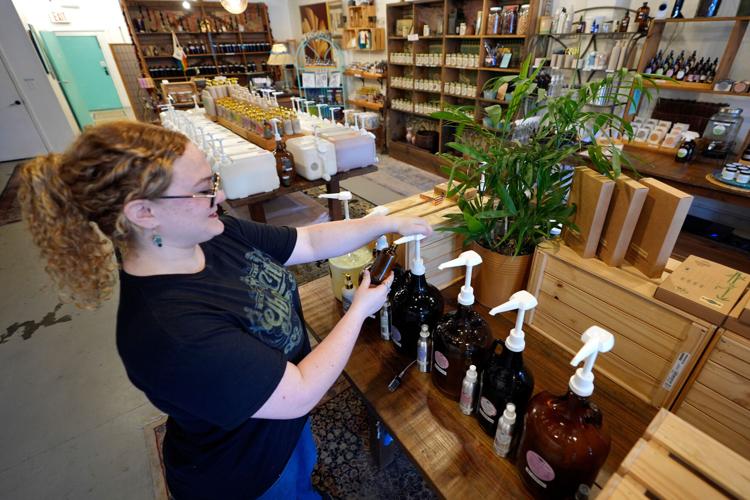
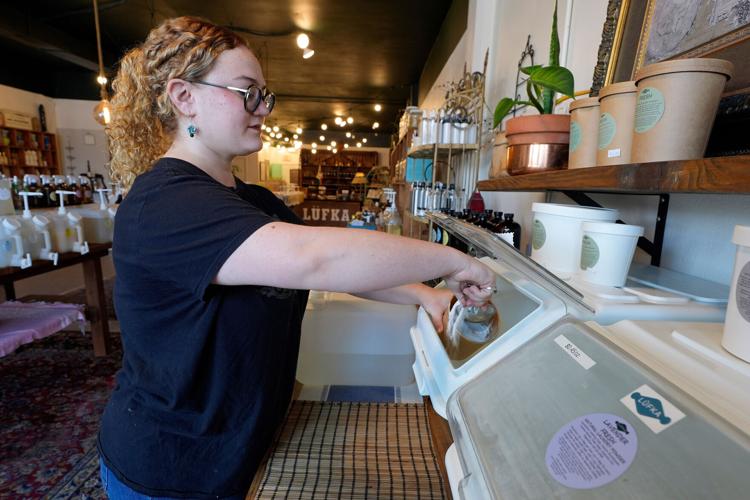
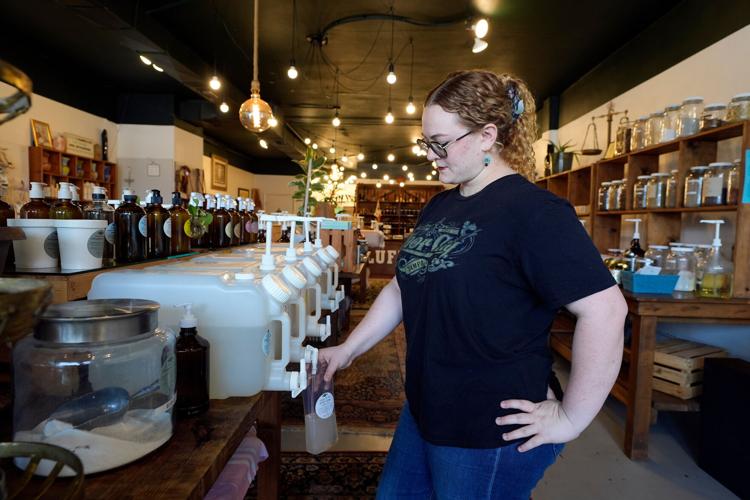
At Lufka Refillable Zero Waste store in Tampa, Florida, customers bring in reusable containers to fill with soap, shampoo and cleaning supplies instead of buying products in single-use packaging.

Aaralyn Holt refills essential oil bottles at Lufka Refillable Zero Waste store on Feb. 18 in Tampa, Fla.
Customers' containers are weighed first, then filled. They're charged by the amount of product added. Over time, that reuse can add up.
Customer Julie Hughes discovered Lufka two years ago while looking for skincare products and has returned regularly, drawn by the ability to reuse packaging rather than discard it.
People are also reading…
"When you do something positive, you get a little bit of like a dopamine hit and you feel good," Hughes said on a recent trip to buy liquid hand soap. "There are so many big problems in the world, but we can't solve all of the big problems, but we do have control over our choices."
Some shoppers have been refilling the same containers for six years, said Lufka founder Kelly Hawaii.
"Just imagine how much waste they've personally stopped consuming because they have that one container for that one product," Hawaii said.
Refillable packaging is less a new invention than a return to earlier distribution models. Many industries historically relied on refillable or returnable containers, with familiar examples in the U.S. including soda, beer and dairy.
A 2020 study explains that a shift to single-use packaging took hold mainly because disposable systems simplified logistics and reduced handling costs for producers and retailers. That transition contributed to a steady increase in packaging production and waste over time, according to the study published in Resources, Conservation & Recycling: X.

Aaralyn Holt refills laundry detergent containers at Lufka Refillable Zero Waste store on Feb. 18 in Tampa, Fla.
In recent years, there has been a renewed interest in reuse as part of a broader move toward a "circular economy" that keeps products and materials in use longer to limit waste. The Public Interest Research Group estimates there are hundreds of refillable stores around the country.
Larger chains and brands are also offering refillable options and other innovations. Lush Cosmetics sells certain products "naked," without packaging, and offers discounts to customers who return containers from its other products. The reusable packaging platform Loop, available in France, partners with major brands such as Nestle and Coca-Cola to distribute products in containers that are collected, cleaned and refilled.
Despite this resurgence, refillable packaging makes up a small share of the overall market. The systems face barriers to expansion, including hygiene requirements and the need for systems to collect and process containers, according to the study, which also noted that these processing and cleaning costs may make them more expensive.
The 'payback period'
Shelie Miller, a University of Michigan professor who studies sustainability, said consumers should think of the phrase "reduce, reuse, recycle" as a priority order, meaning reuse should generally come before recycling.
Still, reuse doesn't automatically mean lower environmental impact. Durable reusable containers typically require more energy and materials to produce, so they need to be used long enough to offset the resources that go into them, Miller said. What this means is that the environmental advantage emerges only after repeated use spreads those initial impacts across many uses, which Miller refers to as a "payback period." How much water and electricity consumers use at home to clean reusable products also factors in.

Aaralyn Holt refills bottles at Lufka Refillable Zero Waste store on Feb. 18 in Tampa, Fla.
A 2021 study by Miller and a colleague examined reusable products including straws, forks and coffee cups and measured their payback periods in categories including greenhouse gas emissions, water use and energy demand. The study found that a ceramic coffee mug must be reused between four and 32 times before outperforming disposable cups on those measures.
Convenience also plays a role. If refilling requires a special trip, the added transportation emissions can cancel out the benefits.
Hard-to-recycle items
Beauty retailers such as Ulta Beauty and Sephora are also partnering with Pact Collective, a nonprofit that collects hard-to-recycle beauty packaging through in-store bins.
Carly Snider, executive director of Pact Collective, said the program collects packaging made of mixed materials that regular recycling programs can't process, or small pieces measuring less than 2 inches — like pumps, droppers and sample-sized containers — that fall through the cracks of machines at recycling facilities.
Pact routes those materials through specialized processing, diverting large volumes of material from landfills, said Snider.
Experts emphasize that refilling and recycling programs aren't a perfect solution, but when they replace single-use packaging and fit into everyday life, they can help reduce waste.
"Small things do add up," Miller said. "And so when you have millions of people who are all doing small things, that really can make a difference, make a change."
7 ways you can reduce your use of plastic, foil and other kitchen disposables
Paper towels

This photo provided by Bed Bath & Beyond shows microfiber cloths from Real Simple which are sold exclusively at Bed Bath & Beyond. (Bed Bath & Beyond via AP)
"Keeping paper towel use to a minimum is one of the things Martha Stewart is really serious about," Tyrell says. Each workspace in the magazine's test kitchen features cloth tea towels, bar towels (similar to rags) and a roll of select-a-size paper towels, she says. The latter is used sparingly.
Tea towels are great for drying hands or dishes, or folding up to use as a hot mitt. Bar towels can be used for most messes. Paper towels are reserved for messes like juice from meat or raw egg.
"It helps to have all your towel options in one place, so I'd recommend keeping rags or bar towels near where you keep the paper towels," Tyrell says. If cloth towels aren't handy, you probably won't use them, she advises.
And if you can't wean yourself off paper towels, there are now several types of reusable ones made of bamboo and other sustainable materials that can be used numerous times before tossing them out, says Brandi Broxson, articles editor at Real Simple magazine. Cleaner paper towels can be recycled.
Plastic shopping bags

Barbara Redcay, not shown, loads reusable grocery bags into her vehicle after shopping at a store in Clarence, N.Y., Wednesday, Nov. 17, 2010. (AP Photo/David Duprey)
Carry your own canvas or string tote bags for groceries and other purchases. The key, as with bar towels, is to keep them handy.
"There are so many types of reusable bags out there that there's really no excuse for bringing home single-use plastic shopping bags anymore," Tyrell says.
Americans throw away around 100 billion plastic bags a year, she says.
Plastic produce bags

Avoid plastic produce bags by keeping a few lightweight mesh bags — often sold as "multi-use straining bags" — in your purse when you head to the grocery store, Tyrell says.
"They're also great for making nut milks or straining yogurt," she adds.
If your grocery store doesn't use compostable produce bags, you can always bring some of your own.
To avoid plastic wrapping on meat or fish, try asking the butcher at the grocery store to wrap it instead in paper, which is biodegradable. Or bring a reusable container to put it in.
Plastic baggies
There are a variety of new products that can be used as an alternative to baggies. Broxson, at Real Simple, recommends one called Stashers. They're like zip-top plastic bags but are made of Silicon, and can be washed in the dishwasher and reused. They are watertight, and can go from freezer to microwave

Second graders at Hammond Elementary School in Laurel, Md. enjoy lunch break in the cafeteria on Friday April 22, 2005. The school has adopted a program called "Waste Free Wednesday" which encourages students to become more aware of the amount of trash they are throwing away during lunches. Examples of materials that end up in the school's trash bins include lunches that are packed in plastic type baggies instead of reusable plastic containers. (AP Photo/ Matt Houston)
Plastic wrap

This photo provided by Bees Wrap shows the wrap in use in a variety pack of colors and sizes. (Bees Wrap via AP)
Both Broxson and Tyrell recommend Bee's Wrap as an alternative to typical plastic cling wrap. It's made of fabric coated in a mixture of wax, oil and tree resin, and sticks to the top of bowls and jars. Like plastic wrap, it conforms to all sorts of shapes. Unlike plastic wrap, it can be washed and reused, and remains sticky for months, Bronson says.
"It's not great for wrapping something drippy like a tuna sandwich, where maybe parchment paper or aluminum foil might be preferable. But as a container covering, or to wrap drier types of foods or sandwiches, it's great," she says.
Aluminum foil

"Luckily, unbleached parchment paper works great for baking and roasting, and also for wrapping sandwiches and snacks," and is biodegradable, Broxson says.
"If you must use aluminum foil, you can wad it up into a ball and reuse it as a scouring sponge for baking dishes to get one more use out of it before throwing it away," she suggests. Clean aluminum foil can be recycled if it's free from food residue. And many stores now sell recycled aluminum foil.
Plastic straws and utensils

In this Wednesday, July 11, 2018, photo, a glass straw is seen in a drink at Aimee Promislow and Fred Tischler's home where they operate their glass straw company, Glass Sipper, in Vancouver. (Darryl Dyck/The Canadian Press via AP)
The test kitchens at Martha Stewart Living have switched from plastic to stainless steel straws, says Tyrell.
"I carry my own titanium fork and spoon, with a nylon connector so they can even be used as tongs. They're super-lightweight, and kind of cool," she says. "Way nicer than plastic."