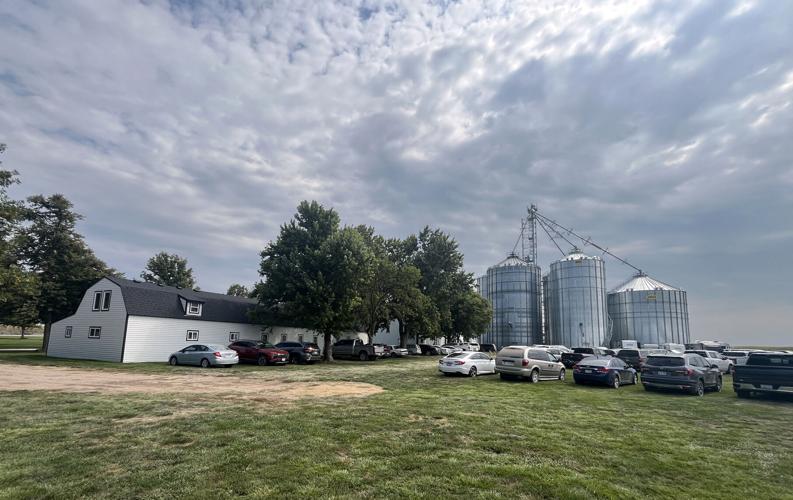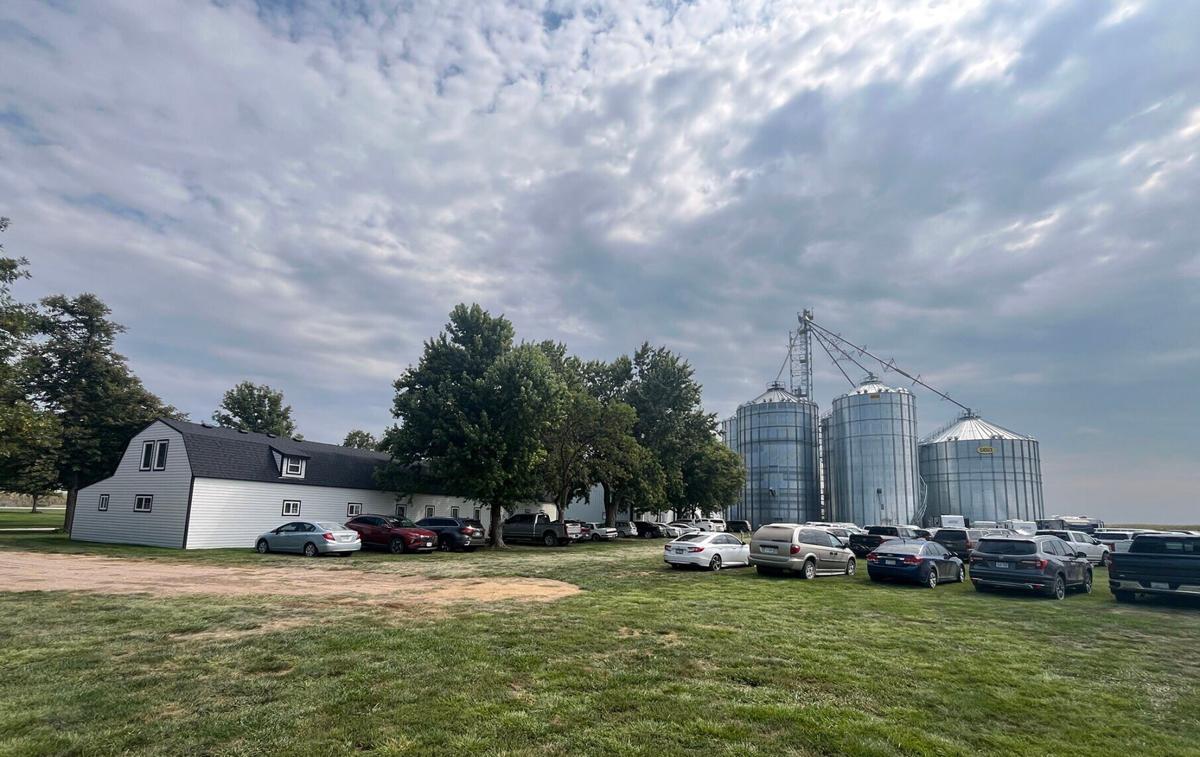
YORK, Neb. — For more than 100 years, members of a secretive church have gathered at a farm in York, Nebraska, for an annual summer convention.
The service on Friday afternoon at the York farm, a sprawling assortment of barns visible from U.S. 81, was business as usual, according to Tina Stringfield, who worked as a minister — called “workers” in the church — for 15 years.
A couple hundred people — children and the elderly alike — gathered in one of the barns to sing hymns and listen to church leaders speak about topics like “friendship” and “citizenship in heaven.”
But this year’s convention comes at a moment of reckoning in the church. Former and current members are grappling with growing allegations of decades of widespread sexual abuse and the launch of a global FBI investigation into the church in February.
People are also reading…
That is part of what drove Stringfield, a survivor of child sexual abuse while growing up in the church in Wisconsin, to go to the York convention on Friday. Part of her goal: to speak about sexual abuse during the open testimony portion of the service.
‘The Truth’
The Christian sect Stringfield was a member of operates across the United States and the world. It does not have a name, but it is sometimes called the “Truth,” “The Way,” or the “Two by Twos” because the workers travel in pairs of two preaching the gospel and staying at members’ homes.
The Two by Two church was formed in Ireland in the 19th Century by Scottish evangelist William Irvine, according to Cherie Kropp, a historian and former member of the church. Kropp estimates that there are around 75,000 members of the church in the United States and globally, though she emphasizes it is a rough estimate.
Kropp, who grew up on Mississippi convention grounds, said conventions are a yearly retreat for members of the church, who otherwise usually worship in their homes and never in a traditional church building.
Conventions usually last from Wednesday to Sunday. The grounds have dormitories where people can sleep, a kitchen and an area where services are held, Kropp said. Duane Grotz, the owner of the York convention grounds, said there has been a convention on the property since 1916.
Seven former and current members of the church who have attended the York convention in the past spoke about the conventions.
They recalled a joyful time, when hundreds of members of the church from Nebraska and nearby states gathered at the Grotz farm.
But those same people expressed concern about how the church leadership has refused to adopt a written policy on sexual abuse or acknowledge their past failings. Some also expressed concern about what was being done at the convention grounds to acknowledge past issues of sexual abuse and prevent future harm.
Grotz’s son, Darren, said they asked alleged perpetrators not to attend. Duane Grotz said that if he knew someone on his land was accused, he’d have them leave. The Grotzes said to make the convention grounds safer, they added exterior lighting, security cameras and have imposed a 10 p.m. curfew.
Advocates for the Truth, which operates a hotline for sexual abuse victims in the church and provides resources for them, has identified over 900 credible perpetrators in the church and received reports from thousands of victims spanning decades. The group estimates that there are about 200,000 total current and former members of the church across the United States and the globe.
In February, the Omaha, Nebraska, division of the FBI issued a bulletin seeking the public’s help identifying victims or individuals with knowledge of abuse or criminal behavior within the Two by Two church.
When asked about allegations of over 900 alleged perpetrators and the FBI investigation, “My perspective on that is that there’s some people that want to try to destroy the faith. It has nothing to do with abuse,” Grotz said during a phone call Wednesday.
“We don’t stand for abuse. We have no approval of abuse,” he said.
Asked about the allegations of widespread abuse in the church on Thursday, Grotz pointed to the Bible story of Joseph, who was sold into slavery and falsely accused by a woman of “trying to get her to lay down with him.”
“It never happened. If you read the whole story, it was her that tried to get him to lay down,” he said.
During an interview on Friday afternoon on the convention grounds, he backtracked slightly. “I’m not saying there’s no victims. I know there (are) victims,” he said.
Richard Gasser, a head worker, or “overseer,” assigned to the Nebraska and Kansas region who spoke during the service on Friday afternoon about “friendship,” said “like a lot of other organizations, it was dealt with wrong in the past, but we are doing everything we can to do what’s right.”

About 250 people filled a barn ahead of a 3 p.m. slate of speakers on Thursday, Sept. 5 at the 2x2 convention at the Grotz family farm in York. 5. Outside were roughly 100 vehicles and a smattering of RVs, with license plates from places including Ontario, Canada, Illinois, Michigan, Minnesota and Missouri. Duane Grotz said the York convention’s been held on his family’s land since 1916.
Gasser said in a phone interview that he has asked individuals with credible allegations against them not to come to the York convention this year and said he has made clear in emails to members that abuse “will not be tolerated.”
Cynthia Liles, a private investigator with Advocates for the Truth, named a handful of workers who served in Nebraska sometime since the 1960s whom she said have credible allegations against them.
Orin Yung, who grew up in Kimball in southwest Nebraska, said he was sexually abused in his home by a visiting worker when he was a kid, sometime between 6 or 8 years old, which would have been around 1960, he said. Later, in his early 20s, he said, another worker attempted to sexually assault him in his home, though he was able to stop it.
He said both times he never told anyone “because you were never supposed to talk bad about the workers.” When he finally told his dad, he said, his dad told him, ‘Oh, the same thing happened to me as a kid.’”
Deb Adadjo, who grew up in Scottsbluff, Nebraska, said she was abused for a summer by her uncle, another member of the church, in Iowa in 1978 when she was 7. She said the abuse has affected her life for years, though, thanks to therapy, her life has improved.
Adadjo left the church in 2022. She knew about abuse in the church other than her own for some time. Her abuser went on to abuse other children, she said.
But as with many people, it was not until March 2023 that Adadjo learned about the extent of abuse in the church, when a letter spread around the Two by Two community saying that Dean Bruer, an overseer in Oregon, had sexually abused and raped minors.
“Bruergate,” as Kropp called it, prompted many members of the church to immediately leave. Yung said he left at that time.
Stringfield left the church shortly after Bruergate, too. She said she spoke to an overseer after the news came out and decided to leave after finding their response inadequate.

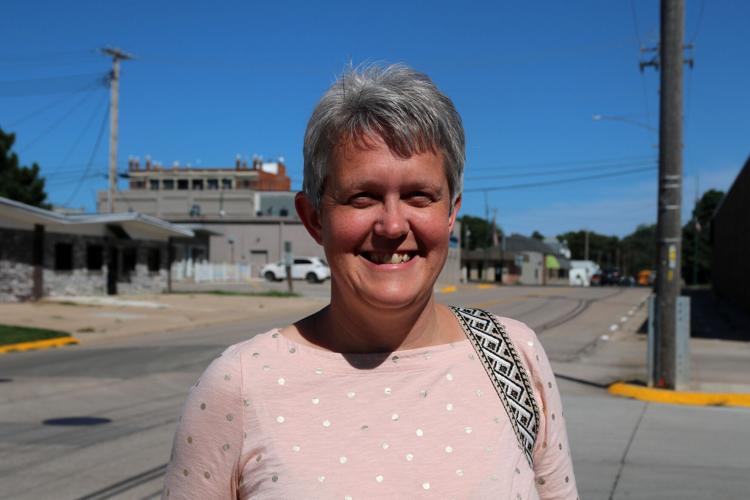
On Friday, a former minister in the 2x2 church, Tina Stringfield, went to the church’s yearly convention in York with the hope of possibly speaking about sexual abuse during one of the service’s open testimony portions. But the owner of the convention grounds told her not to. Since March 2023, the 2x2 church has experienced a reckoning over allegations of widespread sexual abuse.
Stringfield moved to Lincoln almost a year ago. During her time as a worker, she once stopped by the York convention grounds.
Having spent the “prime of her life” working for the church, Stringfield said after she left she was not asked by church leaders what they could do to help her. Meanwhile, she said, her abuser has been allowed to go to meetings. “They’ve made sure there’s space for (him),” she said, but haven’t asked her what she needs.
Bruergate hit Nebraska soon after the letter went public. In a message, Gasser wrote in March 2023 to the members, or “friends” in Nebraska and Kansas. He encouraged victims to reach out and noted that Bruer had been in Nebraska for special meetings in the spring.
Then, in June 2023, after the church’s other annual convention in Nebraska, which was held in Scottsbluff, Gasser wrote another letter to the friends of Kansas and Nebraska addressing child sexual abuse in the church.
Gasser said his staff had recently attended a child abuse seminar at Western Nebraska Community College in Scottsbluff and “were made aware of some of the laws and services that are provided.”
But in that same letter from more than a year ago, Gasser expressed hesitancy at the idea of creating a policy focused on child sexual abuse in the church. “We all have a fear of creating more policies to deal with these things; I believe we all know these actions are so wrong already. There are plenty of Bible verses written that can say it far better.”
A month after that letter, in July 2023, there was an educational meeting about sexual abuse at the Holthus Center in York for members of the church, according to former members who attended the York convention for many years.
Over a year later, Gasser continues to believe that the church does not need guidelines about sexual abuse.
“There’s the Bible and there’s the natural law and they take care of everything. Why do we have to make more laws? The Bible’s very clear on it all and also the law of the land, and we will abide by it,” Gasser said.
When asked why the Bible and the “laws of the land” were not enough to stop abuse in the past and why, unlike other organizations that have dealt with sexual abuse issues, such as The Catholic Church, he was against a written policy, Gasser said, “Well, what more can we do? I mean, it’s wrong and we will report it to law. We’ve told people that. What can you do more than that?”
In Kansas, Dawn and Monte Johnson said they recently proposed a written policy about sexual abuse, which was rejected by an “elder,” an older member of the church where they live.
In the Washington, North Idaho and Alaska region, the ministry rejected a 36-page document about how the church approaches sexual abuse written by church members with a background in psychology and victim advocacy.
‘Maddening’
Stringfield, the former worker, called the lack of policies “maddening.” She said this is common practice in other organizations and noted that the Two by Two church “is a worldwide organization.”
Former members say the church’s response has had an effect on membership.
Relyssa Weeda, 32, a fourth-generation member of the church who grew up in Kearney, Nebraska, and attended the York convention from infancy until moving away from Nebraska in her early 20s, did not leave the church immediately in March 2023.
Growing up, she knew some abuse happened in the church because of a family member’s own experience with it. But she was shocked by the extent of the abuse revealed in the months after Bruergate, as more and more members came forward with stories of sexual abuse across decades.
Still, Weeda, who currently lives near Rapid City, South Dakota, did not leave immediately. As evidence of sexual abuse in the church grew, she said, she thought the church leaders might still make good decisions and “turn the ship around.”
But as she learned more about the history of the church, Weeda said, she came to the conclusion that “the ship is functioning exactly as it was made to function, and there is no turning it around.” Former members said they learned growing up that the church and its workers were descended from the apostles, not founded in the 19th Century by a Scottish evangelist.
Weeda was clear, though, that she did not judge people who had not yet left. “I can’t tell other people what they should or shouldn’t do,” she said. “But I certainly hope that people are willing to ask more questions.”
The thing Weeda misses most about the church, she said, is going to the convention every year. “You have four days of fellowship with people,” she recalled.
At the York convention on Friday afternoon, outside the afternoon service, Grotz asked Stringfield not to speak. Stringfield said she wanted to bring up her experience with sexual abuse in the church during the service’s “testimony” portion, when people can spontaneously stand up and speak.
“I don’t think it’s the place to bring it up here,” Grotz said.
“Why not?” Stringfield asked.
“Because of the spirit of the convention,” he replied. “It would just upset everybody else, and I don’t think the whole convention needs to be upset.”
He said he felt like Nebraska has made the necessary changes to address sexual abuse. “If there’s a state that hasn’t, then maybe that needs to happen,” Grotz said.
“They talk about us being a secret cult. We’re not secret,” Gasser had said Wednesday. “You’re welcome to come and sit in a meeting,” he said, though a York News-Times staffer was asked to leave a meeting on Thursday by Grotz and another was asked to delete a recording of the Friday meeting – a recording of hymns, Scripture readings and lessons from the Bible.
Stringfield said the experience of going back to convention was what she expected. Now, she said, she is looking forward to living the rest of her life.
The FBI Omaha office declined an interview request, but in an emailed statement, attributed to FBI Omaha Special Agent in Charge Eugene Kowel, the organization said “The FBI encourages reporting from anyone who thinks that they may be a victim, or from anyone who may have information on this investigation,” providing a link to its website. The FBI’s hotline is 402-493-8688.
Advocates for the Truth, which operates the hotline, also encourages victims to reach out to its hotline 855-477-2388 for help finding therapy and other resources.
A Pennsylvania grand jury investigating child sexual abuse among Jehovah’s Witnesses has charged another five people with raping or molesting children as young as 4. The indictments Friday are the latest charges in an ongoing probe that has identified 14 suspects. State Attorney General Michelle Henry says that while the misconduct dates back years or even decades, “the trauma endures for these victims.” Critics say that Jehovah’s Witnesses elders have treated child sexual abuse as a sin rather than a crime, and failed to report it to authorities. Henry did not address the church's handling of complaints, but says the investigation will continue.
Portraits of resilience: Survivors of clergy abuse tell their stories
Patrick Shepard

For many years Patrick Shepard wouldn’t touch a basketball. His molester, a priest, had taught him the game, and as much as he loved it, he had “so many bad memories." The abuse sent him spiraling down, through anger and alcohol abuse and sadness. But now he has a loving partner, a son he adores, and the responsibilities and joys of fatherhood help eclipse his pain. He still finds himself crying sometimes, but the tears do not come as often as they once did. And he has taught his son to play basketball.
Dorothy Small

Dorothy Small was 60 years old when she met the priest. She thought it was love — that was the only way to make sense of what happened. But another priest had a different word for it. “You were raped,” he told her. She reported the encounter, the priest was sent back to the Philippines, and Small was ostracized by the church community that once was her lifeline. It left her shattered. Now, she does not go to any church. She finds spiritual fulfillment in private rituals and meaning in her advocacy for adult survivors of priest abuse. “The healing came from standing up for myself, finally,” she says. “It came from not going away.”
Salvador Bolivar

Salvador Bolivar doesn’t like to talk about what happened to him without first summoning the spirit of his ancestors to give him courage. It was the awareness of these ancestors 11 years ago, in a sweat lodge in Colombia, that first compelled him to break his silence about the sexual abuse he suffered at the hands of his Catholic high school dean. Bolivar's belief that his suffering must be part of a plan, meant to arm him with the experience necessary to help other survivors, helps him get through the most difficult days. Still, such trauma takes a toll. “I knew this spiritual task would come at a price,” he said.
The Charbonneau sisters

The nine Charbonneau sisters never forgot the beatings and harsh discipline they endured at the St. Paul’s Indian Mission School in South Dakota. But in their 50s and 60s they remembered, one by one, something even worse: the sexual abuse they suffered at the hands of priests and nuns. Most have given up their fight to sue the church, and want to forget. But four of them (pictured wrapped in a quilt made by their mother, left to right: Francine Soli, Barbara Dahlen, Joann Braget and Louise Aamot) persist. Says Dahlen: “Sometimes I wish the hell we never remembered anything.”
Mark Belenchia

Mark Belenchia didn’t stay quiet. He told his mother and his uncle, in the mid-1970s. He told a parish priest, then the vicar general, in 1985. Still, the clergyman Belenchia said sexually abused him when he was a child in Shelby, Mississippi, remained in collar and cassock. “It showed me that the system says you’re insignificant. It doesn’t matter what you said, or what happened to you,” Belenchia says. Over the years, his quest to make sense of his own tragedy transformed into a crusade against clergy abuse that’s become his life’s focus. Activism, he said, gives him purpose and direction. Through this work he’s able to make use of his pain, to help other survivors struggling to cope with theirs.
John Vai

John Vai doesn’t think or talk about the abuse. It took him four decades to tell anyone: The Catholic church was the heartbeat of his working-class, Italian-American Delaware neighborhood. But so many years later he took a risk, went to trial and won. He unboxed those memories, and the experience almost ripped him apart, he said. He will not do it again. And so, he wakes up at the same time each morning. He plays golf, swims in the country club pool, sips a cocktail when the sun goes down. Happiness isn’t what he’s after. Stability, he said, is what he needs to survive. “Get into a routine,” he said, “and the pain goes away.”
News-Times Managing Editor Mike Brownlee contributed.