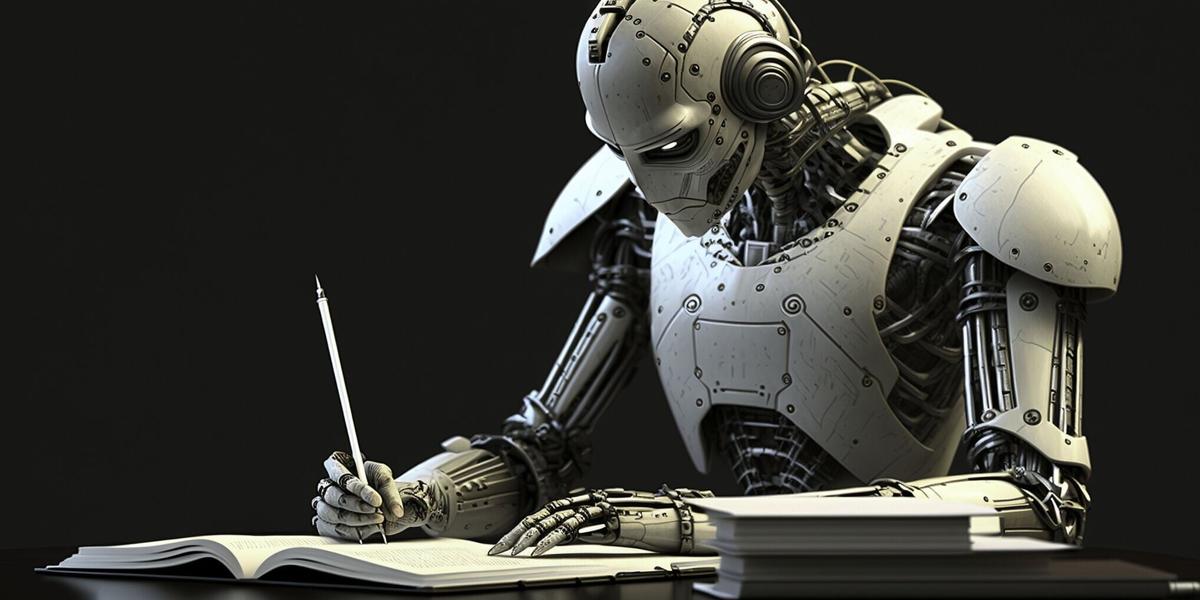
BERLIN — It is perhaps difficult to imagine Jane Austen or D.H. Lawrence or Evelyn Waugh or even the Bronte sisters being as worried, but one in two of Britain's current crop of novelists fear artificial intelligence (AI) could be about to make them redundant.
"Just over half (51%) of published novelists in the UK believe that artificial intelligence is likely to end up entirely replacing their work as fiction writers," the University of Cambridge says, discussing the findings of a recent survey of 258 of the island's fiction writers.
Worse still, almost two-thirds of the novelists asked said their work had been used to train AI chatbots without their permission and with no remuneration given or even offered.
Despite the concerns, one in three of the novelists surveyed admitted to using AI - albeit, they claimed, for "non-creative" tasks such as information searches.
People are also reading…
Romance authors are the most likely to be “extremely threatened” by AI, the novelists believe, with purveyors of other pulpy genres such as crime and thriller also likely to see their potboilers more easily replicated by fiction-churning chatbots.
AI has been widely criticized for its tendency to "hallucinate" - jargon for the bots' inclination to spool out inaccurate or even wacky nonsense when asked to come up with factual research - but it seems this trait, which some experts view as ineradicable, could make the bots effective at coughing up fiction.
But according to the researchers, who are based at Cambridge's Minderoo Centre for Technology & Democracy, there is a "sector-wide belief" that if AI is used to produce novels, it will lead to "ever blander, more formulaic fiction that exacerbates stereotypes, as the models regurgitate from centuries of previous text."