

Tony Cavallaro grabbed some supplies to scrub the 17-foot-by-15-foot indoor pool in his home for an "early spring cleaning."
He took to social media to say, "We cleaned the entire room and windows getting it all ready hopefully for Albert's return!"
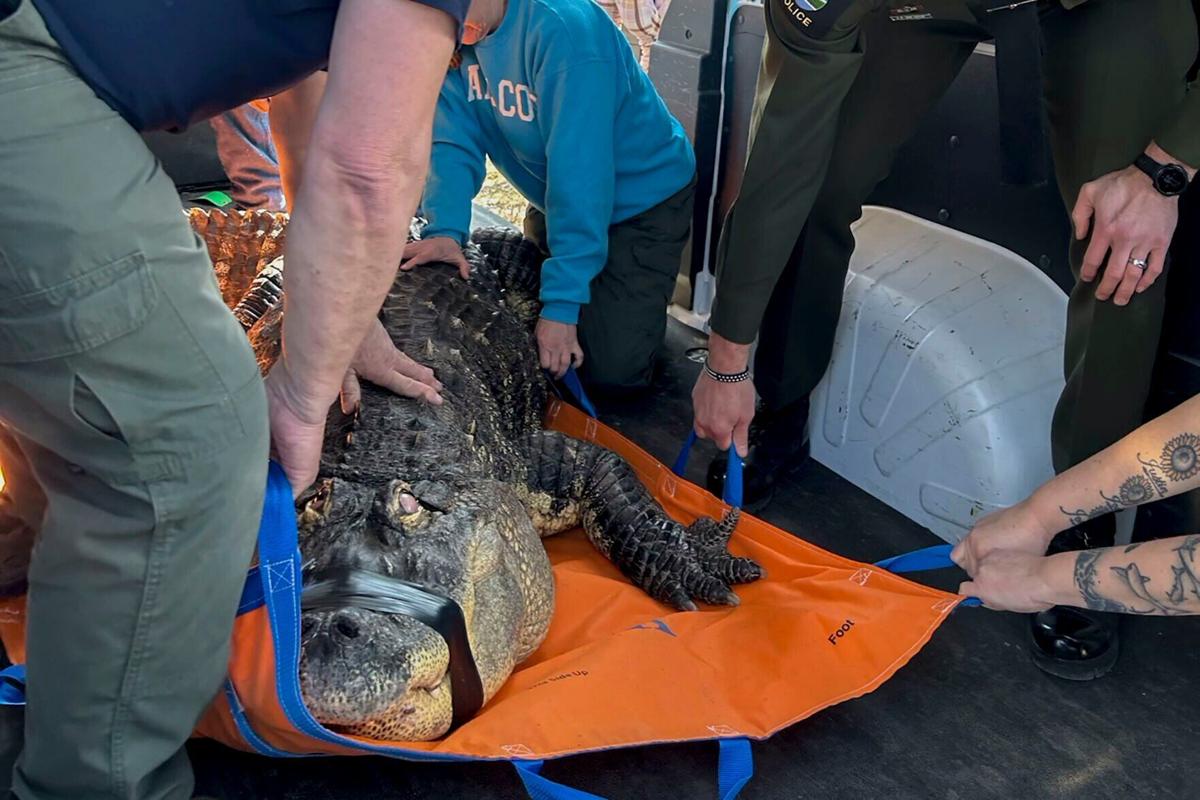
It has been 2½ weeks since the Department of Environmental Conservation seized an 11-foot, 750-pound alligator named Albert from Cavallaro's Hamburg, New York, home.
"I feel like they got a dagger in my back and skin turned, and I can't pull it out. That's how bad this is affecting me," he said about the loss of his reptilian pet for 34 years. "I don't have no life. They took my life from me two and a half weeks ago. And it's just getting worse as time goes on."
People are also reading…
The DEC says it confiscated Albert because Cavallaro's state-issued license to possess a dangerous animal expired three years ago. The agency also alleged that the alligator is blind and has spinal issues, among other ailments. Cavallaro refuted the claims.
The Buffalo News has filed FOIL requests for records pertaining to Albert's license but has not received a response yet. On March 19, the DEC responded to The Buffalo News' request for a comment with the following statement:
"Possession of animals designated as dangerous, including alligators, is prohibited in New York State except under license from the Department of Environmental Conservation (DEC). These licenses, along with authorizing possession for regulated activities, protect the animal and the public. In this case, the former owner’s license to possess the alligator expired in 2021 and was not renewed. At that time, DEC determined the owner’s facility failed to meet specific conditions to ensure this dangerous animal did not come in contact with humans and did not pose a threat to humans or the animal."
According to the DEC, even if Cavallaro was appropriately licensed, "public contact with the animal is prohibited" and would be considered valid "for license revocation and relocation of the animal."
Albert's whereabouts remain unknown; the DEC said he is with a "licensed caretaker." Not knowing where his pet is has been hard for Cavallaro.
The DEC has not charged Cavallaro in court. The state keeps delaying it, he said, adding, "in the meantime, Albert's in jeopardy. He could die because … they do not know how to take care of them. They do not know his routine."
Cavallaro's attorneys are preparing to file an Article 78 petition in court against the DEC to challenge the seizure of Albert.
"I'm an emotional mess. I'm overwhelmed. I've had anxiety attacks left and right. It's terrible," Cavallaro said.
An online petition at change.org demanding Albert's return to Cavallaro has more than 155,000 signatures. The community also has rallied to support Albert and Cavallaro. A Hamburg pub, the Pour House, has begun selling yard signs for $15 and T-shirts for $20, the proceeds of which will be used to help bring Albert home.
Cavallaro said he has always been fascinated by reptiles. He bought Albert at a reptile show in Columbus, Ohio, in 1990. He told the Washington Post that he found the then-2-month-old Albert's overbite and short snout adorable, naming him Albert Edward so that his nickname would be Al E. Gator.
Cavallaro had a permit ever since to partake in reptile shows at colleges and community centers. Once he moved to Hamburg in 2006, he stopped doing shows because the alligator had become too big to easily transport.
"He became a pet then, and people that were coming over were all friends of mine. No public was coming here," he said of his house.
Can apex predators like alligators be domesticated? Greg Graziani, the director of Florida Gator Gardens, who has been working with crocodilians and other reptiles since 1976, said the animal will feel "calm and comfortable" around the individual who takes care of him on a regular basis.
"The animals that I work with in training, they recognize my voice," he said. "As long as the alligator is not being mistreated, and it's being fed, it's going to be happy."
In 2016, Cavallaro built an addition to his house that includes a 5½-foot-deep indoor pool with a waterfall, exit ramp, underground filter system and in-floor heating, which cost him nearly $120,000. With big windows that let in natural light, the room has a fake palm tree and a green carpet where Albert slept.
Cavallaro said he fed Albert raw chicken thighs, drumsticks, and both raw and cooked pork. Albert also loved cheese cubes, he said.
"He loves cheese," Cavallaro said. "I give him little pieces of cheese cube. He takes his big head out and takes it on my hand, real gentle."
While he allowed his friends to fling Albert's food into the pool, he would never let them come into close contact with him, he said.
"I would never let anybody hand-feed him because that's the only way you can have an accident with Albert," he said.


