

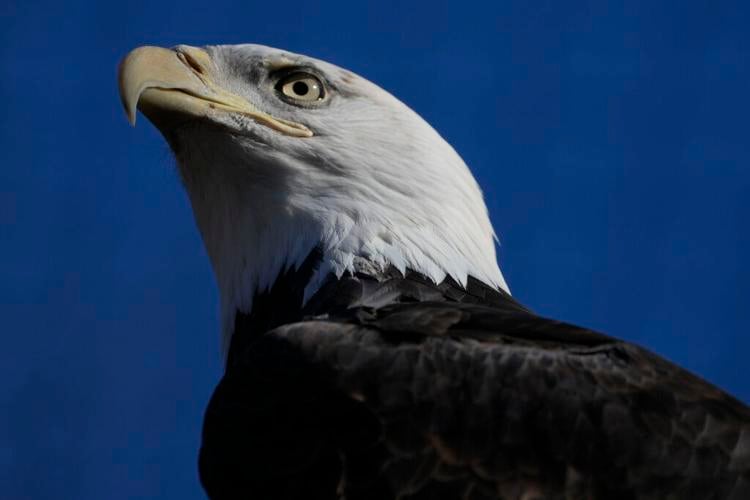
WEST ORANGE, N.J. — Along the long road from American icon to endangered species and back again, the bald eagle — the national bird of the United States, often seen against a clear blue sky — is having a moment.
The eagles find themselves in an environmental updraft of sorts since the early 2000s, when the federal government took the thriving birds off its endangered species list with more states following suit.
Culturally, too, the animals are soaring.
In December, then-President Joe Biden signed legislation making the raptor the country's national bird. New Jersey became the latest state to delist the bald eagle as endangered in January, citing a remarkable comeback for the creatures associated with strength and independence — and that occupied just a single nest in the state decades ago. And the Philadelphia Eagles reached the Super Bowl this year.
People are also reading…
How did the birds recover?
As with so many tales, it's complex. Their well-being was intertwined with a chemical insecticide.
The story — there was a single nesting pair in New Jersey in the 1980s and roughly 300 now, for instance — centers on the banning of DDT. The insecticide, with environmental side effects that included thin-shelled eagle eggs, touched off a cratering in the number of eagles across the United States. Officials prohibited the pesticide in 1972.
To rebuild the birds' numbers in their historic range across the country, conservationists imported birds from places where their populations were stable, including from Canada.
Early on, they also removed eggs from nesting birds' nests, replacing them with artificial ones for the eagles to "incubate" while the real eggs were safely hatched outside the nest. The eaglets then were returned to the nest for their parents to raise, according to Kathy Clark, head of New Jersey's Endangered and Nongame Species Program.
"They're one of the few conservation success stories of animals that almost went extinct on our continent. And so I think now it's really important to make sure people know that story and learn from it," said Maia Edwards, the science director at the American Bald Eagle Foundation in Alaska.
Expanding in new environments
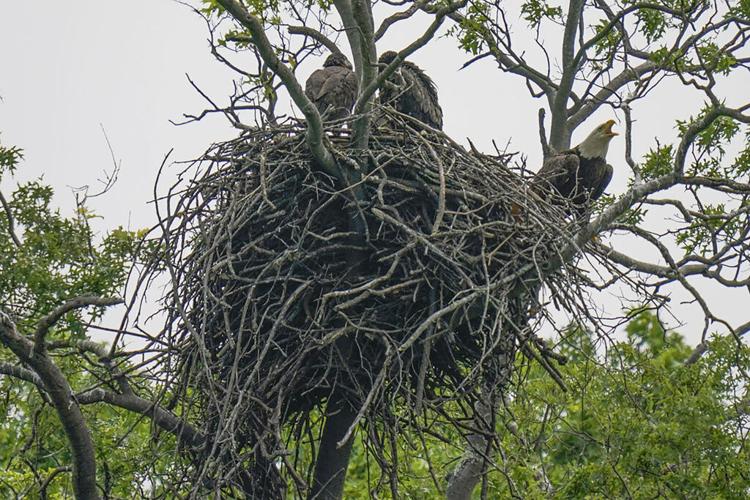
Clark, whose work with the birds spans decades and includes the period when their numbers were so small in New Jersey they lived only in a remote part of the state, said the eagles taught officials a number of lessons. One is that they're "fairly adaptable" and now live across areas with dense human population — from suburban Bergen County near New York to the wetlands along the shore in the south.
She recalled the story of one fledgling eagle that found itself on a backyard woodpile and walking around the street in a suburban town. Volunteer observers worried over the bird's well-being, given the realities of suburban living. Still, observers spotted the eagle, identified by a band, a year later. It apparently survived.
"Those birds that, you know, have that tolerance to live like in such a densely human structured environment is something I have a hard time understanding," she said. "They're Jersey birds. You got to have attitude, right?"
The birds face dangers as they expand into suburbia, though.
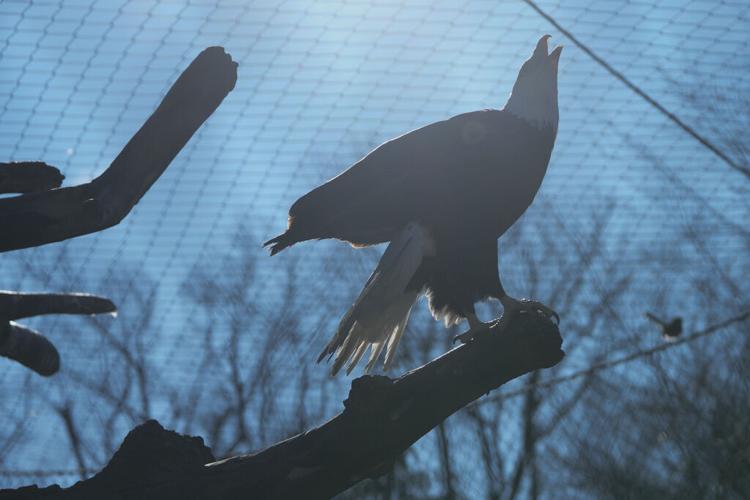
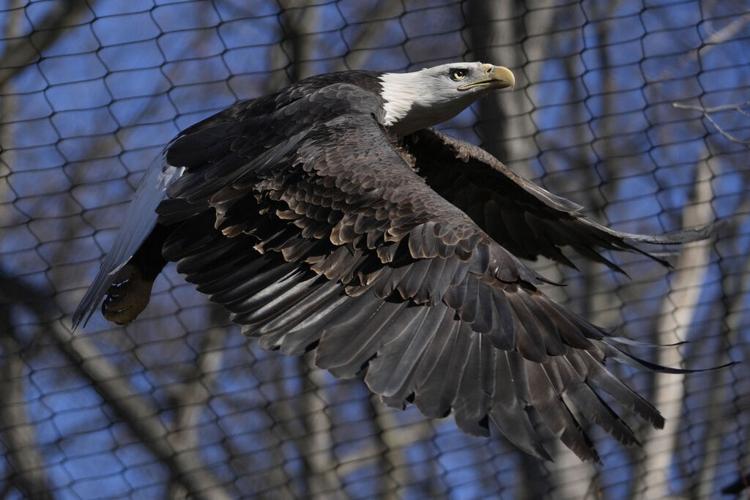
Jilian Fazio, director of the Essex County Turtle Back Zoo in suburban northern New Jersey, said the zoo rescues a number of birds hit by cars. One bird, a male named Freedom, perched atop a branch in his enclosure at the zoo recently and called out loudly. He was found dangling by a rope, left with an injury that renders him unreleasable, Fazio said.
There are other threats, as well.
Habitat preservation and clean, open water — the eagles feed heavily on fish — are concerns, but there's also the current outbreak of avian influenza or bird flu. Clark says officials are going to maintain surveillance amid the outbreak.
Resurgence in popularity
Beyond the birds coming off endangered lists, they made headlines recently for finally getting their due as the county's national bird — an oversight long left undone in law as many people thought it already had that status because the bird is on the national seal, said Sen. Amy Klobuchar of Minnesota, who sponsored the legislation Biden signed.
She and colleagues worked with Native American and veterans groups to get buy-in for the legislation, she said, and it passed the typically divisive House and Senate with no dissent.
The birds are revered in a number of Native American cultures as symbols of strength, particularly in the Pacific Northwest, according to Paul Apodaca, a retired academic who specializes in folklore and mythology.
The eagles' perch as symbols of the country contributes to their conservation, with experts considering them an "umbrella species," whose need for large open spaces and waterways helps preserve lesser known wildlife.
"Americans are always going to have that sort of personal relationship with bald eagles," Clark said.
New Jersey Sen. Andy Kim, a native of Philadelphia Eagles territory, took his two young sons to this year's National Football Conference championship game, a memory he said they won't forget. "Let's never forget that Bald Eagle was officially named America's national bird at the same time the Eagles are headed back to the Super Bowl," he said in a text message.
Sightings rise
Experiencing seeing a bird in the wild or even as you're driving along a business-lined highway can leave an impression.
Dan Day, a birder who's spotted bald eagles about 50 times in recent years both on nature walks and just driving around suburban New Jersey, remembered never having seen the birds as a kid growing up in Cleveland. Now a New Jersey resident and Philadelphia Eagles fan, he regularly goes out in his green "Birds" cap and binoculars.
"Just the mere thrill of seeing one — a lot of people just have never, ever looked at one," he said. "It really elevates your day to see a bald eagle."
Enjoy watching them, experts say, but give them space, too — because rescuing animals threatened with extinction is expensive, uncertain work.
"I don't think I ever will lose that perspective of, of being on the brink there," Clark said, "not knowing if you're going to be able to save the species."


