S
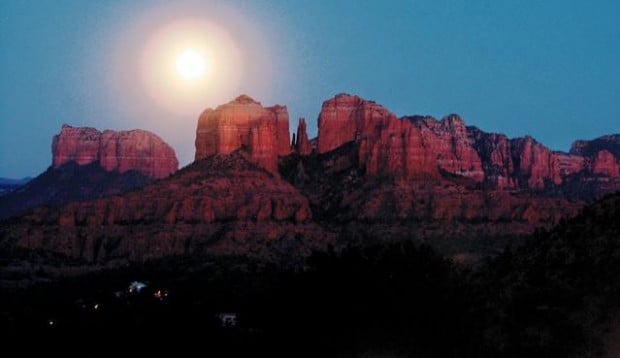
EDONA - This town isn't just about big red rocks, artists' studios and vortex visions. It's also about shopping.
Truth be told, many visitors come here mainly to browse, bargain-hunt and buy. Some visit shops in Uptown or cruise the outlets, but the "must" destination for many shoppers is the Tlaquepaque Arts and Crafts Village.
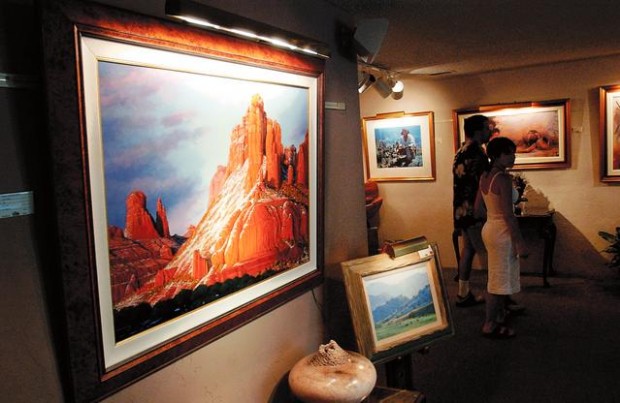
Tlaquepaque, pronounced Tah-LAH-kee-PAH-kee, houses 45 shops, galleries and restaurants in a Spanish Colonial-style setting with masonry walls, four courtyards, fountains and lush landscaping.
Although it looks at first as if it might have been around for a century or two, Tlaquepaque was built in the 1970s and named for a suburb of the Mexican city of Guadalajara.
Wendy Lippman, general manager, notes that Tlaquepaque's chapel may be rented for weddings.
People are also reading…
One of the newest additions, Lippman says, is El Picaflor, a gallery featuring Andean art.
● Doug Kreutz
S
EDONA - Visiting a vortex is a serious spiritual endeavor for some people and just a lark for others. In either case, it's hardly a wilderness experience.
The four main Sedona vortexes - purported power points - are conveniently sited near roads and easily accessible.
Those who want to find their own way can do so with the help of vortex books and maps available at many New Age shops.
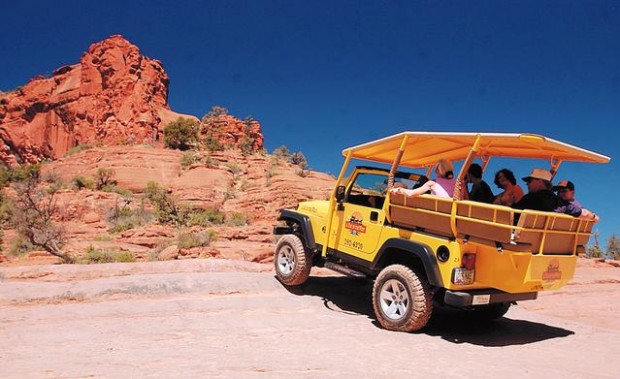
For visitors who want some guidance, several companies offer tours, each with a somewhat different twist on the experience.
One example is the Sedona Heart Center, a New Age-oriented business through which owner Suzanne McMillan-McTavish and her staff sell a variety of tour packages.
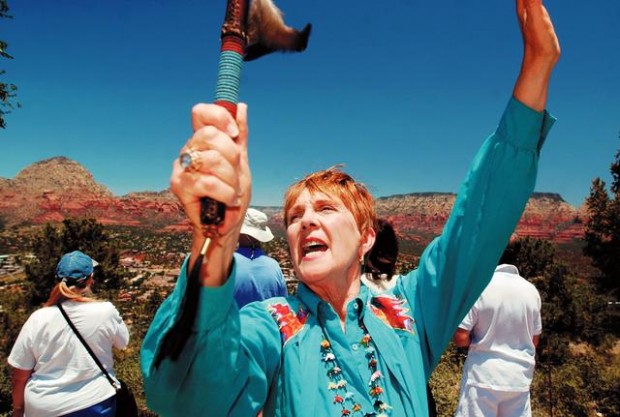
"It's not a religion," McMillan-McTavish tells half-a-dozen clients as she guides them to what is essentially a drive-up vortex site on Airport Mesa. "It's just like a battery of energy. That's the best way to think of it."
From an overlook spot on the mesa, she points out other vortex points in the area and gives a short course on vortexes as she understands them.
"Some vortexes are masculine," she says. "You feel a surge of energy. Others are feminine, like a mother holding you in her arms."
Whatever feelings or moods you bring to a vortex will be intensified, McMillan-McTavish says. "If you're happy, you get happier. If you're sad, you get sadder. If you're emotionally distraught, you really get bent out of shape."
Later, after asking participants to share some information about themselves, McMillan-McTavish has the group disperse a bit. Then she breaks into a song with distinctly American Indian overtones called "Song of the Ancient Ones" and waves a rattle around each of the clients.
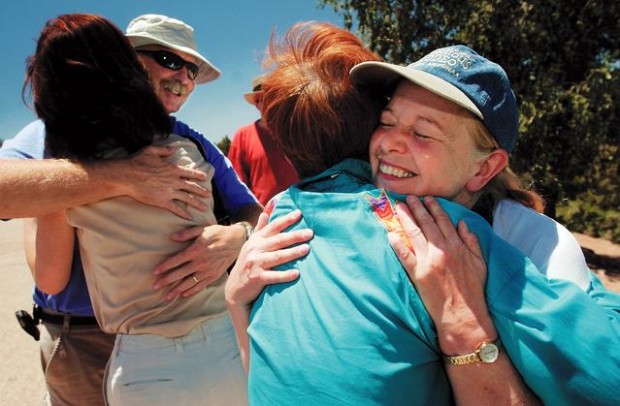
Because the ceremonial is taking place at a public overlook point across from a large parking lot, other tourists occasionally stop and gawk at the vortex visitors and the animated, dancing, singing McMillan-McTavish. She pays no attention to the onlookers and completes the ceremony by giving hugs all around and asking participants to share their reactions.
Those reactions include feeling "an incredible sense of balance," "feeling centered" and wanting to "live simply and love deeply."
When the group has moved on to another vortex site with one of McMillan-McTavish's staff members, she is asked how she responds to the not infrequent suggestion that she is commercializing a spiritual experience.
"To spiritual die-hards, I say it costs money to do this," she says of leading the tours. "It takes money for gas and money for guides. We're a commercial business - not a church."
● Doug Kreutz