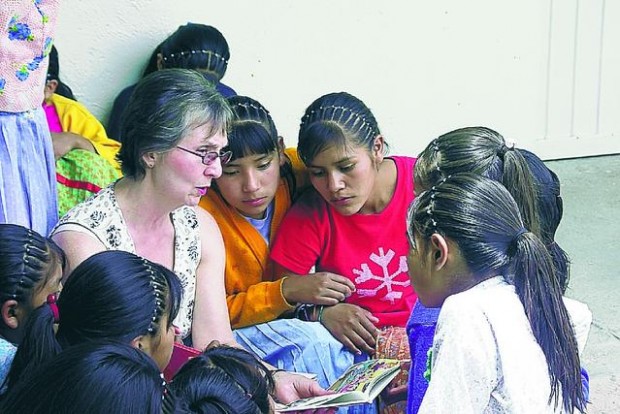
Little Flor was mesmerized, but not by the story I was reading. As I turned the pages and regaled the kindergartners with "Adam the Ant," pint-sized Flor stood next to my shoulder and stared at my head. For some reason, the Tarahumara girls at the Tewecado Mission School were fixated on my short — and in their opinion, unkempt — hair.
Flor couldn't stand it any longer. ¿Tienes piojos? she blurted out.
It all fell into place. The only earthly reason a Tarahumara girl would have had her hair cut is head lice. I had short hair, ergo … .
A visit to Cerocahui, Mexico, is always an eye-opener, though not necessarily in the way one might expect. But, I get ahead of myself:
It was January 2000 when my husband and I found ourselves in the back of a converted school bus marked "Hotel Misión." We were on our way to Cerocahui, Chihuahua, and as we rounded the bend and caught our first glimpse of the "Shangri-La of Mexico," we exchanged glances.
People are also reading…
Riiiight.
It was our first visit to this area of Mexico and we were there to learn. We had just been hired as tour escorts for a private train tour company, and this was our orientation.
A mix of serendipity and just plain luck had led us here and, well, there we were. Cerocahui was a dusty little town of 1,200 nestled in a valley not far from the tracks that led to Mexico's Copper Canyon. Why are we going here? we wondered.
For the uninitiated, Cerocahui is a question mark. But for those of us who have had the opportunity to return time and again, the town and its people are the heart of the Sierra Tarahumara, a quintessentially Mexican mix of the mestizo and Tarahumara cultures who have learned to live in harmony and welcome the occasional waves of gringos who come their way.
All this, and spectacular scenery, to boot.
The combination creates an irresistible lure to those of us who, perhaps rather smugly, prefer to define ourselves as travelers rather than tourists.
The town can be seen in a matter of hours, and that's taking one's time. The church is directly across from the hotel, which is next to the Tewecado Santa María de Guadalupe boarding school, a scheduled stop on our itinerary. Our first thought, we must confess, followed the lines of "not much to do here, eh?"
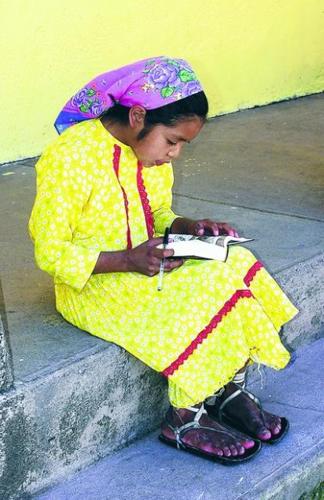
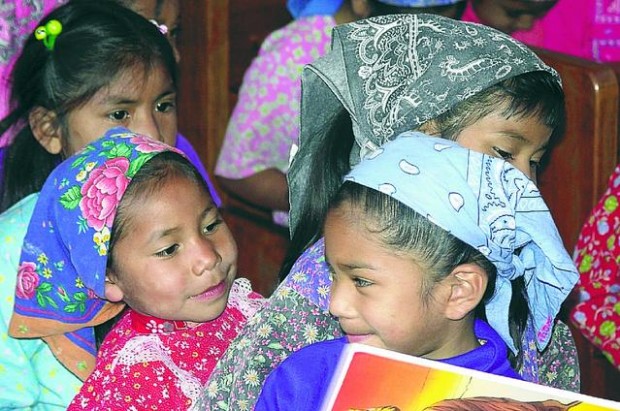
What we found, however, would enchant us and eventually change our lives. Founded in the 1940s, the school is home to 75 Tarahumara girls, ages 4-12, and serves as the elementary school for 185 more day students. The facilities are an education in themselves, as the realization dawns that the entire operation is run by four nuns.
In many cases, the girls live several days' walking distance away and board at the school at no cost to the families other than the occasional gift of squash or a handmade basket. Many arrive suffering from malnutrition, dehydration or intestinal disorders.
None of that was evident as the girls lined up in their pleated skirts and tire-soled huaraches and sang to us in their native Rarámuri. The boarding school charges completely captivated our passengers and, need we say, us.
School administrator Sister Catalina then tells us how a new student, age 5 or 6, cried inconsolably upon her arrival. The older girls gathered around and assured her everything would be OK. "You'll really like living here," they said, "because you get to eat every day!"
To top it off, the school receives no support from the local diocese nor from their order, the Sisters of the Sacred Heart of Jesus and the Poor. In lockstep, we — and our passengers — open our pockets. But, in typical American fashion we can't help but wonder: Isn't there a better way?
That question led us to found the Tewecado Trust, a non-profit corporation that provides funding, mentoring and technical expertise to support the school. Since 2002, the organization has raised funds to install a new water system and redo the roof, create a school library, provide scholarships for the lay teachers to become certified as well as regular donations for the purchase of food, vitamins and medical supplies, clothing and operational expenses.
Sadly, the train company has since been derailed by the flagging economy. But, for those of us who have fallen under the girls' spell, the trust continues to provide a way to stay in touch and make a tangible difference in the lives of the 75 little Tarahumara girls who call the Tewecado home.
It takes a little doing – driving 10 hours and hopping the public train instead of relaxing with a cocktail in a luxury dome car – but the tug of the little girls is strong so we regularly make the trek. We know we're on the right track as they swarm from their dormitory to envelop us with hugs.
Hmmm. Maybe "Shangri-La" isn't so far off after all.
The Tewecado Trust
The Tewecado Trust is a nonprofit, all-volunteer, 501c3 tax-exempt corporation in Tucson. The Trust works in partnership with the Sisters of the Sacred Heart of Jesus and the Poor to support both the Tarahumara boarding students and the elementary school in Cerocahui, Mexico.
The Copper Canyon region is suffering from a severe drop in tourism due to the difficult economy in the U.S., the swine flu scare and media reports of drug violence. Mother Nature has not been kind either: The winter rains and snows never arrived, so spring planting was impossible for many of the area's subsistence farmers – parents of the girls who attend the Tewecado Mission School. Unable to care for their children, they turn to the sisters for help. The school depends solely on the support of caring individuals and organizations to feed, clothe and educate the Tarahumara children in their care.
Tax-deductible donations may be mailed to: The Tewecado Trust, P.O. Box 36078, Tucson, AZ 85740. More information is available at www.tewecado.org