
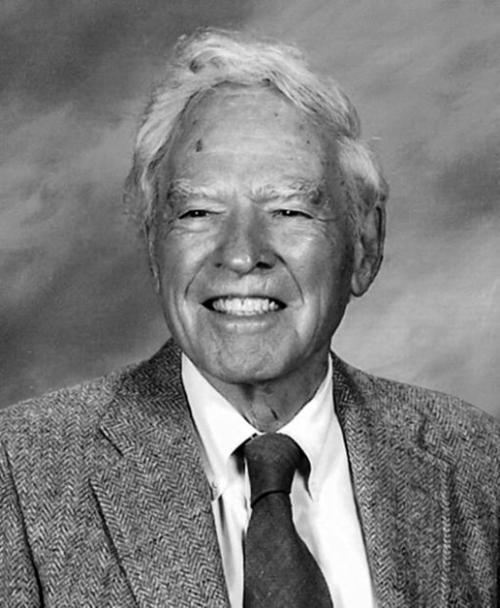
Recently I've read, and heard ad nauseam, about "Depression." Come with me back to Greene County Mississippi in 1935:
"Miz Agnes, mama said, if you'd send her a little piece o' meat to cook our collards with, she'd come over and wash yo' clothes, scrub yo' floors, she'd do anything, Miz Agnes, just anything!"
With this plaintive plea and a wistfully rising voice, 10-year-old Renabell Smith followed her around the backyard until Mother reacted. She looked Mother forcefully in the eye and followed closely her expression. "Just anything, Miz Agnes."
Cappy Jo, 8; Catherine , 6, and Shirley Temple, 4, who had accompanied their sister across Noname branch, barefooted, also followed Mother's expression with their beady-blue eyes. Their pale and freckled faces and rotting teeth bespoke a lack of calcium as well as of hunger. All were young candidates for pellagra, a disease that had already wreaked havoc and killed thousands across the South.
People are also reading…
Tough on bums, but a patsy for those in real want, Mother looked at me: "Jimmye, run to the smokehouse and bring that hog jowl; it's hanging over the coals by those bones toward the back."
Done. She gave it to Rena adding, "Tell your mother to wipe Shirley Temple's snotty nose!"
• • •
The truck with products from the Federal Emergency Relief Administration arrived and Dan Roy Marshall, a classmate, was first in line to pick up the family allotment. There were potatoes, cornmeal, prunes and grapefruit, agricultural supplies that had been declared "surplus" by federal authorities. It was not considered morally correct in the community to accept anything without working in exchange. Thus, many families would arrive unobtrusively, and late in the day when no one may be watching. To sign up for "Relief," or "them commodities" as they were called locally, was akin to being on the dole, or in the Poor House — Dickensian shame! Pride is at its cruelest among the poor.
Dan Roy got a bunch of the grapefruit and joined my brothers and me on a cow hunt in Grandpa Charles Hillman's pasture nearby. "What's this stuff? Ain't oranges! I'm hungry, ain't had nothin' since yesterday," he said, and began biting into the fruit, peeling and all. After the second fruit disappeared down his empty gullet, he threw the rest away. "I'll starve before I eat that damn stuff!" he said. On return, we noted that he took the entire basket of grapefruit home.
"Dovie, I hear that you eat clay, true?" my mother asked a girl who helped with our washing. "Doesn't it grit between your teeth?" "No ma'am, I don't eats it, I just sucks it," Dovie replied. An empty stomach is an inviting repository for many things that human beings can concoct. Clay hunger is another case where diet dictated a natural "remedy" for a lack of substance and minerals. It has now been learned that the ingestion of kaolin, also known as "white dirt," chalk, or white clay, is a type of pica. The eating of nonfood substances was common to hungry people in the 1930s.
• • •
Joe Williams approached my father and said, "Mr. Bud, I've gotta' have work; my wife and kids ain't had nothin to eat since Sunday." What could my father do? He was broke and hadn't worked regularly since the sawmills shut down at Avera, and school doors had closed last spring, leaving him jobless. Father, after a long pause, said, "Joe, come back tomorrow morning and my boys'll help you shell some corn for meal and grits. Agnes'll pull some turnips and cut a piece of meat to cook 'em with."
• • •
"Panic," the old term, had given way to "depression." It became the Great Depression later. Things had deteriorated since the crash of 1929, but had really gotten bad since 1932. Father and Mother were out of work and had moved back to the farm, the Old Thaddeus Green Homestead, dating from the Civil War. A garden would help see us through the summer. Franklin D. Roosevelt would become a demigod for saving the United States from further disaster. His fireside chats filled our minds with hope, even pacified some empty bellies.
When I dwell on these scenes and a thousand others of squalor and despair from my world on a Mississippi subsistence farm in the early 1930s; when I sense the world of a James Agee narrative, and the conscience-chilling-photography of Walker Evans and Dorothea Lange, that old feeling of curdled nausea returns: "My God, how could this have happened?" Nor were the problems all about food. Depression became a state of mind!
Through tearful reflection I almost laugh aloud at the "Talking Heads" around me on MSNBC and Fox News that use the Great Depression as a backdrop-reference for their YouTubing, Craigslisting and blogs. Mostly bosh! The Great Depression, this and that, they babble on! They have little idea what they are talking about. Where is their sentience, their humane judgment? They're talking about My Depression. They are stealing my soul, picking the bones off my psyche! Only we, the remnant, know and can talk about it and really understand.
Depression blotted out most of our thoughts except that of survival. Change and adaptation became a constant factor, beginning with my adventurous years in a one-room schoolhouse and on our few acres of sandy loam. After escaping the drudgery of slopping hogs, plowing behind a mule, and sawing pulpwood, a pursuit of knowledge was predictable from my parentage. Somehow I felt excited about every turn in my escape. In college at 15, I learned about Yankees and Catholics. Never having met a Jew, I learned to love my first roommate, Herman Mehl, from faraway Far Rockaway, N.Y.
I've spent a lifetime fighting fear and bias. What a delight to observe progress on integration, universal suffrage, affirmative action and an increased access to the educational process for the masses. After Obama, my optimism is buttressed by prospects for a fairer society. Yet, all these will never erase the specter of the Depression!