I've learned to walk a million times.
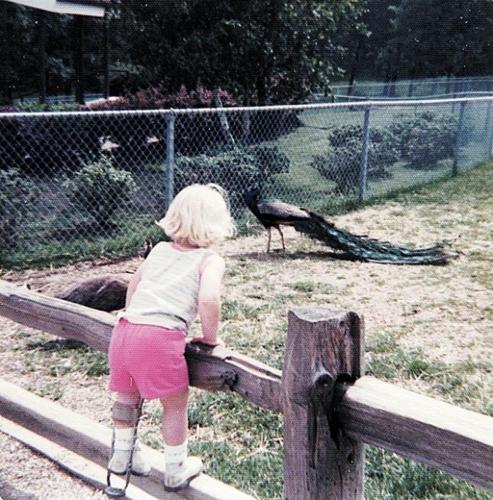
I use a prosthetic leg because my own left leg was amputated at the age of 3, the result of a rare congenital condition. I've always been this way. All kids grow up and need new shoes, new shirts, new pants. I also needed new legs, each taller than the one before.
Again and again I took first steps, adapted to the feel of new knees and feet. I made each new limb my own.
Technology has progressed over the 31 years I've used a prosthesis. My legs have evolved from hard, shiny wood and plastic limbs that had to withstand little- kid roughhousing to more advanced knees and feet covered with sculpted foam and heavy nylons trying to create the illusion of a "real" leg.
I've walked on knees that were nothing more than free-swinging hinges. I've tried pneumatic and hydraulic knee joints. I've tread on dozens of feet.
People are also reading…
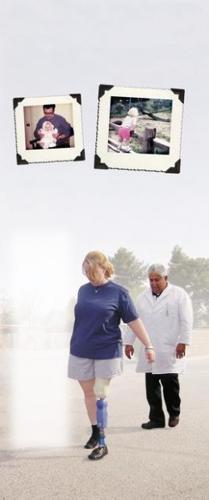
Each new leg was a step forward. But now, I'm taking the biggest step. I'm learning how to be bionic.
Becoming bionic isn't like it is on television — I haven't been implanted with computer chips and wires. I still put my prosthesis on over what's left of my organic leg. But my new bionic knee, called the Rheo knee, now has a mind of its own. It reads how I walk and adjusts to the terrain. The knee braces when I go down hills, walking straight down, foot over foot, instead of scooting down sideways. I don't have to think about making my knee kick out my shin and foot; it does that on its own. I can trust that my foot will be there.
My prosthetist, Eddie Escobar, says that, as far as he knows, I'm the first person in Tucson to have this new bionic knee — this knee that allows me, for the first time ever, to temporarily appear as someone without a disability.
Now I'm struggling with making that idea my own.
I don't think about my legs much day to day. If something isn't fitting right or it hurts, I just sort of tune it out. Everyone has something to deal with and I'm no different.
Except that I am different.
It's when my prosthesis makes me face that fact, when I have to actually think about it, that it makes me mad. I feel vulnerable.
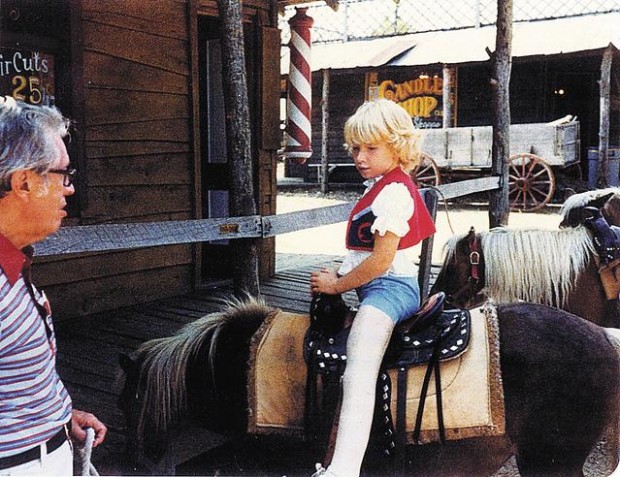
Growing up, I worked very hard at being just like everyone else in all the ways that count as a kid — running, playing Wiffle Ball with the boys in the back yard, jumping off swings. I ignored questions of "What happened to your leg?" or "What's wrong with your leg?"
As a kid, you think that because someone asks you a question, you're supposed to answer. Especially when a grown-up is asking. But I hated that feeling of being a curiosity and singled out not for something I did, but for something I am.
My parents told me I didn't have to tell anyone anything I didn't want to. Let them wonder, they said. So I did. But ignoring the questions wasn't enough. It bugged me.
The realization of my own power came one day in the girls' bathroom of Edgar Road Elementary School, a red brick schoolhouse in a suburb of St. Louis.
"What happened to your leg?"
I made the decision right there, standing next to the paper towel dispenser.
"Nothing."
I turned around and walked out the door. I had my answer. Nothing had happened to my leg, nothing was wrong with my leg. My leg was my leg. And that was all.
Years later, I feel bad for that little girl who just had a question.
I answer kids' questions now, because I realize it's better for a child to know than to wonder. And I answer most adults' questions. But rude grown-ups who ask nosy questions usually find themselves without a satisfactory answer beyond that I use a prosthetic or artificial leg.
I know my power. My leg is my leg.
Differences become invisible to kids when they're no longer interesting. But a kindergartner with a fake leg stays interesting for a while.
I stood at the edge of the blacktop and watched a group of third-grade boys — led by a mean kid named Scott — lurch around the playground with a stilted stiff-legged run-walk. My kindergarten mind didn't understand. Jeff, my best friend who lived in the house behind ours, was lurching and laughing with Scott. The boys saw me and stopped.
We looked at each other. I understood. They were making fun of me. That had never happened before, at least not right in front of me. I turned and walked away. I didn't know what else to do. That was the first time I knew that, no matter what I did, I would always be separate.
Later that day we got a lecture from our gym teacher, a polyester-clad, red-headed rectangle of a woman who did double-duty as the fifth-grade social studies teacher. Miss Willoughby lectured us about how it's not nice to make fun of people who are different. Being different is OK. We're all different. Different is good.
No one wondered who she was talking about.
I burned with anger at Scott for months. Seethed, silently. His mom was a teacher's aide in my kindergarten class. I was furious with her for being a bad mother. One spring afternoon in the middle of story time, Scott's mom started batting her hands at her stiff curl-and-set hairdo and yelling. A bee had gotten stuck in her perfectly sprayed curls. She may not have seen the bigger picture, but I did. It was cosmic payback.
I understand that I'm slow. I've been passed by an old guy walking — while I was riding my bike.
In the Webster Groves school district, sixth-graders got to spend a few days at camp as the reward for making it through the rigors of elementary school.
It was there that a camp counselor — a high school boy trying to make me feel less bummed about being left in the dust on the hike — told me I was cool because I was Jaime Sommers, the bionic woman from TV. Even as a kid, I knew he was reaching out and trying the best way he knew to be nice, but he was just wrong.
Jaime Summers and her friend Steve Austin, from the "Six Million Dollar Man," were bionic. They were better than regular humans and could run super fast and jump super high and do cool stuff. I was slower than everyone else. I could hop on one leg really well — but when do you really need to do that when you're fighting crime?
I nodded and smiled. I tried to believe him, but the facts didn't support his statements. I would never be cool like Jaime or Steve. I just felt singled out because of my prosthesis and tried to change the subject.
But now I am bionic.
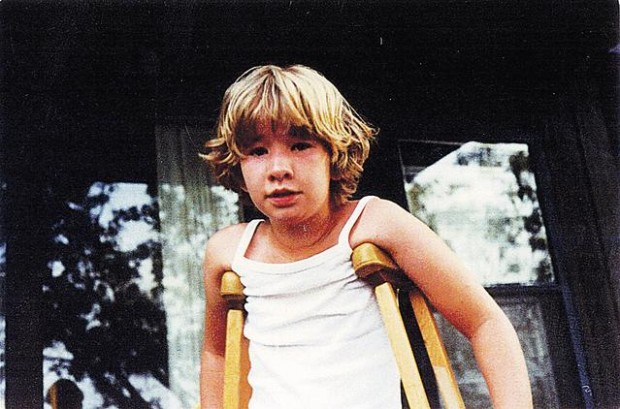
My parents gave me the greatest gift they could have given: nothing. They didn't treat me special, they didn't coddle me, they didn't expect less. The summer before fourth grade, when I was on crutches after surgery, my complaints that the boys in the neighborhood wouldn't let me tag them out with my crutches — I had to actually tag them with my hands like everyone else — fell on parental deaf ears. When my little brother, friends and I turned my crutches into guitars to pretend we were the Beatles, I didn't get to be George, my favorite Beatle, just because they were my crutches.
I didn't know what the word "handicapped" meant for years. I literally thought it was like your favorite baseball cap you always had around. A handy cap.
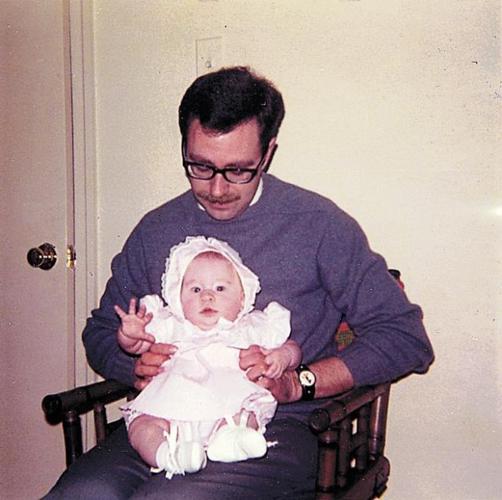
I was born with a condition called PFFD, proximal femoral focal deficiency. In short, my hip and leg didn't grow right so my left leg and right leg didn't match. My left leg would always be way too short. At first, I wore a brace that made up the extra inches so I could get around. But by the time I was 3, my doctors at Shriner's Hospital in St. Louis and my parents decided it was time to amputate part of my leg so I could use a prosthesis.
My parents always told me no one knows why PFFD happens. No one did anything wrong and it's no one's fault. I wasn't bad. These are the things a child can understand. We need to know why, but most of all we need to know we're OK the way we are.
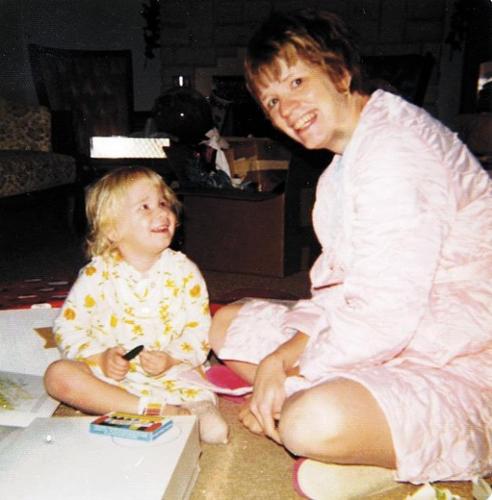
My first memory is cruising around on the scratchy purple carpet of the family room. Mister Rogers was on the Zenith, and my dad's black vinyl lounge chair took up the whole room. I remember my feet. And since both of them were actually mine, I had to be about 2 years old.
My left foot makes an appearance in home movies and baby pictures. It's a guest star. I don't know what happened to my foot after it left me. Maybe it ended up in a big pile with all the other kids' messed up and unwanted parts. Maybe it went on grand adventures without me, like I went on without it.
My aversion to hospitals started young. My mom tells the story of how, shortly after my leg was amputated when I was 3, I had to go back into the hospital for several weeks to learn how to use my first prosthesis. But I refused to cooperate. My parents told the doctors I just needed to go home. Eventually, the doctors gave up and sent me home, unable to use my new little straight-legged prosthesis. But when we pulled up to the house, I opened the car door, hopped out and walked up the sidewalk, up the front steps and right into the house.
Turns out I could walk. On my 3-year-old terms.
Some memories remain frozen where they were formed. Facts can be put into context later and better understood, but the imprint remains. When I was in third grade the doctors realized they didn't take enough off the first time. My prosthesis didn't have a knee and I was still growing. I couldn't sit at the piano anymore, and it was hard to get into a car with my straight leg sticking out.
So I went back to the hospital. The surgeons took out my own left knee and put in a metal plate to fuse my thigh and shin bones into one short leg that would fit a new prosthesis. I was trading my knee for a prosthetic knee. It was a trade I knew wasn't fair but had to be made.
The feeling of being wheeled down the hospital hallways on a stretcher and wearing one of those puffy blue surgery caps taped to your forehead doesn't fade. Nor does the terror of being parked alone in a cold tiled hall lined up with other stretchers carrying other kids, waiting to taxi into the operating room. Hearing cries and screams and shrieks of kids echoing down that hall and wondering just what They — the big They in charge — were doing to those kids. I was next and I couldn't do anything about it.
It was years before I realized that the voices came from the nearby waiting room, which was filled with toys. The shouts were probably from kids playing and being happy.
My parents and I have never really talked about my prosthesis outside of dealing with the practicalities of daily life. I had the benefit of growing up with a prosthesis. There is no "before" and "after."
As a young kid, I would sometimes be upset and cry and try to find a reason why this happened, why to me. I screamed at my mom that it must have been her fault. I made my mom cry. I vowed to never do it again.
I have pondered the big "why me" question for years. The only answer I've come up with so far is that nature is beautifully imperfect and, more to the point, Why not me?
A year ago, I realized that I needed a new prosthesis because my socket — the bucket part where my leg goes in — wasn't fitting right and my hydraulic knee was shot and a few years out of warranty. I kept falling down in the middle of the street, in parking lots, on my driveway, at work, at home. And my leg, which is held on with suction and depends on a close fit, kept falling off just enough to remind me that it wasn't mine anymore.
When a prosthesis fits, it feels like me. A part of me that I take off at night, but still me. And when it doesn't fit, it's just a fake leg. It feels like wearing a left shoe on your right foot.
My prosthetist, Eddie Escobar at Hanger Prosthetics, thought I would be a prime candidate for the newest in prosthetic technology, the Rheo leg, which uses artificial intelligence to mimic the movement of a real knee. Sounded good to me. I was ready to be bionic.
It didn't sound so good to my HMO, which denied me again and again. A word of warning: Replace your artificial parts before they wear out because insurance policies are often written so they don't include replacement of prosthetics because of normal wear and tear, no matter how necessary. Prosthetics are expensive and need to be replaced every few years — components wear out and your body changes over time.
I know that I am extremely fortunate to be able to change to a new insurance company and have access to this kind of care and equipment. I am far more fortunate than many.
However, my new insurance company wasn't so sure it made the right call a few months ago when Hanger Prosthetics was told my benefits would cover the new bionic leg. The insurance company first told me I was responsible for nearly $60,000 for my new metal bones, computerized knee and rubberized skin.
I panicked when I saw that $60,000 figure. Could not breathe. I was absolutely convinced, absolutely terrified the repo man would come for my leg. I'd have to go back to the old way of walking, of being in the world, limping and hurting and lurching. My husband, Tim, had to convince me that we wouldn't let anyone take my leg off of me before I could stop hyperventilating.
After a review, the amount has been reduced to $4,600.
I didn't realize just how much a part of me this new leg had become.
For the first time ever, I have the physical, mechanical ability to walk correctly. It's not as good as a "real" leg, but it's the closest I've ever been. My bionic knee provides resistance like a real knee.
Now the rest of me has to learn how to walk, the right way. I have to undo more than 30 years of physical hardwiring.
I've put myself in physical therapy. I do exercises. I concentrate on taking my first step with my right foot because it aligns me better. I hold my pelvis and abdominal muscles tight while remembering to keep my shoulders loose. In my head I can hear the voice of Mary Beth Barone, my physical therapist at St. Mary's Hospital, reminding me to feel my knees under me as I step, move my shoulders, stay centered and slow down.
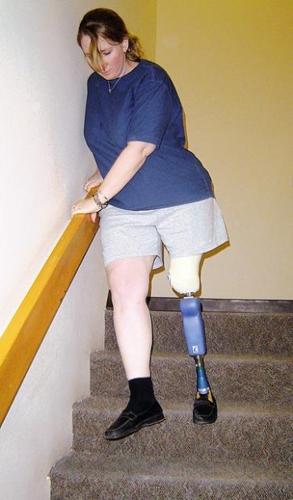
Using a bionic leg has given me abilities that I'm sure few others recognize as monumental. The ability to walk down a flight of steps foot over foot is mesmerizing. But it's a mental challenge because I have to train my brain that it's OK, my prosthetic knee will hold me until my right foot hits the next step.
Now I can walk with my head up. I don't have to watch the ground with every step, because I can trust that my foot will be there. I have to remember to swing my arms when I walk, because I've never done it before.
Bionic technology isn't making me better than everyone else; it's giving me the ability to try to be like everyone else in a hundred little ways.
The first night I brought my new leg home was difficult. I'd learned to use it and walk, but it still felt alien. It wasn't me yet.
Doing laps in the living room, it hit me. I'm a sellout. All that "I'm just me" talk meant nothing. Given an opportunity to be like everyone else, I took it. It sounds ridiculous: an identity crisis because I have a chance to improve my leg. What idiot wouldn't? Why even give it a second thought? Rationally, I understand that.
But it's an emotional Möbius strip. I never thought of myself as disabled, even though by most definitions I am. I've never seen myself as less. But by taking the chance to lessen my impairment, I am by definition admitting that I am not, and haven't been, just fine being me all these years.
Then it happened. My foot — my glorious new foot with the lifelike toes imprinted into the rubber — started to wiggle. But not in the Pinocchio coming-to-life way. Back and forth, like a gimpy shopping cart. The bottom screw was coming loose. I was wearing the cutting edge in prosthetics technology. I was bionic, for crissakes. And my foot was about to fall off.
My husband, Tim, screwed my foot back on, but by the time I got back to Eddie for a fix-up it was barely hanging on. It's hard to keep up the facade of bionic triumph when you're hobbling in one direction and your foot is going in another.
No more pretending. I will never be like everyone else. My leg will always come off at the end of the day, if not sooner. I will always order my knee, foot and skin from a catalog, and I will always need to have a good wrench nearby.
My leg is my leg.
Life's Turning Points
The moments that change everything
● There are 1.8 million people in the United States who have lost limbs, most because of vascular problems. But more soldiers are losing limbs in the Iraq war than in previous wars, creating a new need for prosthetics. Many are fitted with microprocessor knees, like the Rheo.
A person's own leg fits inside the top part of the prosthesis, called the socket.
The valve lets air in or out. Some sockets, like mine, are held on by suction.
The Rheo knee contains a microprocessor that adapts 1,000 times per second. The knee uses a magnetic field to provide resistance.
The prosthetist uses a special PDA to program the bionic knee.
The knee runs on a lithium battery. The charge lasts up to 48 hours and it takes two to four hours to charge. It connects in the back.
The foot is attached to the knee with a pylon. Each knee-and-foot combination has a different feel.
Prosthetics are often covered with sculpted foam and nylon or rubberized "skin," called a cosmesis. My leg now has a cover on it. Wearing a cosmesis is usually a personal preference.
— Sarah Garrecht Gassen