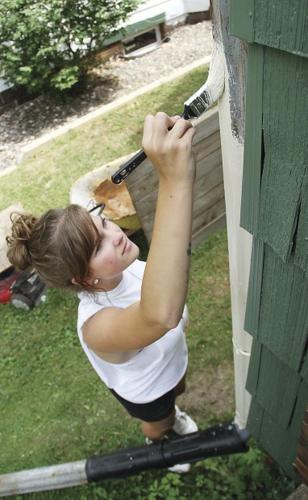
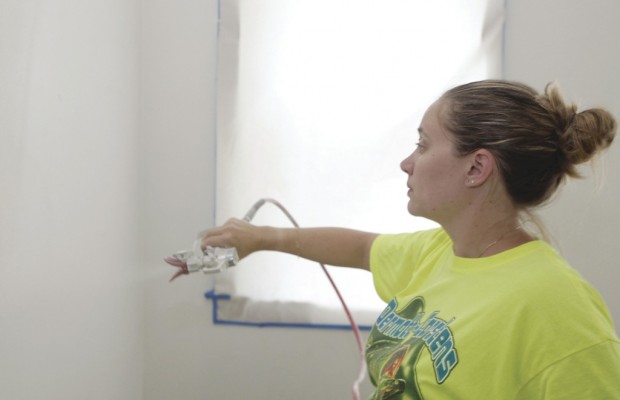
Like most professional painters, Tim Bosveld knows a dozen or so easy- to-learn tricks that an amateur can use to make the difference between a regrettable mess and what could pass for a pro job. But, despite years spent as a professional painter, Bosveld insists the most valuable tip he has to pass on is about how to pick the right color.
"Buy a small sample of the paint (under consideration) and apply it in the room and live with it for a while, really live with it. See how it works in the room," says Bosveld, marketing vice president with Dunn-Edwards. He says there's no way to predict the full impact of a paint color change just looking at color swatches in the store, or even holding them up to the wall in question.
"There are so many things that influence how a color works," says Bosveld. "Lighting, whether it's incandescent, fluorescent, natural or, now, even LED. Then there's all the surrounding colors, furniture, window coverings, flooring. The only way you're going to understand how all those factors" interact is to live with them a bit before painting. This is made easier by the paint dealer trend toward selling small sample-sized containers of paint. In Dunn-Edwards' case, you can buy a few ounces of paint, enough to paint a 2- to 4-square-foot area.
People are also reading…
No. 2 on Bosveld's list would be to take your time on a thorough prep job: first repair any holes or dents, then slightly rough up the surface with light grade sandpaper (particularly if you're covering a slick semi-gloss or gloss paint, as in bathrooms and kitchens), clean the surface and, if necessary, prime the entire area to ensure an even finish, Bosveld says.
Simply put, Bosveld says, "The quality of the paint job is a product of how well you prepare the surface." And although amateurs too often resist the primer coat, Bosveld says priming is nearly always part of the prep process. He allows that a coat of primer may not be necessary if the wall or ceiling is unblemished, with no patches or rough spots, and already painted a color close to that of the new paint. But, that's not often the case.
"Paint is a system," says Bosveld, "and it's primer and the paint coat." It is particularly important if there are any imperfections such as patches. "Primer will get in there and seal patches."
Tucson painting contractor Brandon Mallis didn't hesitate a second when asked about the biggest mistake do-it-yourselfers make. "Cutting corners on preparation - not priming or sanding," Mallis, owner of Affordable Quality Painting, says.
"If it's a surface - drywall, wood, metal, any kind of bare surface - it has to be primed," he says.
After thorough prep work, Mallis' tips for DIYers start with a strong recommendation for buying quality brushes and roller covers that can be cleaned and reused, rather than buying cheap ones and throwing them out after one use. "Spend $15. It only takes a couple minutes to clean and you can use it 15 or 20 times." Besides, he says, cheap roller covers produce an inconsistent surface and often shed fuzz in the paint.
Buy the best paint available, or the grade just below the top of the line. "It's easier to apply and it covers better," he says.
And, yes, a good paint job does nearly always requires two coats, "unless you are using the same color, the same sheen and you just painted it and are just touching up."
Before you pop the top of a paint can, cover the floor with a tarp, remove electrical-outlet covers and tape the edges between the areas you will be painting a different color or sheen: the edge where the ceiling meets the walls, doorways and window frame, fixtures that can't be removed for the painting, and finally the floor, or baseboard. A new 3M Scotch Safe-Release Painters Masking Tape, won't leave adhesive behind when it's removed.
From there, the principal is, start from the top - the ceiling, if you're repainting the ceiling - and work your way down. Paint runs downhill, and so does the eye. Safe-release tapes, by the way, usually can stay on longer without tearing off an adjoining layer of fresh paint the way traditional masking tape did if it was left in place too long. That's handy if you are applying a primer coat or have to do a second coat.
The ceiling, because it is a relatively large and uninterrupted surface, must be consistent. That requires a surface that is properly prepped.
"Ceiling paints are normally dead flat, the flattest finish possible," Bosveld says. "You want to use the flattest finish possible to hide imperfections. And, because there's normally no contact with the ceiling, you don't need a lot of durability in that finish."
Next, most experts recommend "cutting in" the corners and the edges around the ceiling, doors, windows and the baseboard using a slanted 2- or 2 1/2-inch brush. But first, wet the brush in water, which aids in letting the brush pick up paint from the container and in releasing it on the wall. Apply just enough pressure to bend the bristles, but not too much, or it will leave deep brush marks.
After painting the edges, the pros say, use a roller (you'll need an extension handle if you have 8-foot ceilings) to work in an "N" or "W" pattern, working back and forth to fill in the areas not covered and those you've already covered once. Don't move too quickly or you'll spray paint all over. Bosveld recommends taking the roller as close as possible to the edges. The idea is to cover up as much as possible of the "cut in" work you did with the brush in order to blend the slightly different textures produced by the brush and the roller.
Don't work too large an area or you run the risk of creating a "picture frame," the effect of having the "cut in" brush work dry before you can blend it with a roller.
Finally, Bosveld says, remember that "a color isn't its actual color until it dries," so reserve judgment until the paint has been allowed a reasonable amount of time to dry.
Tips
• If you're going to use more than one gallon, mix them together in a larger bucket to blend any differences in shade.
• Preparation is the key to a good paint job. It makes the job easier.
• Wet brush in water (it makes it easier to pick up and release paint).
• Put just enough paint in the bucket to cover bristles.
• Dip the roller into the tray, rolling back and forth to cover evenly.
• When using a brush, choke up on the handle, holding it near the bristle end of the handle.
• Tap the brush when dipping it into the paint to release excess, don't wipe it.
• Start by "cutting in" around corners and ceilings, and then windows and doors, painting a 2-inch strip around those edges.
• Paint with just enough pressure to bend the bristles, but not too hard so as to leave brush marks.
• When using a roller, cover a 2-foot square area in an "N" pattern, rolling up first, to minimize dripping, then working back to previously painted area to make sure you apply paint evenly.
• Roll over as much of the brushed "cut-in" areas as possible.
• Don't do too much at once. If the brushed paint dries before you roll that area, the texture of the rolled and brushed edges won't match. This is called "picture framing."
What you'll need
• Drop cloth.
• A 2 1/2-inch angular trim brush for "cutting in" ceilings, corners, doors, windows and baseboards.
• A roller, extension handle, cover and tray. Use a half-inch cover or more for lower gloss, or shorter for higher gloss
• A step ladder and/or an extension pole, for rooms with high ceilings.
• A trim bucket, for painting with a brush.
• Stir sticks.
• Two-gallon buckets, so you can blend batches of paint to minimize tonal differences.
• Wiping cloths for cleanup.
• Quality paint. In the long run, a high-quality paint adheres better, giving a more consistent finish and possibly eliminating the need for a second coat.
Learn the DIY way
• There are dozens of DIY how-to-paint videos available for free on YouTube.
• Dunn-Edwards' website offers a 10-video course for DIYers who are about to paint: www.dunnedwards.com under the "Homeowners" link.
Dan Sorenson is a Tucson-based freelance writer. Contact him at d. sorenson@cox.net