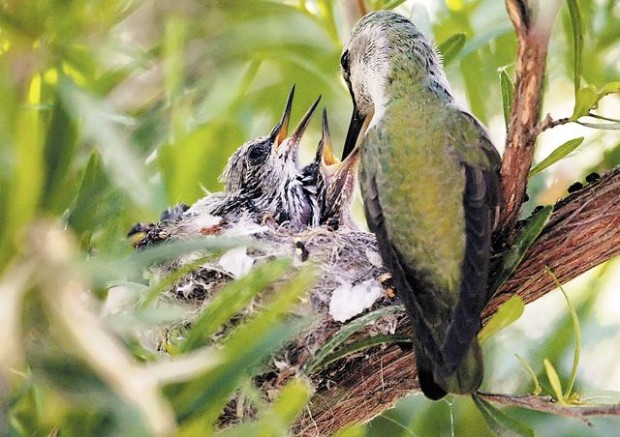
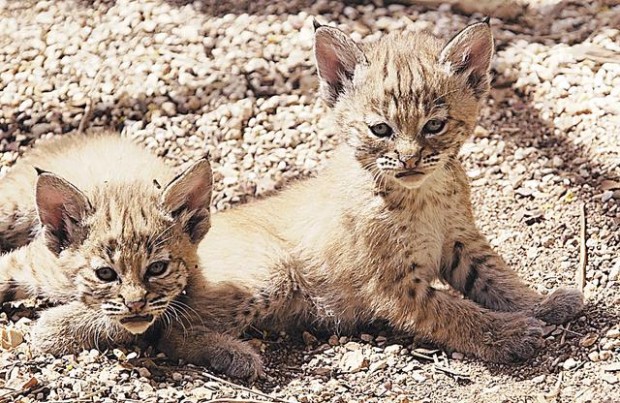
Welcome to the world baby bobcats. Hello there young hummingbirds.
Make yourselves at home little lizards.
These and many other newly born or hatched critters — from mammals to birds and reptiles — arrive in our desert region in the not-too-cold, not-too-hot, often-just-right days of spring.
Today, as a sort of homage to this season of rebirth and renewal, we offer a look at several species that bring forth young in the spring.
"With the warming of the weather and with more things springing up to eat, spring is a natural time for animals to give birth," says Elissa Ostergaard, urban wildlife specialist with the Arizona Game and Fish Department.
"A lot of birds breed in the spring," Ostergaard says, "and it's also a good time for many of the small and big mammals."
People are also reading…
Two things worthy of note:
The season of spring on the calendar extends from March 20 to June 20. But here in the Sonoran Desert, many would agree that the period from perhaps mid- or late-February to early or mid-May is the time when weather and vegetation growth conjures the idea of spring.
Many of the animal species that commonly produce young in the spring also can have babies in other seasons. This can be instead of the spring births — or in addition to them.
Information about the wildlife on these pages was provided by Ostergaard and Craig Ivanyi, director of living collections at the Arizona-Sonora Desert Museum — with additional data from Internet sites and reference books.
Now, let's say hello to some Harris's hawk hatchlings, a litter of coyote pups and some of the other "critters of spring."
Costa's hummingbirds
These all-but-weightless little birds — with adults tipping the tiny scales at something like 0.1 of an ounce — make up for their lack of size with delicate beauty and whirlwind behavior.
"An egg looks almost like a yogurt-covered raisin. They're tiny little things," says Ivanyi of the Desert Museum, which is home to some newly hatched Costa's hummingbirds this month. "They usually have a clutch of two eggs, and incubation is somewhere around two to three weeks. The young will fledge (develop the ability to fly) in 20 to 23 days."
As they grow, the young hummers will consume nectar and insects — and will be gobbling down about 70 percent of their body weight in food every day by the time they are adults, Ivanyi says.
Bobcats
More than a few people have mistaken newborn bobcats for house cat kittens. They're small and kind of cuddly looking — but they're definitely wild animals.
"Bobcats will have one or two or more kittens — usually born in March or April," says Ostergaard of the Game and Fish Department. "The kittens' eyes are closed when they're first born. They're mammals, so they'll breast-feed for a while."
Later, the mother bobcat will bring prey — including birds, rabbits, pack rats and mice — for the young to eat.
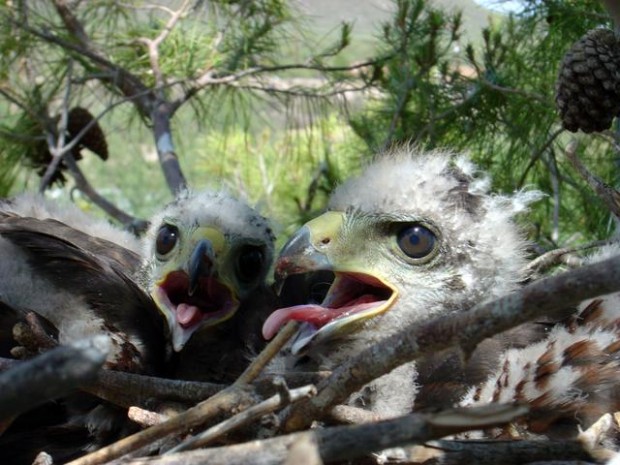
Harris's hawks
Often nesting in large trees at places such as the Sweetwater Wetlands in Tucson, Harris's hawks typically have two to four young. They might hatch in March or April, or later in the spring.
"Harris's hawks usually hunt cottontail rabbits, pack rats or birds to feed their young," says Ostergaard. "The young begin to fly four to six weeks after being hatched."
She describes the species as a "very social raptor."
"Their young will usually stay with them through the following year — hunting communally for rabbits and rodents," Ostergaard says.
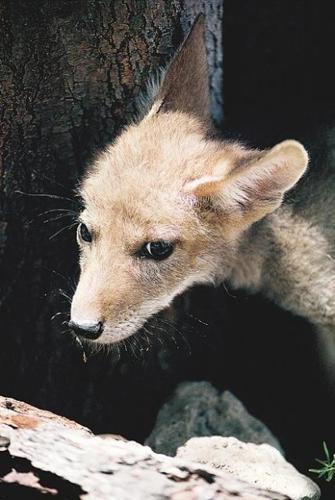
Coyotes
The wild dogs of the desert can give birth at any time of the year but often produce offspring in the months between February and April, Ostergaard says.
"They usually use a den," she says. "They'll dig a big hole in a soft patch of ground, or they might use a culvert in town as a den."
She says coyotes can have up to a dozen pups in a litter — sometimes even producing litters in urban areas.
Coyotes living near Reid Park one year recently, for example, had a litter of at least nine young.
"With the Reid Park pack, the mother and several males helped raise the pups," says Ostergaard, emphasizing that people should not attempt to interact with wildlife.
"Keep wildlife wild," she says. "We even encourage people to be rude. Yell, or throw some rocks. The more coyotes are wary of people, the less problem we have with them being aggressive toward people."
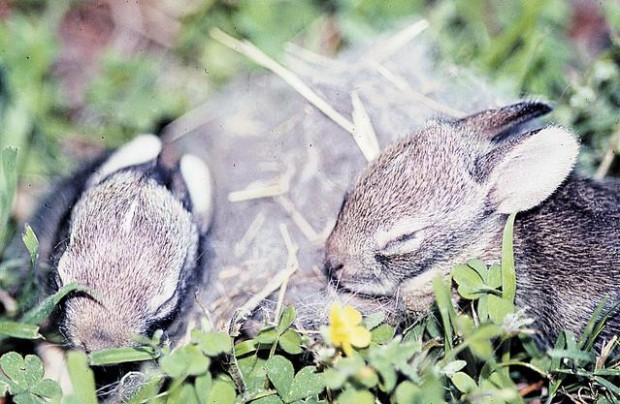
Desert cottontail rabbits
This species breeds, well, like rabbits. During a breeding season extending generally from January through September, cottontails can have between four and eight litters a year, with an average of two to four young per litter, says Ostergaard.
"This means that one pair could produce up to 32 young in one year," she notes.
Cottontails are born with very fine hair in nests usually built in an oval-shaped depression in the ground. They open their eyes after four or five days and are able to leave the nest about 14 to 16 days after birth.
Did you know
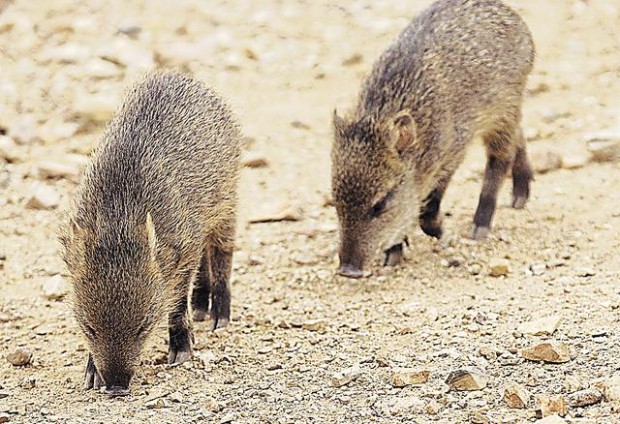
Among the animals that can give birth throughout the year are javelinas. They usually produce one or two young at a time after a five-month gestation period.
Newborn javelinas weigh about 1 pound and are precocious little critters — quickly gaining mobility and following their mothers around shortly after birth.