


OK. Let's be blunt.
The heat that bears down on us here in the Sonoran Desert is not a delicate thing.
It bellows. It blasts. It burns.
And it will have its way with us.
As summer blooms from sea to shining sea, we here in the Old Pueblo see less a bouquet of blessings than yards full of panting plants even with walloping water bills.
While for many across the country summer speaks softly of afternoon picnics and lazing in the shade, summer here is a tyrant that has us holing up in ultra-cooled movie theaters and planning trips to the beach or the mountains.
But, somehow, we cope.
Summer's onset here means making many adjustments. A most critical one is the way we eat in the heat.
People are also reading…
Don't worry. This won't be painful. Our instincts, an abundance of delicious choices and the examples of those who have survived — yeah, thrived — in warmer climes will make our mission very possible.
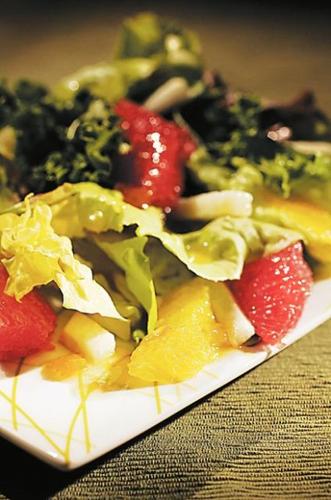
Many of us instinctively back off from the heavy meals so comforting on cool days and instead reach for lighter summer salads and fresh fruit, especially the watermelons and peaches and plums and berries seducing us in the produce section.
And that, according to Dr. Brian Cabin, a Tucson medical and homeopathic physician, is an instinctive move we need to respect.
"Our bodies tell us that it's not the time for eating heavy meals, dense with meats and cheeses and fats. And seasonal foods tell us what we should be eating — fruits and vegetables accompanied by lighter amounts of grains and proteins than we quite naturally gravitate to in cooler weather."
The No. 1 nutritional requirement for the summer months, especially here in our desert home, is — you guessed it — hydration.
That's the thing about eating fruits and veggies — they consist mostly of vitamin- and mineral-rich water.
And you thought your yen for the uncooked was because you couldn't bear firing up the kitchen stove.
Certainly, opening a 350-degree oven on a day when it's 109 degrees in the shade feels like you have discovered a new gateway into hell.
But it's what we usually prepare in those ovens that we absolutely don't need sitting in our systems in the summer sizzle.
"Our digestive tract is a furnace," says Cabin. "Eating fuels that furnace, and if we eat foods that are harder to digest — meats and fats — that furnace has to work harder and it actually produces more heat. And blood is tied up in the digestive process when we would be better served having it free to circulate in our peripheral organs, like the skin, helping to keep us cool."
There is nothing as straightforward and effective — not to mention available and cheap — in keeping our cool as good ol' water. Especially in our summer's dry Dry DRY heat do we need to be on our toes about keeping the liquid love flowing.
Water's boring, you say? Liven things up a bit — put a slice of citrus in your glass. Or dilute fruit juice so that you get a flirt with flavor but not a caloric overdose. Try a little fruit juice with some seltzer water or club soda for a fun fizz.
And although that ice-cold beer and frozen margarita may look like the epitome of refreshment, watch out. Alcohol is an enemy of hydration. So is caffeine, so limit those coffee drinks and carbonated sodas.
Scottie Misner, a nutrition specialist at the University of Arizona, says alcohol and caffeine engage water regulators in our kidneys that make us shed liquids more quickly than normal. And things like Gatorade have been "oversold," she says. Even if you or your kids are being really active in the heat, frequently consuming good ol' water and a handful of a salty snack will do the trick, says Misner.
For thousands of years those who have found themselves living where the sun's rays feel like tongues of fire have used a little vegetable in the nightshade family that puts some fire on the tongue to help them cope with the heat. Think India, Thailand, Indonesia, Korea, Jamaica — Mexico. Yep. We're talking chiles. "Hot and spicy" almost defines some of the warmer world's cuisine, and chiles, migrating the world over from their native South America, make it happen.
There's a good reason.
"They make us sweat," says Cabin, "and as the sweat evaporates, we are cooled."
Simple as that.
They also make us release endorphins, those wonderful little opioids that give us a sense of well-being. After a few months of being baked, broiled and braised, that's got to be a good thing.
And we're in luck. We've got plenty of hot and spicy chile-based choices to indulge in scattered throughout our dusty desert town — from salsas to ceviche to Szechuan to vindaloos to sambals to kimchee to pad Thai. It's all good.
So, besides the fresh corn and cool cucumbers and plump summer squashes and tomatoes that may actually taste like tomatoes, there are smoothies and paletas and raspadas and sherbets and sorbets and frozen fruit chunks (especially frozen grapes — yeah, that's right) and watermelon slushes and fruit soups and pasta salads and even some ice cream now and then — hey, we've got this thing, well, licked.
So eat (light). Drink (water, teas, fruit juices and, it bears repeating, water). And be merry (with a little help from those chiles.)
And remember: It's a wry heat.
● Do follow your instinctive urge to eat light. Try eating four to six small meals a day.
● Do take advantage of the array of fresh seasonal fruits and vegetables available.
● Do keep hydrated. Water, unsweetened fruit juices, teas, seltzers and interesting variations and combinations of these should flow freely.
● Do try to include some sweat-producing dishes made with chiles. Delicious and cooling.
● Don't eat fat-laden meats, cheeses, sauces and desserts. They make our digestive systems work harder, and we probably don't need them anyway.
● Don't overdo the alcohol or caffeine — they are dehydrating.
● Don't worry about your relationship with your stove. It will be just fine with a little neglect, and you can enjoy getting to know each other all over again when the weather cools off.