

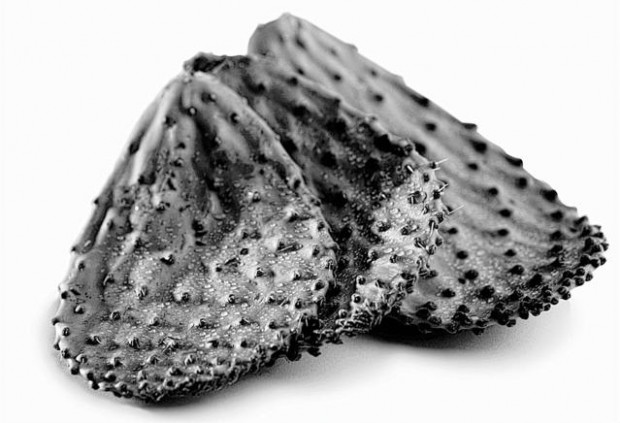
Called nopales in Spanish, edible cactus paddles come from varieties of prickly pear cacti — which also bear the orb-shaped, rose-colored fruit, famed chef Rick Bayless notes in "Rick Bayless's Mexican Kitchen."
Thin paddles from plants cultivated just for that purpose are most commonly eaten, Bayless writes. The plants are common throughout Mexico, and the paddles are a popular part of the diet. They have a delicate, tart flavor.
First eaten by the Aztecs, "the cactus was taken back to Spain by returning conquistadors," according to "The Food Encyclopedia," by Jacques L. Rolland and Carol Sherman. Today it also grows throughout the Southwest, Central America and the Mediterranean.
Buying tips
Look for bright-green, medium-size paddles with no wrinkling; they should be somewhat rigid, Bayless advises. The paddles can be found fresh in Mexican markets and some specialty grocers, among other sources.
People are also reading…
Storing hints
Keep them loosely wrapped in the refrigerator for up to a week.
Preparation technique
Cleaning the paddles requires care; although some cultivars are spineless, they still can have small needles. Bayless suggests this method, which we found easy to follow, producing ouch-free results: Trim off the edges of a paddle, including the part where it was attached to the plant. Holding a sharp knife nearly parallel to the paddle, slice off the spines.
Cooking suggestions
Diced into small pieces or narrow strips, called nopalitos, cactus is eaten in scrambled eggs, omelets, salads, salsas and soups. It is often pickled as escabeche. It is used raw or cooked, often boiled or blanched. Overcooking can lead to an okralike sliminess; there are ways to get around that problem. Bayless grills the paddles slowly, as street vendors do in Mexico. Or he roasts them: Toss nopalitos with olive oil; roast at 375 degrees on a baking sheet for about 20 minutes.