

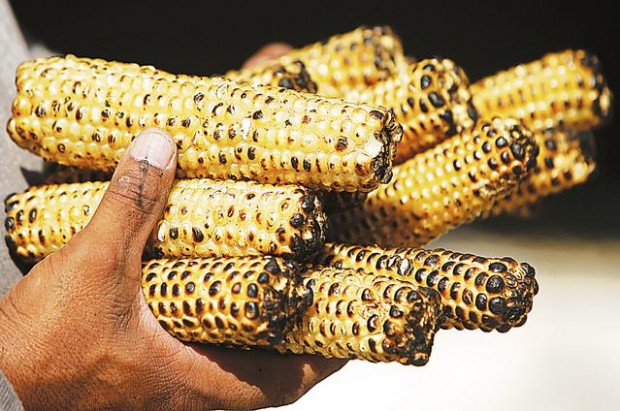
Carolyn "Shorty" Reyes grasps a bag of whole roasted corn kernels in one hand, and a bag of cracked corn in the other.
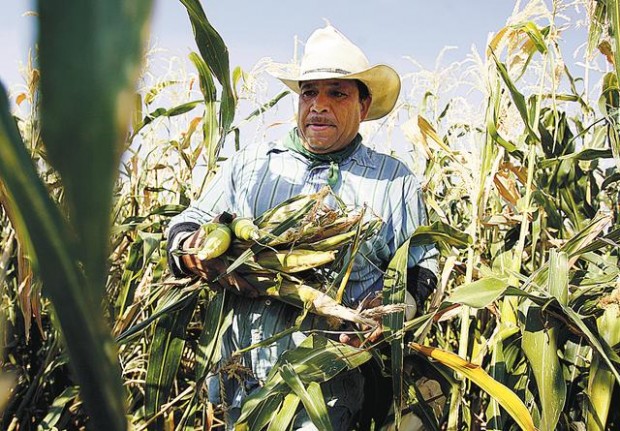
"This corn is gold," the Tohono O'odham youth educator said of the native 60-day corn. Grown by the San Xavier Co-op Farm, the corn will be hand-picked in staggered stages every four to six weeks until October.
The corn, like the many other native crops grown on the 950-acre farm, practically disappeared over the last decades due to water shortage. The tribe believed that mining operations and city/state water allocations depleted the wells and sued. A 30-year legal battle resulted in the Southern Arizona Indian Water Rights Settlement signed earlier this year by the governor, the mayor of Tucson and the tribe.
The 60-day corn is "gold" for many reasons. As educator and administrator Renee RedDog explains, "It is part of the renewal of traditional foods and diet that are more nutritious and healthful. Diabetes is out of control, but native foods allow better blood-sugar metabolism."
People are also reading…
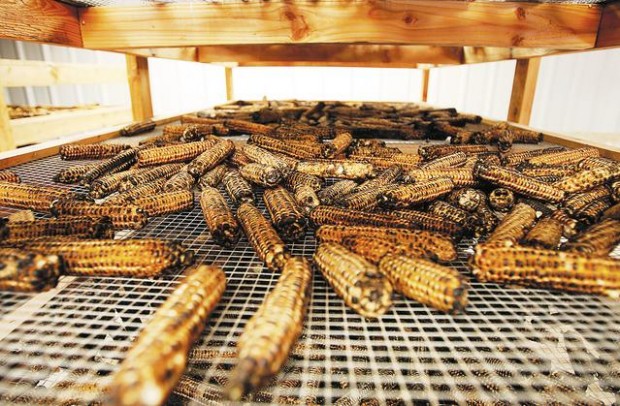
The corn is gold because it makes ga'wisa (guys-za), "an old-time favorite food," say RedDog and Reyes. The cracked corn sold for this dish makes a porridge prepared like rice. (Take two parts water to one part corn, add some chile or chile paste, cook to consistency desired, eat.) Fifteen acres of corn grown on the farm and roasted in hand-turned cylinders can't meet demand for making ga'wisa.
The rebirth of ga'wisa began years ago with the heirloom seeds saved by board member Clifford Pablo's grandfather and renewed tribal incentives to grow traditional crops. The corn and other native foods such as tepary beans, chiles, melon, wheat for Indian popovers and other foods, mesquite flour, squash, peas and devil's claw for weaving baskets, are farmed by the co-op without use of pesticides, herbicides or fertilizers.
Bill Worthy, co-op farm manager, explained the crops are part of a holistic process that begins with the blessings and prayers led by medicine men for every aspect and stage of farm work: rehabilitation of the land, installation of pipelines to carry CAP water, flood-control canals, seed plantings and the various stages of crop growth to harvest time. The 60-day corn is especially important in October when tribal feasts such as those connected to St. Francis draw the native community and crowds to San Xavier.
All of this has strengthened the Tohono O'Odham culture and community, perhaps the most golden aspect of all. The farm is a "re-visioning of the elders' time when the Santa Cruz River was flowing. It allows us to educate our people and youth about health, new technologies, sustainable farming methods and environmental values," said RedDog. "We want to grow our own entomologist through college, to come back here, work and teach," added Worthy.
Sales of the corn and other crops are almost literally gold for the San Xavier farm since it receives no monies from the Tohono O'Odham Nation. Reyes, whose long black silky braid hangs three-quarters the length of her body, travels to American Indian rodeos and farmers markets throughout the reservation and beyond to sell the bounty. You can also head out to the farm and buy some yourself.
Street Vendor's Roasted Corn and Lime Relish
Yields 3 cups
u 1 small onion, diced
u 2 1/2 cups fresh roasted corn kernels
u 1/4 cup mayonnaise
u 1/2 cup coarsely ground Parmigiano-Reggiano
u 3 ounces fresh lime juice
u Salt and pepper to taste
Thoroughly combine all ingredients.
Recipes from Janos Wilder, Janos Restaurant
"I love using native corn in my cooking," said Janos Wilder, chef/restaurant owner at Janos and a big advocate for native foods.
"The flavors are wonderful, and they imbue our dishes with a culinary sense of place. There's nothing like working with the authentic products of the region."
Like any corn, the art of cooking it lies in the many variables at hand, says Wilder: timing the recipe you're making, volume of water to corn, spiking up the flavor, mixing with herbs and other summer vegetables.
There is no limit to the range of "great, alive, punchy, multidimensional tastes of corn," Janos says.
He suggests seasoning a corn relish with chipotle, canned or in powder form. Or roast some ears on the grill like this: After soaking in water, peel the husks down, remove the silk, wrap back up and grill 15-20 minutes. Prepare a flavored butter by folding and mashing in fresh chopped basil and garlic. Slather butter on the roasted cobs, and you've got a mouthful of sensual, delectable, rich summer flavors.
Another Janos recommendation: Make a smoker out of your grill by adding soaked corn cobs to the burning charcoal. You can grill/smoke the corn you've cut off the cobs on top (in a grill pan or aluminum foil envelope) or roast and smoke some more ears alongside any other foods you want to cook. And remember, the key to any recipe or cooking is the taste test. Test regularly.