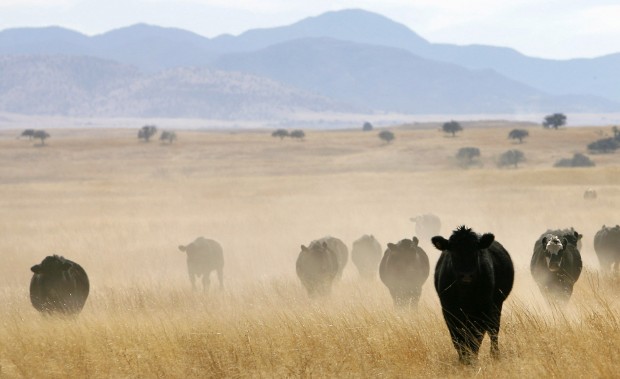
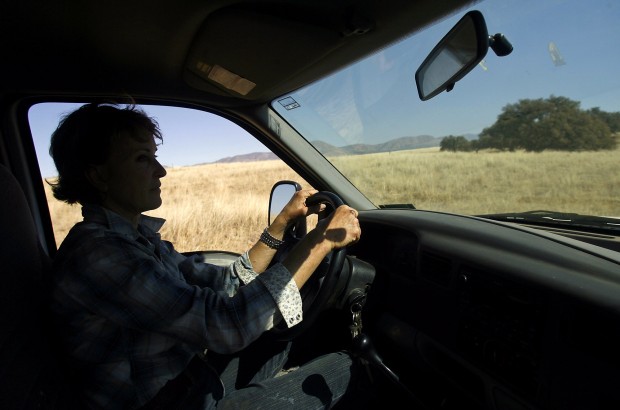
SAN RAFAEL VALLEY - While bumping along a rutted dirt road in a Ford F350 pickup on a windy February afternoon, it was easy to imagine a simpler, more pristine life while passing miles of knee- and thigh-high grasses yellowed from winter.
"Sometimes I turn around and look at my horse and I think, 'This could be 1880,' " said Sidney Spencer, a third-generation owner of the Lazy J2 Ranch.
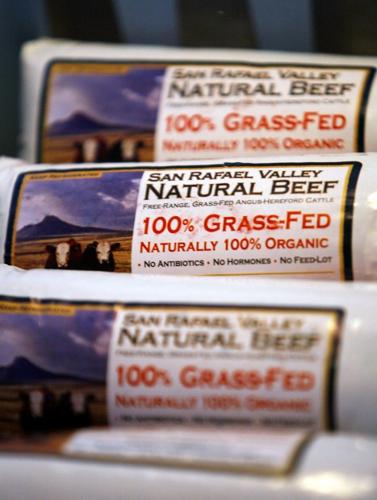
A simpler, more pristine meat is being produced at some Southern Arizona cattle ranches. These ranchers tout the health benefits of their meat and the humane conditions for the animals, saying that both make free-range, grass-fed cattle superior. The cows also are antibiotic and hormone free.
"There's kind of a renaissance of how people eat, beef in particular," said Paul Schwennesen, one of the owners of Double Check Ranch in Winkelman. "It's got a bigger, bolder flavor, a very beefy flavor.
People are also reading…
"Stuff that's been raised on corn - and I don't denigrate that - tends to have the flavor washed out of it."
Arizona's cattle inventory is about 870,000 head, according to the National Agricultural Statistics Service, which includes dairy and beef cattle. Out of that number, about 180,000 are beef cows and 275,000 are steer. There's no estimate of how many are grass-fed.
Grass-fed meat is naturally organic, but ranchers tend to avoid jumping through hoops to make their meat certified organic. Many work with the Arizona Department of Agriculture instead of the USDA.
Don Butler, director of the Arizona Department of Agriculture, has enjoyed his share of grass-fed beef and says it's a growing trend.
"They're all over, but it will never take over the market," he said. "It's a niche market. They're not going to wipe out the cattle that are coming out of a feed yard."
3 generations of ranching
After Spencer's grandparents sold the ranch in 1953, it was broken into about 15 parcels.
In 1986, Spencer had been working on Wall Street and planned to buy the ranch, but the market tanked a year later and she "lost everything."
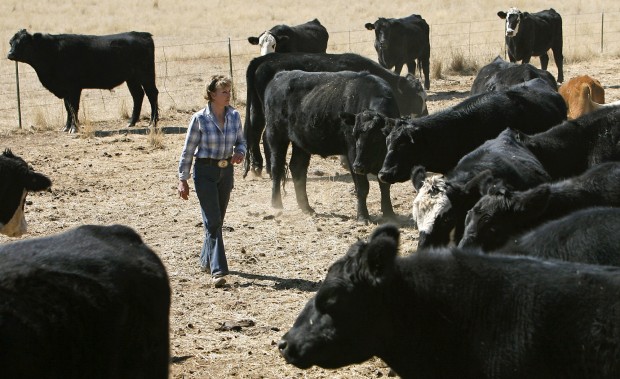
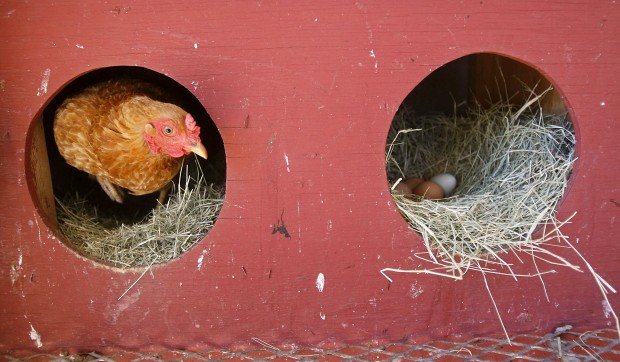
It took her 10 years to get most of it back. Now she's the proud owner of about 150 head of cattle, 30 chickens, five horses and two cats.
Over the years, she bought her grandparents' ranch in bits and pieces. A hundred acres here. Eighty acres there.
She does all the ranch work for the now 6,000-acre Lazy J2 Ranch (www.srvbeef.com), about 15 miles southeast of Patagonia.
It's one of about seven cattle ranches in the area that make up part of the 100,000 acres of deeded land in the San Rafael Valley.
She rides miles of fence regularly, looking for breaks and where smugglers have cut the barbed wire.
She buys 4- or 5-month-old calves from her neighbor and treats them when needed. In her 17 years at the ranch, she's called a veterinarian twice.
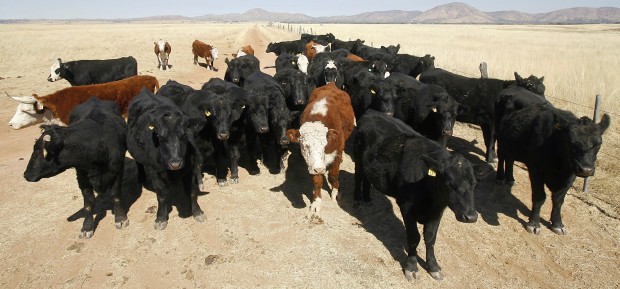
If the cow ever requires antibiotics for illness, the yellow tag in his ear is replaced by a red one and he is eaten by Spencer's family.
Lazy J2 beef is sold at local farmers' markets and at New Health Life Center. Per pound prices range from $7 short ribs to $27 filet mignon. Many cuts are priced $8 to $10.
All in a day's work
The truck bounced along the roads of Lazy J2, passing stately oaks and barbed wire fences.
The cattle are rotated through different pastures every month or two. It's best to allow 25 to 30 acres per animal to feed them year-round, Spencer said.
"Taking care of the grass is the most important thing in ranching," she said. "You don't do this unless you love the land."
After checking the status of a couple of 20,000-gallon water tanks and driving about five miles, she spotted about 150 black and red clustered bodies of Angus and Hereford steers.
The tanks seem large, but one steer will drink 30 gallons of water a day when it's hot.
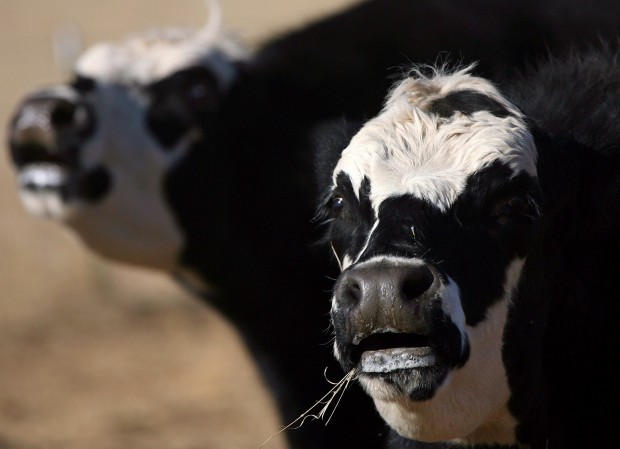
When the truck pulled up, the cows strode over, braying and snorting before stopping just short of the truck. Their big gentle faces and wary eyes observed the truck and its occupants.
"I love them, so it's really tough," said Spencer, who sends two at a time every month to slaughter in Willcox. "They're characters."
Only No. 13, Lucky, will be spared. The wily steer managed to elude slaughter twice, which gave him a pass.
"People think they're dumb, but they're not at all," Spencer said of the steers, which yield 670 pounds of meat for each 1,200-pound steer.
She said 75 percent of her business is from Tucson. Much is from farmers' markets, but the University of Arizona introduced bull burgers at its Cellar Bistro two years ago.
"You can truly taste a richer, more flavorful burger from what you get in a typical restaurant, particularly what you find in fast food chains," said Jon Levengood, retail dining manager for UA Dining Services. "Our grass-fed burger is one of the most popular menu items we have."
Local chefs serve grass-fed
Executive chef Ryan Clark of Lodge on the Desert goes through about 50 pounds of Double Check Ranch beef a week. He sells the half-pound burger with local tomatoes, house-made pickles and fries for $12.
"If it's cooked properly, it's got a ton of flavor," said Clark, who has featured grass-fed beef on his menu since he started at the Lodge in November 2010. "It's very, very lean, so it's got to be cooked rare or mid-rare.
"Guests like it - they say it has a unique flavor," he continued. "It takes like how beef should taste."
Clark estimated he pays three times the amount he would pay for grain-fed ground beef, but he said it's worth the extra money.
Janos Wilder, owner of Janos Restaurant, J Bar and Downtown Kitchen + Cocktails, occasionally serves grass-fed beef.
"It's a different flavor that people aren't always used to," Wilder said. "It's a leaner cut. Some steaks, like ribeyes, you want that marbling. The higher the marbling, the higher the grade.
"That's good and bad," he continued. "You can have all your meat without all the fat, but the fat is what creates the flavor."
The science of meat
The UA Meat Science Laboratory does custom harvesting and processing, mostly with grain-fed cattle, for individuals and businesses.
Ten employees slaughter, butcher, wrap and freeze or vacuum-pack the meat that people bring in.
It costs $70 to harvest a beef animal. Then it's an additional cost per pound to butcher the meat.
Lab director John Marchello, an animal science professor, said that statistics show that people prefer grain- over grass-fed beef.
"It's a much more intense flavor," Marchello said of grass-fed beef. "There is a bit of a tenderness issue."
Marchello, who has been with the UA for 45 years, said the lab is conducting experiments comparing amounts of omega-3 and omega-6 in the two types of meat.
"No matter what type of beef one chooses, it is an excellent source of 10 essential nutrients, including zinc, iron and protein," said Lauren Scheller, director of marketing for the Arizona Beef Council.
Trend setters
The Schwennesen family began direct marketing grass-fed beef 16 years ago.
"We started doing this long before it was chic," said 33-year-old Paul Schwennesen, who moved back to Winkelman five years ago to help his parents at Double Check Ranch. He had been stationed Boston with his wife while serving in the U.S. Air Force.
Paul and his wife have a 2- and a 4-year-old, possible future third-generation ranchers.
The family owns a herd of about 300, mostly Brangus heifers (Brahman and Angus) with Limousin bulls. They chose those breeds because they wanted animals that could thrive in the heat.
Free range means leaner cows. Double Check supplies some Tucson restaurants with its beef, including Harvest and Blue Willow.
"They don't get this heavy, heavy internal marbling," said Schwennesen of his cows. "A lot of people like that, but I think a lot of people are changing their tastes. It's valuable to have a vibrant alternative."
Double Check's main ranch, which is on the Arizona-New Mexico line about three hours northeast of Tucson, is run by Eric and Jean Schwennesen, Paul's parents.
Paul Schwennesen often is at Double Check's packing house, about an hour north of Tucson.
"We have the whole cycle under our control," said Paul Schwennesen. They butcher 15 to 18 cows a month at 24- to 30-months old. Each 1,000- to 1,100 pound-cow produces about 380 to 400 pounds of meat.
Costs at farmers' markets include $1 a pound for bones to $22 a pound for filet mignon. Ground beef is about $6 a pound. Online ordering at doublecheckranch.com recently started.
At about 900 pounds, the cows are brought in from the range to an irrigated pasture to get "a nice green grass finish." They are fattened up from 60 days to six months.
And the cycle begins again.
"It's something that kind of gets into your soul," Schwennesen said.
It's leaner
John Marchello of the University of Arizona Meat Lab said that grass-fed beef contains fewer total fats than feed-lot cattle and has higher levels of vitamin E, beta-carotene and vitamin C. Grass-fed also has more health-promoting fats, including higher levels of omega-3 fatty acids.
Paul Schwennesen of Double Check Ranch said his cows' fat has a golden hue from all the beta-carotene from grazing on living grass.
But Lauren Scheller, director of marketing for the Arizona Beef Council, said every beef animal spends a majority of time eating grass.
The only difference is that some are grain-finished, or fattened up before slaughter, she said.
Regulations
The Arizona Department of Agriculture must have the same standards or better than the U.S. Department of Agriculture.
Ranchers pay an annual licensing fee, and an inspector must be present on every kill day.
On StarNet: See a slide show of images from the Lazy J2 Ranch at azstarnet.com/gallery
Coming Thursday
Find out where to eat and buy grass-fed beef in Tucson in Caliente.
"Stuff that's been raised on corn - and I don't denigrate that - tends to have the flavor washed out of it."
Paul Schwennesen, one of the owners of Double Check Ranch in Winkelman
Contact reporter Valerie Vinyard at vvinyard@azstarnet.com or 573-4136.