


Plant collectors are a hardy breed of hobbyists. They face challenges unimportant to accumulators of inanimate objects that can go anywhere.
Climate, soil conditions and pests make plant collecting an intensive labor of love.
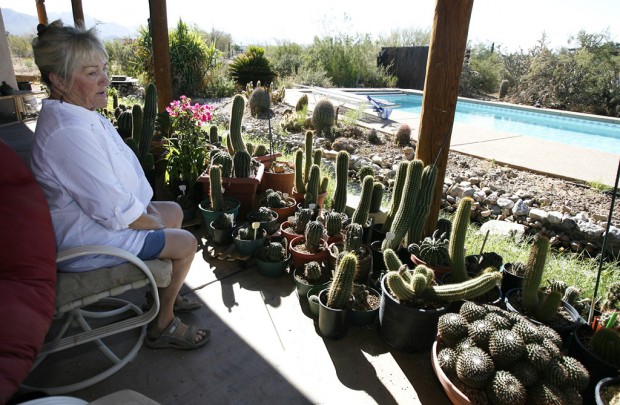
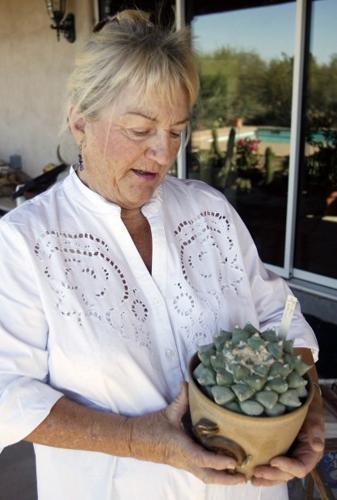
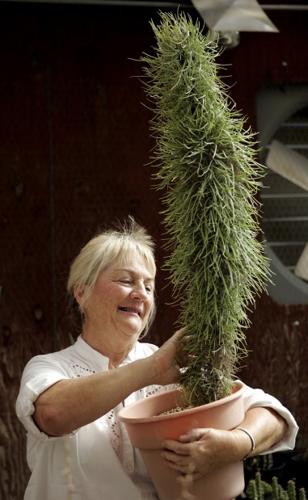
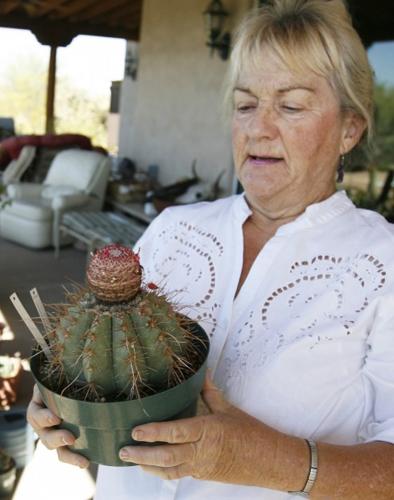
Carol Clapp knows. She started collecting cactus in southeast England in the 1960s, inspired by a cactus book a relative gave her.
"They're a bit weird," the far-west-side resident says as she recalls why she likes cactus. "They're not just stems and leaves sticking out of them."
She housed her collection of succulents from around the world in greenhouses in the places she's lived.
After moving to Tucson in 1997, she continued using greenhouses to protect cold-sensitive specimens, but now grows many plants in the ground.
People are also reading…
Cactus and succulent societies have helped her collection grow and thrive. "It's the best way to learn," she says. "You chatter with people who have been doing it longer than you."
Her number one suggestion for budding collectors: Grow something easy for your environment. "If you constantly have to fight the climate, some die," she says.
Lisa Waite Bunker uses a similar strategy for most of the 48 heirloom and contemporary rose cultivars she grows in pots at her westside home.
Bunker, social media librarian for the Pima County Public Library, naturally turned to books to learn how to grow old rose species after seeing specimens brought to New Mexico by early Spanish settlers.
Inspired by Liz Druitt's book "The Organic Rose Garden," Bunker bought roses grown in Texas. "Those roses are heat resistant," she says.
Bunker has rose cuttings from a 100-year-old Arizona ranch house and is eager to try heat-hardy specimens a friend is propagating.
Another book she relies on is the "Sunset Western Garden Book," where advice is skewed to West Coast and Southwest growing conditions.
She suggests that beginning collectors learn by visiting public gardens such as Tohono Chul Park, Tucson Botanical Gardens and the Pima County Cooperative Extension's demonstration gardens.
Both women like learning plant history and human culture associated with their respective collections. They also enjoy the serenity that plants bring.
"I like to sit out and meditate. They're very soothing," says Clapp.
Bound to a computer at work, Bunker says, "To be with things that are real and part of the earth is a really good balance to the technical part of me."
Gardening groups
Here are some local gardening groups that focus on specific plant species:
• Rose Society of Tucson, rosesocietyoftucson.org
• Tucson African Violet Society, tucsonavs.org
• Tucson Area Iris Society, tucsoniris.org
• Tucson Cactus and Succulent Society, tucsoncactus.org
• Tucson Orchid Society, tucsonorchidsociety.org
Master gardeners with the Pima Cooperative Extension suggest a few gardening tasks for July:
• Fertilize palms.
• Prune mesquite, eucalyptus and palo verde. Remove storm-damaged limbs of any tree.
• Water lawns in early morning, not at night, to prevent fungus disease.
• Remove spent blossoms from flowering plants to encourage blooming.
• Pick melons, which should be ripening this month.
• Plant pumpkins so that they are mature for Halloween.
Contact local freelance writer Elena Acoba at acoba@dakotacom.net