

Q. Years ago, my wife was given a very nice squash-blossom necklace. It came from the Tucson area and is too heavy to wear now. We want to sell, but we don't know how. I suspect it has real value because of the silver and turquoise and fine work.
— Tom, Charlottesville, Va.
A. The squash-blossom theme is ancient. As incorporated into distinctive necklaces made by Native artisans in America's Southwest, turquoise and/or silver squash blossoms are centered by a large crescent, called a naja by the Navajo. As a symbol, the crescent is Paleolithic: In Southwestern jewelry, the naja shape is derived from the Spanish horse collar. Najas are often decorative and downright fancy.
Flowerlike squash-blossom necklaces were introduced by the Navajo around 1900. Classic Navajo versions have seven blossoms on either side of the naja. Early examples were made of hand-hammered Mexican coin silver. In the 1920s and '30s, turquoise was brought into the design.
People are also reading…
When evaluating a squash-blossom necklace, both the necklace and the naja are critical.
Arizona sellers Tom and Deborah Begner of Turkey Mountain Traders in Scottsdale specialize in antique Native American arts, including jewelry. According to Deborah, squash-blossom necklaces are ranked by age, maker and quality of work. Value-wise, they run from $100 to $15,000 for "a world-beater."
Like many art forms, squash-blossom necklaces ride waves of popularity. The 1970s were a high point, when "they were cranked out like crazy," said Deborah. Most squash blossoms of the period have no value but as decorative jewelry.
"I can't sell them for anything," she added. Exceptions are those made by a handful of specific artisans and those with quality turquoise.
Turquoise matters. "In the '70s, some would make a big honker and put good stones into it. You just don't know." Treated stones are heavy: Solid weight does not ensure a quality necklace.
Squash-blossom necklaces of the 1920s are "another story." Those from known makers are valuable antiques.
If you send images, Deborah will look at the necklace. She suggests using a color photocopier, taking shots of the necklace front and back. That gives an idea of scale and quality.
FYI: Send an e-mail to info@turkey-mountain.com to reach the Begners. "Southwest Silver Jewelry" by Paula A. Baxter (Schiffer, $50) shows a range of examples, including squash blossoms, and has a general price guide.
» AUCTION ACTION
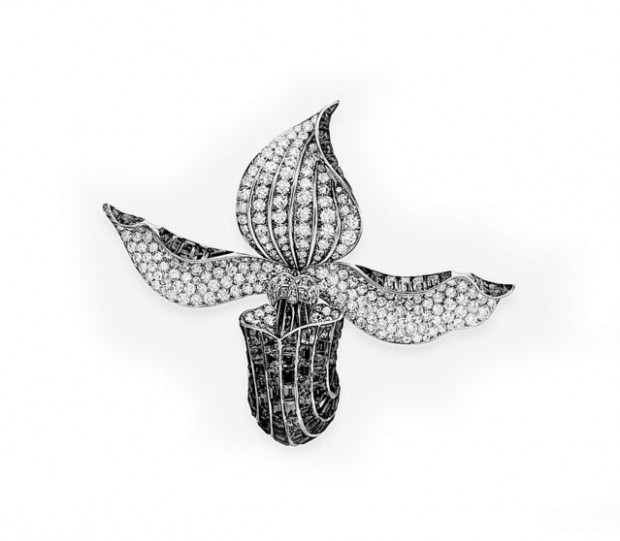
Founded in the 1890s by Rene Boivin, the House of Boivin in Paris is celebrated for superb floral jewelry. A diamond-and-citrine orchid pin from the 1930s designed by wife Jeanne Boivin brought $98,500 recently in a sale of 20th-century jewels at Christie's. Most of Boivin's signature pieces from the 1930s to the '50s were designed by women.
Fashioned of 18-karat gold and platinum, the orchid has circular and vari-cut diamonds, gold veining, and calibre-cut citrines. Signed Rene Boivin, it sold with a gold fitted case from the jeweler.