

Some folks call them "heroes," but grandparents raising grandchildren say they're just doing what's necessary.
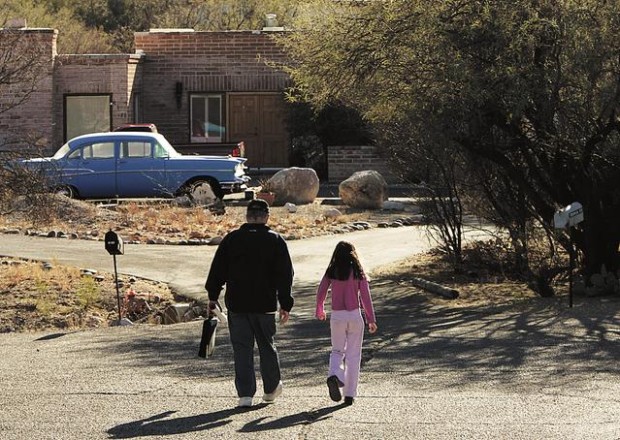
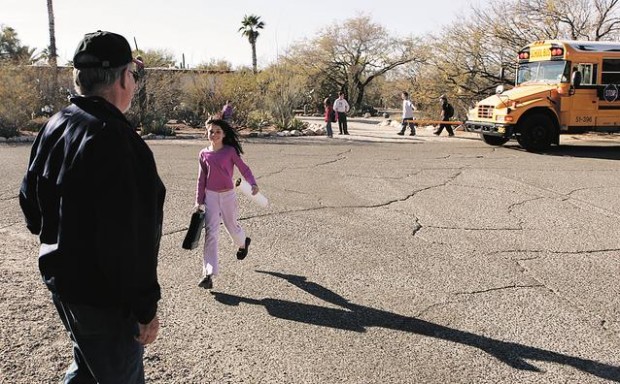
"There are not really choices," says Tucsonan Diane Moss, 59. She and her husband, Ron Moss, 65, have been looking after their 10-year-old granddaughter, Rebecca, full time for a year.
Diane and Ron are two of the growing number of grandparents nationwide caring for grandchildren at a time of life when they expected to be doing something else. Though the experience brings much joy to caregivers, it can also deliver challenges, such as legal hurdles, conflicts with birthparents and dealing with the children's emotional issues.
In Pima County alone, about 8,500 grandparents from various socioeconomic and ethnic backgrounds are raising at least one grandchild, according to Laurie Melrood, director of KARE (Kinship, Adoption, Resource and Education) Family Center in Tucson.
People are also reading…
Melrood cites drug issues as the primary reason the birthparents no longer have their children. Other factors include mental or physical illness, incarceration and death.
Thomas and Barbara Maday started caring for three grandchildren, now 9, 11 and 17, after their daughter, the children's mother, died of pneumonia three years ago. A chiropractor, Thomas, 66, has put retirement on hold.
Barbara, 64, who raised five children with her husband, finds that she presently has less energy and patience. The most difficult aspect, she says, is "the loss of my role as a grandparent to these children."
Joan Scott, 65, also misses the traditional grandmother role. "Now I'm a caretaker," notes Scott, whose 16-year-old grandson, Clay, has lived for two years with Scott and her husband, Armand Minuti, 69.
The state of Massachusetts, where Clay formerly lived, placed the youth in foster care when he was 13 because his mother was unable to care for him. He moved from home to home until a Family Court judge transferred care to Scott in Tucson.
Many grandparents raising grandchildren can absorb the additional expenses, while others, who may rely on Social Security and savings, need financial assistance. Some, such as 80-year-old Robert Strosser, have returned to work part time for extra income.
"He sometimes gets up at 2 or 3 in the morning to deliver papers," says his wife, Alice Strosser, 81. Eight years ago, the couple began caring for three grandsons, then 8, 10 and 12; the two youngest remain at home.
Financial benefits that many caregivers may be eligible for include health insurance for the granchildren through AHCCCS (Arizona Health Care Cost Containment System) and Temporary Aid for Needy Families (TANF), which is paid from federal funds by the state of Arizona.
When grandparents apply for TANF on behalf of grandchildren in their care, only the child's income, such as survivor benefits, is considered. Grandparents may receive assistance — a maximum of $204 monthly for the first child and $71 for each additional child — until the children reach age 18 or, in some cases, 19.
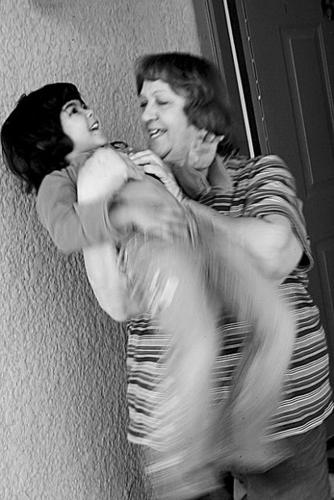
Isolation often accompanies the new parenting role as friends drift away, according to George Bennett, 68. He has looked after his granddaughter, Jasmine Bennett, with his wife, Carole, since the girl was 7 weeks old. Jasmine, now 9, was rescued from a drug environment.
Bennett is a founding member of KARE Family Center, 4710 E. 29th St.
The center promotes stability for families caring for children born to others by offering free services, including support groups.
Doris Gilder finds it comforting to attend a weekly group for grandparents and kin caregivers 60 and older.
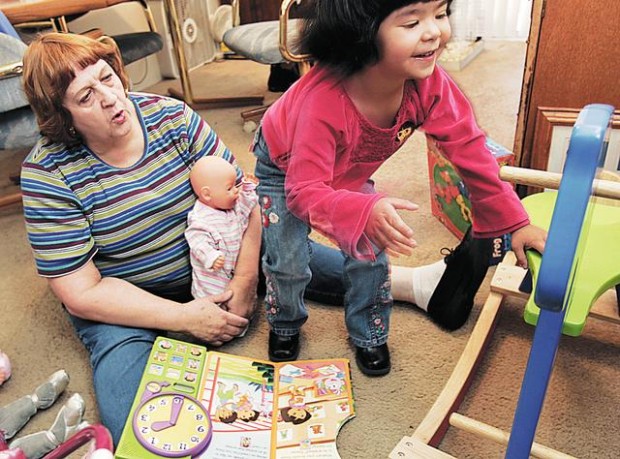
"I sometimes feel like I'm on a raft in the middle of the ocean," says Gilder, 60, who is divorced, works full time and is raising her 3-year-old great-granddaughter, Niomi Baumea, alone. The girl came to live with Gilder after a temporary stay with others, following removal from parental care by Child Protective Services within the Pascua-Yaqui tribal Social Services Division.
Though grandparents face many issues, they appear to be successful in their parenting role. Scott's grandson, Clay, notes that age is the only real difference between his grandparents and the birthparents of friends. "I'm pretty much as happy as I've ever been," he says.
And when other children ask the Rosses' granddaughter, Rebecca, why she lives with her grandparents, she responds, "Because I can."
● KARE Family Center helps grandparents raising grandchildren.
● Looking for resources to help you in raising a grandchild?
KARE (Kinship, Adoption, Resource and Education) Family Center, 4710 E. 29th St., Building 7, offers free assistance in English and Spanish to grandparents, other relatives raising children born to others and adoptive families in Pima County.
Services provided include information and referral, case management, legal information, family counseling, assistance in applying for financial benefits, recreation, a library and support groups, including Marana and Green Valley locations.
The center is a program of Arizona's Children Association in partnership with Casey Family Programs, with support from the Pima Council on Aging, the Arizona Department of Economic Security and the University of Arizona-Pima County Cooperative Extension.
The center is open 8:30 a.m.-5 p.m. weekdays. For more information, call 323-4476 or e-mail Kares@arizonaschildren.org.
● Other resources:
For other resources, including articles, message boards and book recommendations, you can go to the AARP Grandparent Information Center, at www.aarp.org/ grandparents online.