

Editor's note: Ten years and $2.5 billion in research have found no cures from alternative medicine. Yet these mostly unproven treatments are now mainstream and used by more than a third of all Americans. This is one in an occasional series examining their use and potential risks.
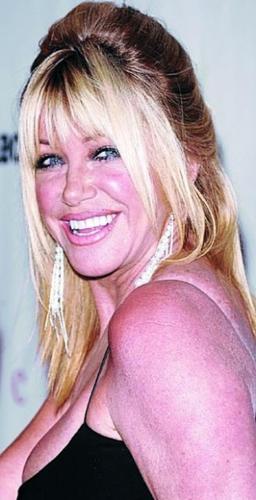
NEW YORK — Suzanne Somers is at it again.
Less than a year after the former sitcom actress frustrated mainstream doctors (and cheered some fans) by touting bioidentical hormones on "The Oprah Winfrey Show," she's back with a new book. This one's on an even more emotional topic: cancer treatment. Specifically, she argues against what she sees as the vast and often pointless use of chemotherapy.
Somers, who has rejected chemo herself, seems to relish the fight.
"Cancer's an epidemic," said the 63-year-old actress in an interview in a Manhattan hotel a day before today's release of "Knockout," her 19th book. "And yet we keep going back to the same old pot, because it's all we've got. Well, this is a book about options.
People are also reading…
"I'm 'us,' " Somers adds. "I'm not them. I've been on the other side of the bed. And it's powerful to have information."
Tendency to oversimplify
The American Cancer Society is concerned.
"I am very afraid that people are going to listen to her message and follow what she says and be harmed by it," says Dr. Otis Brawley, the organization's chief medical officer. "We use current treatments because they've been proven to prolong life. They've gone through a logical, scientific method of evaluation. I don't know if Suzanne Somers even knows there is a logical, scientific method."
More broadly, Brawley is concerned that in the United States, celebrities or sports stars feel they can use their fame to dispense medical advice. "There's a tendency to oversimplify medical messages," he says. "Well, oversimplification can kill."
Though she may be one of the most visible, Somers is hardly the only celebrity who's advocated alternative treatments recently.
Radio host Don Imus says he's eating habanero peppers and taking Japanese soy supplements to help treat his prostate cancer. The late Farrah Fawcett underwent a mix of traditional and alternative treatments, and made a poignant plea for supporting alternative methods in her film, "Farrah's Story."
And comedian Bill Maher has made no secret of his disdain for flu shots, questioning why you'd let someone "stick a disease into your arm." He also said pregnant women shouldn't get the new H1N1 vaccine, contradicting U.S. health officials who say pregnant women especially need it because they are at high risk for flu complications.
Celebrities' influence
While it's hard to imagine a comedian like Maher influencing public-health decisions, there have been cases where celebrities have been seen to influence the public, says Barron Lerner, a doctor who's looked at celebrity illnesses through history.
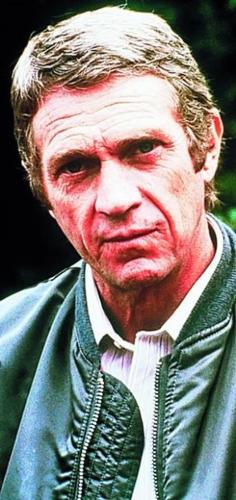
He recalls how some desperately ill cancer patients took their cues from Steve McQueen, the rugged actor who turned to unorthodox cancer treatment in 1980. When conventional medicine failed to halt his mesothelioma, a cancer of the lung lining, McQueen traveled to Mexico, where he was treated with everything from coffee enemas to laetrile, the now debunked remedy involving apricot pits.
"It's difficult to quantify his influence, but there was a lot of traffic to Mexico of end-stage cancer patients after his death," says Lerner, author of "When Illness Goes Public."
Though his alternative treatments didn't work, the actor gave voice to an emerging feeling that mainstream medicine might not be enough, Lerner says.
Fast forward to the 21st century, where Somers, who played the ditzy blonde in TV's "Three's Company," has written a series of books making that point. In "Ageless," she argued that doctors don't understand women's bodies, especially those going through menopause.
With so-called "bioidentical" hormones — compounds that are custom-mixed by special pharmacies — Somers argued that women can restore youthfulness and vitality, energy and vigor, not to mention their sex drive.
The problem for many doctors: These custom-compounded products are not approved by the Food and Drug Administration.
Somers, whose hormone regimen involves creams, injections and some 60 supplements daily, got a huge boost earlier this year from Winfrey. "Many people write Suzanne off as a quackadoo," Winfrey said when Somers appeared on her show. "But she just might be a pioneer."
Yet Winfrey's tacit support of Somers gave her some of the worst press of her career. "Crazy Talk," Newsweek headlined an article on the talk-show host. Another headline, on Salon.com: "Oprah's Bad Medicine."
Winfrey responded in a statement that her viewers know that "the medical information presented on the show is just that — information — not an endorsement or prescription." But many doctors feel Winfrey has more of a responsibility to her viewers.
"Oprah, how could you? That's all I can say," says Dr. Nanette Santoro, a hormone specialist at the Albert Einstein College of Medicine. Somers is now hoping for a return invitation to Winfrey's influential stage to discuss her cancer book.


