

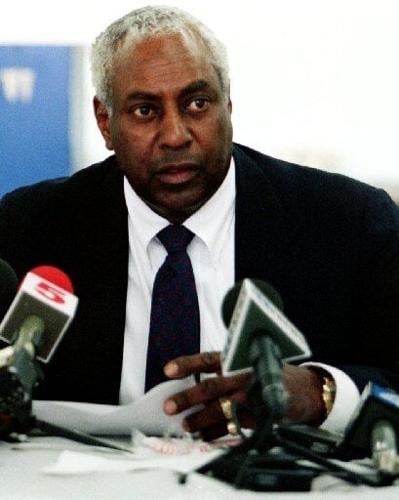
ST. LOUIS • Alderman Freeman Bosley Sr. says he “dug as deep as he could” to pay for his daughter’s college education.
So the longtime city politician sent an unusual letter to friends and supporters, asking them to provide $14,274 he says is the outstanding balance of his daughter’s upcoming bill at St. Xavier University in Chicago.
“Although the help from scholarships and grants has paid for nearly twenty-five thousand dollars, the remaining balance is still a challenge,” Bosley wrote in the undated letter obtained this week by the Post-Dispatch.
Bosley asked for the checks to be made out to St. Xavier University and mailed to an address in the 3200 block of University Street.
Bosley, a Democrat, appeared indignant when first asked about the letter on Wednesday morning. He told a reporter that he didn’t use any city resources and was just asking for money from friends. The letter wasn’t sent on city stationery or campaign letterhead.
People are also reading…
“I get asked for things all of the time,” Bosley said, adding that he would have his lawyer deliver a statement later in the day.
Bosley then called the reporter back and read the brief statement himself, saying that the cost of a college education had become expensive and that he was “just a father trying to help his daughter.”
The solicitation, however, has raised ethical questions and put a spotlight on what some say are lenient state laws governing the money politicians raise — and how they report it.
“It’s a unique situation,” said Stacey Heislen, the acting director of the Missouri Ethics Commission. “We’ve never been posed a question of this nature before, that I’m aware of anyway.”
Heislen said that it didn’t appear that Bosley’s letter violated any state statute.
That is shocking news to some national campaign finance experts. After all, Bosley isn’t just any parent trying to pay for his children’s education. He’s an elected office holder.
“It’s stunning that there aren’t local laws prohibiting this type of behavior,” said Meredith McGehee, the policy director at the Campaign Legal Center in Washington.
“This is the perfect example of cash for access,” McGehee added. “If you want to get in good graces, finance the college education of an elected official’s daughter.”
Politicians in other states have come under fire for having donors pay for personal expenses of relatives. Virginia Gov. Bob McDonnell was recently slammed by critics for failing to disclose that a businessman helped cover the $15,000 catering bill for his daughter’s wedding. The Washington Post reported in April that the issue is now the subject of an FBI inquiry.
Bosley wouldn’t identify who received his letter or how many were sent — or whether any money had been raised as a result.
“How many people do you know?” Bosley said when asked how many letters had gone out.
“I know thousands of people,” he said, but noted that he didn’t send the letter to everyone he knows.
Bosley later stressed that he isn’t using his office to influence any donations.
However, the letter begins: “This is Alderman Freeman Bosely Sr. requesting your support once more.”
Bosley, like all aldermen, is paid $37,000 a year. Bosley raised $25,363 in campaign donations during the last election cycle. He has $820 on hand, according to a campaign finance report filed last month.
Mayor Francis Slay had no comment on the situation, a spokesman said Wednesday. Aldermanic President Lewis Reed could not be reached for comment.
Bosley, 78, who represents the 3rd Ward, first took office in 1977. He ran unsuccessfully for mayor in 1985, then returned to the board a few years later. His son, Freeman Bosley Jr., became the city’s first African-American mayor, serving one term in the 1990s.
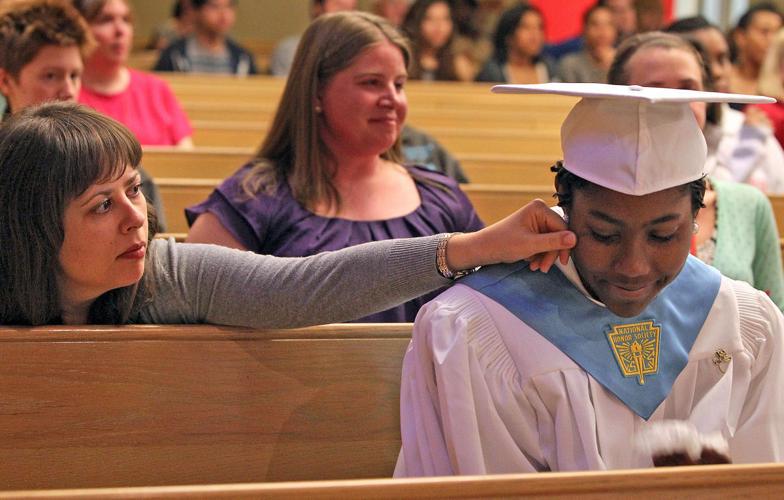
The letter says Bosley’s daughter, Kenya, attended St. Elizabeth Academy, a Catholic all-girls school in St. Louis that was shuttered last month.
“On top of the difficult process of finding scholarships, Kenya’s class lost their high school counselor and college consultant in early October, due to the school’s closure,” Bosley wrote. “It has made it challenging for Kenya, as well as other seniors in her class, to be aware of scholarship opportunities and to make sure they are well prepared for the next step.”
Bosley said his daughter, 18, was in the top 2 percent of her class and maintained a 4.0 grade point average.
Kenya Young-Bosley said she knew of her father’s effort and referred all questions to him.


