
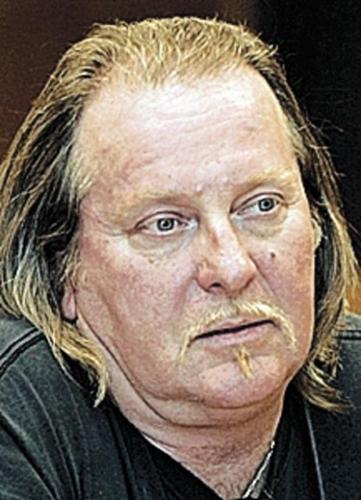
After five days of keeping Dr. Bradley Schwartz and the rest of Tucson on pins and needles, the jurors deciding his fate managed to not only prolong the suspense a little bit longer but throw in a surprise as well.
The jurors convicted Schwartz of conspiracy to commit first-degree murder in the slaying of Dr. David Brian Stidham, but they couldn't reach a unanimous verdict on the first-degree murder count itself.
As a result, both Stidham's and Schwartz's families may end up having to sit through the agony of another trial.
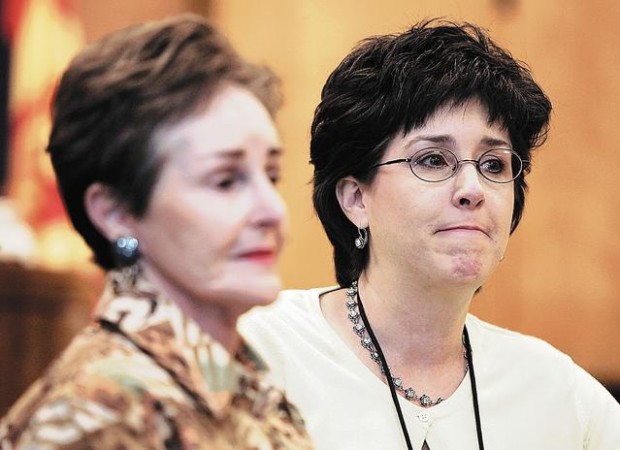
Throughout all of the confusing scientific evidence, outrageous stories and gruesome details, Stidham's sister, Andrea Depwe, and his mother, Joyce Ann Stidham, were able to maintain their composure.
A few kind words from a juror after the verdict was announced changed all of that.
People are also reading…
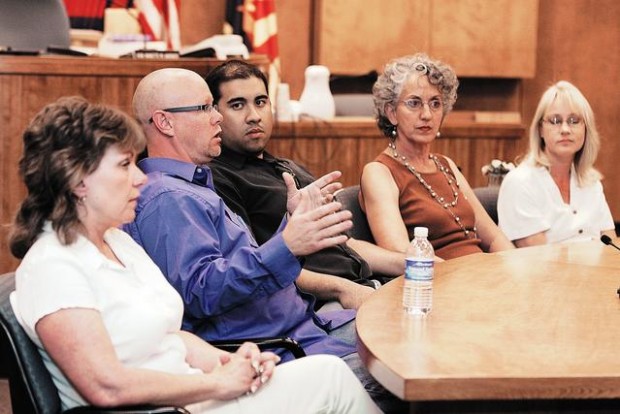
When James Brian Wood extended his "deepest condolences" to Stidham's family during a press conference, the two women burst out into tears.
Then, dabbing their eyes, the women mouthed their thanks.
Shortly after 4 p.m. Tucson time, the jurors announced they had a verdict, but when they turned it over to Judge Nanette Warner, she took one look and sent the jury out of the room.
As the packed courtroom erupted into loud murmurs, Warner held a bench conference and then left to do a bit of research.
When she came back, she announced the jurors had deadlocked on the first-degree murder count. She brought them back into the courtroom, offering them advice on how they might be able to resolve the impasse before asking them if they would be willing to try.
Jury Foreman Kevin Dale McCaleb said he felt it would be fruitless to continue trying and the other jurors agreed.
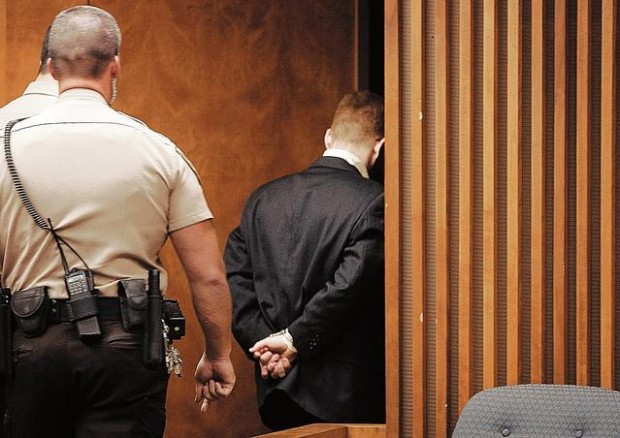
The sole guilty verdict was then read.
Prosecutors will announce May 15 if they'll try the eye surgeon again. Two weeks later, on May 30, Schwartz will be sentenced to life in prison with parole possible after 25 years, the only possible sentence the law allows.
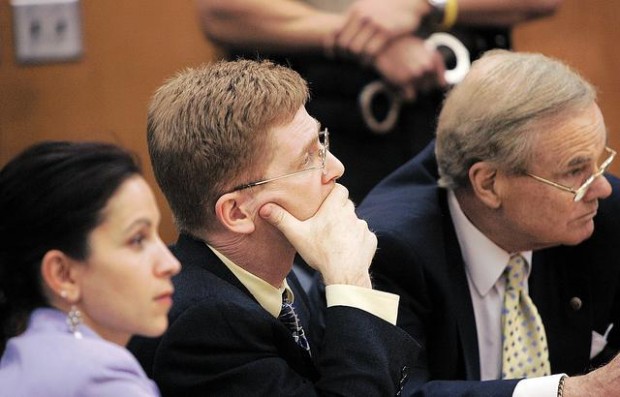
The father of three reacted to the news with no outward show of emotion, but his attorney, Brick Storts said he was "obviously extremely shocked."
"They are what they are," Storts said when asked for a reaction to the verdict.
As for what he'd do differently, he said, "There's always something you can do differently, but as I sit here today, I don't know what that would be."
Chuck Teegarden, a spokesman for the Pinal County Attorney's Office, simply said his office is proud of the job prosecutors Sylvia Lafferty and Richard Platt did, saying they gave it everything they had.
After the jurors left the courtroom, Depwe thanked the prosecutors and the jurors for "giving up two months of their lives to see that justice was served." The Texas resident also thanked the community for its support in the wake of her brother's death and for making his final years happy ones. She and her mother declined to answer any media questions.
The jury began deliberating last Wednesday after weighing the testimony of 77 witnesses and poring over 403 exhibits, considering whether Schwartz hired a hit man to kill Stidham in October 2004.
According to prosecutors, Schwartz grew to hate Stidham, a married father of two, after Schwartz was forced into drug rehabilitation by the Arizona Board of Medical Examiners in the fall of 2002.
Schwartz expected Stidham to keep his practice going while he was gone, but Stidham left the practice fearing his reputation and livelihood would be tainted by his association with Schwartz, Lafferty told jurors during closing arguments last week.
When Schwartz got out of rehab in February 2003, he lost his hospital privileges. Insurance companies wouldn't pay for his services. His ability to write prescriptions was curtailed and he was forced to submit to urine tests and attend 12-step meetings, Lafferty said.
In addition, several of his patients and staff members left him and went to Stidham.
Although he'd been making $100,000 a month in 2002, he made a total of $118,000 for all of 2003, Lafferty said.
"In the defendant's mind, Brian Stidham was to blame," Lafferty told jurors during closing arguments.
First, Lafferty said, Schwartz tried to persuade a series of girlfriends to plant child pornography or drugs in Stidham's office to humiliate him. Then, he progressed to recruiting people to physically harm Stidham by breaking his fingers or throwing acid in his eyes.
Finally, Lafferty said, Schwartz hired Ronald Bruce Bigger, a former patient, to kill Stidham.
Lafferty contends Bigger stabbed Stidham between 7:26 p.m., when Stidham set his office alarm, and 7:46 p.m., when Bigger made a phone call from a Denny's restaurant to Schwartz.
Lafferty reminded the jurors about witnesses who placed Bigger at the medical complex where Stidham was slain, at a nearby convenience store and at a restaurant near where Stidham's stolen car was found.
She also pointed out that DNA experts couldn't exclude Bigger as the source of DNA found in Stidham's Lexus.
Storts pointed out that testimony from the state's experts on DNA was flawed — by the state's own admission.
Storts also reminded jurors experts disagree about when Stidham died.
Storts said if the jurors don't believe Stidham died between 7:26 p.m. and 7:46 p.m., they would have to acquit Schwartz because Bigger has an alibi that begins at 7:46 p.m.
Moreover, there is no way Bigger could've stabbed Stidham, driven seven miles away, dumped Stidham's car, gotten rid of his bloody clothes and walked to a nearby restaurant to call Schwartz in under 20 minutes, Storts said.
As for the multitude of women who testified Schwartz told them he hated Stidham, wanted him hurt or wanted him dead, Storts said Schwartz was simply trying to impress them.
"He liked people to think he was a big man and he wanted to impress these women," Storts said.
On StarNet: Get expanded coverage of the Schwartz trial, including a photo gallery, Kim Smith's blog, a timeline of events and more at azstarnet.com/schwartz
● Upcoming dates in the Dr. Bradley Schwartz murder-for-hire case:
l May 15: Prosecutors have indicated they'll make a decision about whether to re-try Schwartz on the first-degree murder charge.
l May 30: Scheduled sentencing date for Schwartz for his conviction on conspiracy to commit first- degree murder.
l July 12: Scheduled trial date for Ronald Bruce Bigger, accused of being the hit man who carried out the murder of Dr. David Brian Stidham.
● 1998-99: Schwartz works for a Phoenix-based medical practice, opening its Tucson office.
● June 2000: Schwartz later admits he began using drugs daily.
● February 2001: Schwartz checks himself into drug rehab for one month at Sierra Tucson.
● November 2001: Stidham joins Schwartz's practice.
● December 2001: The Drug Enforcement Administration raids the doctors' office.
● Sept. 25, 2002: A 77-count indictment is filed against Schwartz in the DEA case.
● Oct. 12, 2002: Schwartz begins four months of addiction therapy.
● Nov. 7, 2002: Stidham is fired by Schwartz in a telephone conference call.
● Feb. 12, 2003: The Arizona Medical Board suspends Schwartz's medical license indefinitely.
● June 22, 2003: Police are called as Schwartz and his then-girlfriend fight.
● Aug. 14, 2003: Medical board ends suspension of Schwartz's medical license.
● October 2003: Medical board censures Schwartz and puts him on five-year probation.
● Dec. 23, 2003: Schwartz plea- bargains to two counts of drug fraud in the DEA case.
● Oct. 5, 2004: Stidham is killed.
● Oct. 15, 2004: Schwartz and Ronald Bruce Bigger are arrested on suspicion of first-degree murder.
● Jan. 25, 2006: Jury selection in Schwartz's murder trial begins.
● March 7, 2006: Schwartz murder trial begins.
● May 2, 2006: Jury reaches its verdict: guilty of conspiracy, deadlocked on first-degree murder.