

JEFFERSON CITY • Missouri Supreme Court judges wrangled Wednesday with the question that has put Paul McKee’s $8 billion redevelopment proposal for north St. Louis on hold for three years:
How specific does the project have to be before McKee can begin tapping $390 million in local tax-increment financing subsidies?
The court homed in on that issue during a 45-minute question-and-answer session with attorneys defending and challenging the financing agreement approved by the St. Louis Board of Aldermen.
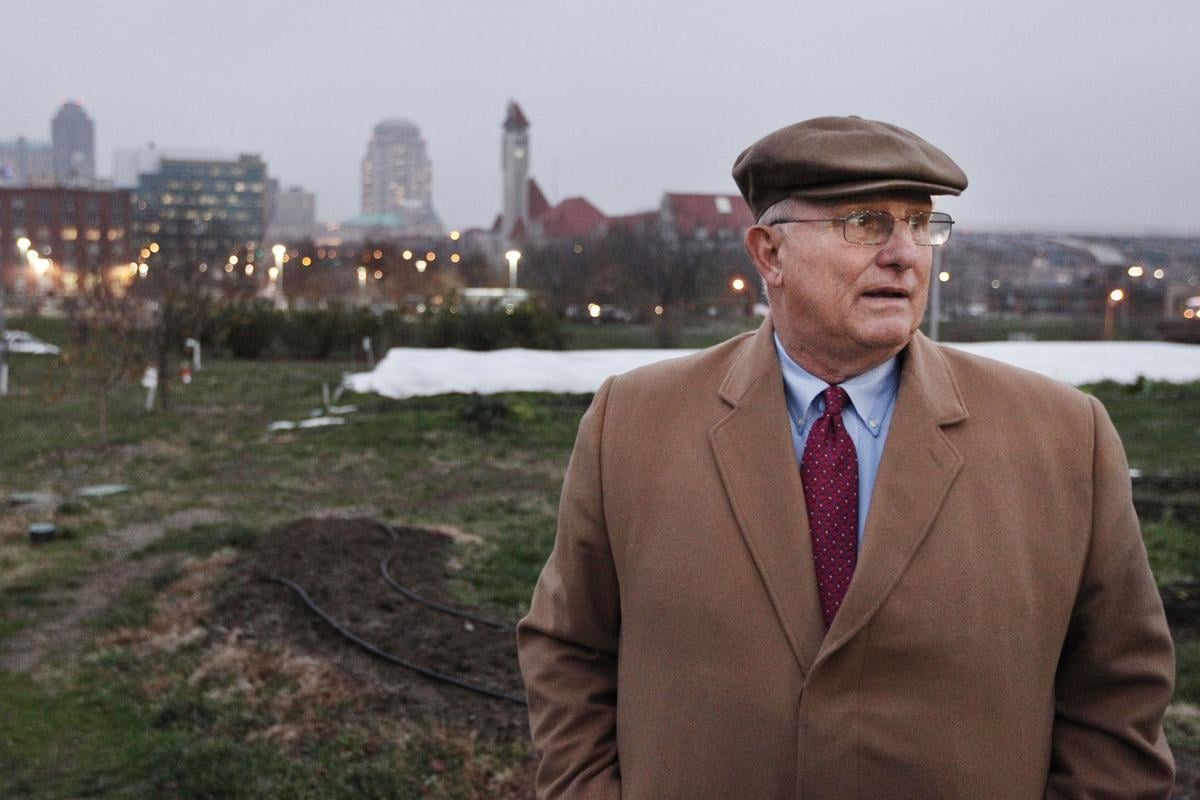
McKee, who attended the arguments, said that he was “glad to get it over with. At least we’re at the end.”
But the judges’ questions offered few clues on how they might decide the far-reaching case.
“You don’t read anything into anything,” said attorney Bevis Schock of Clayton, who represented some of the residents contesting the plan. “You just make your points and you let ’em rule.”
People are also reading…
McKee envisions a massive development that could include homes, offices, shops, schools and parks. The development, which is called NorthSide Regeneration, would span 1,500 acres in north St. Louis. It would be built in phases over 23 years.
Under the financing agreement approved by the Board of Aldermen, the developer could get $391 million from the extra tax revenue generated by the project.
Most of the money — $345 million — would go toward construction of sewers, streets, sidewalks and utilities; demolition of buildings; and cleanup of environmental hazards, according to court documents.
But St. Louis Circuit Judge Robert Dierker threw the plan out, saying more detail is needed. In his ruling in July 2010, he said that “concepts are not projects” and that the tax-increment financing, or TIF, law requires “shovel-ready projects.”
The plan’s defenders say Dierker’s ruling goes further than what the TIF law requires.
“This case is about a trial judge who created his own definition of a statutory term — that term being ‘redevelopment project’ — and then utilized that new definition that he had created, words that he had added to the statute, as the basis to invalidate two city of St. Louis ordinances,” said Clayton attorney Jerry Carmody.
Carmody represented the city of St. Louis, the St. Louis Board of Aldermen and the city’s TIF commission.
McKee’s lawyer, Paul Puricelli of Clayton, argued that the project will be shaped by market demand and needn’t be precisely outlined in advance.
The law says a redevelopment project is “any development project within a redevelopment area in furtherance of the objectives of the redevelopment plan,” according to a handout prepared by McKee’s legal team.
“The statute does not say shovel-ready, it does not say specific, it does not say concrete,” Puricelli said.
The redevelopment agreement has safeguards for the city, because the developer can’t receive TIF money until streets, sewers and other public improvements are built and their costs are documented, Puricelli told the court.
“You have to do the work, then go to the city with your receipts in hand,” Puricelli said. “It’s not necessary on Day One to have that kind of specificity.”
But if the court determines that more details are required, McKee’s lawyers said the redevelopment agreement meets that test by listing certain buildings slated for demolition or restoration.
D.B. Amon of St. Louis, an attorney for some of the residents, disagreed. He said the law required identifiable development projects, with specific locations and costs detailed.
Schock said afterward, “The heart of this case, and 90 percent of the argument, was whether a project means a specific building that has a door and a roof and a purpose, or not.”
Cheryl Nelson, one of the residents challenging the plan, attended the arguments. She told reporters that her property value had plummeted because of the redevelopment plan’s designation that the area is blighted.
“I am not against redevelopment,” she said. “I am against being booted out where I pay taxes.”
At the circuit court trial in 2010, the residents’ expert, Michele Boldrin, then the head of the economics department at Washington University, said the estimated costs and revenue for NorthSide were “clearly out of thin air” and the economic assumptions for the plan were “plainly unbelievable.”
But such feasibility issues are for local government officials, not the court, to weigh, argued Carmody, the private attorney hired to represent the city of St. Louis.
“It may be a failure,” Carmody said. “But the question before this court is, should it be a judge … that says, ‘No, don’t even try it,’ to somebody who says, ‘I’m going to dedicate the rest of my life to make a difference’?”
The high court’s six judges will decide the case, on no specific timetable. The court has one vacancy; no special judge was appointed to fill in on this case.
Virginia Young is the Jefferson City bureau chief of the Post-Dispatch. Follow her on twitter at @virginiayoung.


