



WASHINGTON (AP) — Scientists have figured out why vampire bats are the only mammals that can survive on a diet of just blood.
They compared the genome of common vampire bats to 26 other bat species and identified 13 genes that are missing or no longer work in vampire bats. Over the years, those gene tweaks helped them adapt to a blood diet rich in iron and protein but with minimal fats or carbohydrates, the researchers reported Friday in the journal Science Advances.
The bats live in South and Central America and are basically "living Draculas," said co-author Michael Hiller of Germany's Max Planck Institute. About 3 inches (8 centimeters) long with a wingspan of 7 inches (18 centimeters), the bats bite and than lap up blood from livestock or other animals at night.
There are now only three vampire species still around and this one was the largest we know to have ever lived.
Most mammals couldn't survive on a low-calorie liquid diet of blood. Only three vampire species of the 1,400 kinds of bats can do that — the others eat mostly insects, fruit, nectar, pollen or meat, such as small frogs and fish.
People are also reading…
"Blood is a terrible food source," said Hannah Kim Frank, a bat researcher at Tulane University, who was not involved in the study. "It's totally bizarre and amazing that vampire bats can survive on blood — they are really weird, even among bats."
Some other creatures also have a taste for blood, including mosquitoes, bedbugs, leeches and fleas.
The latest work expands upon research by another team that pinpointed three of the 13 gene losses.
"The new paper shows how different vampire bats are from even other closely related bats, which eat nectar and fruit," said Kate Langwig, a bat researcher at Virginia Tech, who had no role in the study.
With such a low-calorie diet, vampire bats can't go long without a meal. In a pinch, well-fed ones will regurgitate their food to share with a starving neighbor. They seem to keep track of who has helped them in the past, said Hiller, noting that vampire bats have complex social relationships.
"It's not a kin thing," said Tulane's Frank. "They just notice and remember: You're a good sharer, I will reward you."
Bats, sharks, pumas: What you need to know about 10 misunderstood animals
Bats, sharks, pumas: What you need to know about 10 misunderstood animals

We owe a lot of our health and happiness to some of the most undeservedly reviled creatures in nature. Bats, in particular, get a bad rep as blood-sucking, horror-genre caricatures or Halloween mascots at best, and disease-spreading enemies of humanity to be culled at worst. Without them, we would not have tequila, bananas, or cacao. Without them, there would be ecosystem collapse.
It may sound like a dramatic proclamation, but nature is constantly working to stay balanced, with every living thing doing its part to maintain homeostasis simply by existing in its given ecosystem. By introducing or removing a variable, the balance often shifts with severe consequences. This is why invasive species are so devastating.
Several studies suggest humans are born with an innate, evolutionary stress response to animals that posed significant threats to our ancestors. Researchers also point out this stress response does not necessarily equate to fear but rather intense focus. We’ve evolved to be hyperaware of threats like snakes and spiders because it’s kept us alive. Today, it’s not just avoiding snakes that keeps us alive and healthy. One snake species, the Brazilian pit viper, is a vital source of the live-saving ACE inhibitor class of medicine.
If we aren’t born with the fear that makes us vilify certain species, then we are learning it, from a young age and from our observations of others. Culture can also be the reason why one person reveres the wolf while another views it only as a voracious predator. Consider the formative childhood fairy tales passed down through generations like Little Red Riding Hood (both the Brothers Grimm and Charles Perrault versions) or The Three Little Pigs: at their center are lessons to be heeded about danger and death in the form of a wolf.
Fear and misunderstanding have led to the culling of many species, sometimes to the brink of extinction and to subvert conservation efforts. But knowledge can conquer fear. To help, Stacker compiled a list of 10 animals often misjudged and misunderstood by humans. Keep reading to learn the role these 10 misunderstood animals play in the ecosystem.
You may also like: From Hypatia to Christina Koch: 50 groundbreaking women of science

Bats

The world needs bats. Not only are they pollinators and pest-reducers, one study found that bats, by routinely feeding on insects, saved the U.S. agricultural industry roughly $23 million annually on pesticides. Bats have evolved to be effective vector species, or carriers and transmitters of deadly diseases like Ebola, Marburg, and SARs. This adaptation, especially in the midst of the coronavirus pandemic, has drawn the persecution of bats from communities around the world to the detriment of the larger ecosystem.
Sharks
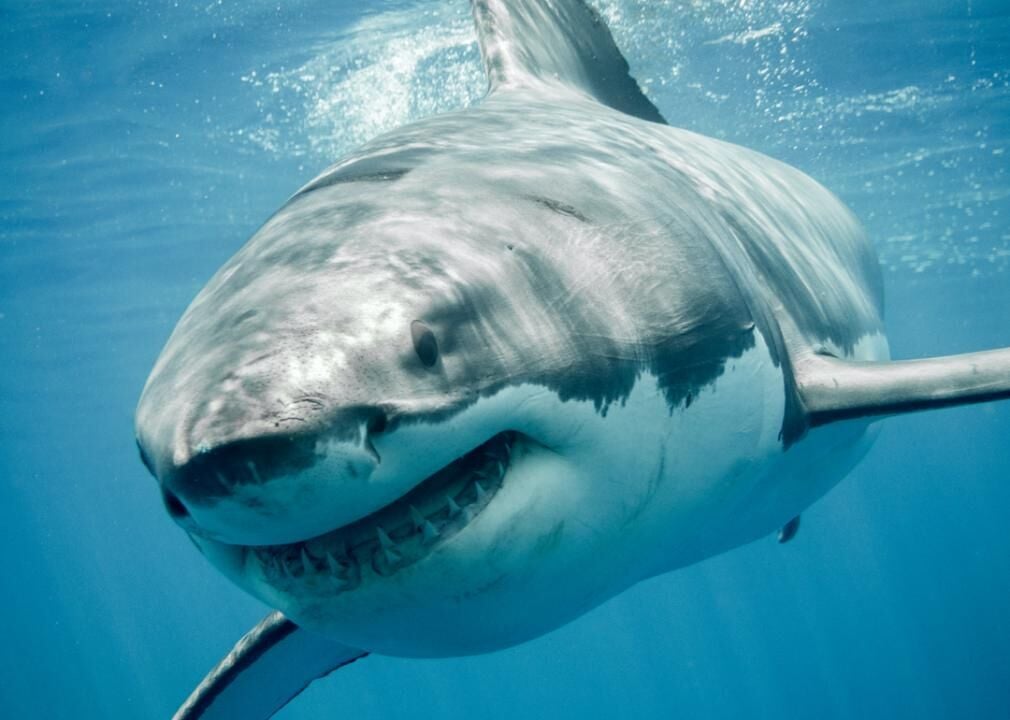
Sharks are an integral part of the marine food web and are vital to the health of ecosystems the world over, from coral reef ecosystems in Australia to coastal U.S. fisheries. In 2004, after decades of overfishing, the population of large sharks off the east coast of the U.S. fell by 75%. As a result, the ray population exploded, and the scallop population—a delicacy for rays—was decimated along with scallop fisheries off the coast of North Carolina. Sharks can also impact the future of human medicine. Shark DNA, fully sequenced in 2019, may hold clues about how to better understand, treat, or even cure cancer and Alzheimer's disease, and more quickly and efficiently heal wounds.
Pumas

According to researchers, pumas, or mountain lions, are not just moderators good at keeping other populations of the food web in check—they are ecosystem engineers. As largely—but not exclusively—solitary carnivores, a puma’s kill can feed much more than just itself. The carrion of an elk can feed other apex predators such as bears and attract scavengers and decomposers like beetles, which provide the important service of breaking down decaying organic matter. Why should you care if pumas provide food for beetles? Because healthy beetle populations create fertile soil, pollinate flowers, and eat insects that feed on our crops.
Puma encounters in settled areas are not the result of rogue predators with new appetites. Pumas are losing their habitat to real estate development. Since 1990, roughly 60% of new single-family homes in the U.S. have been built in puma-inhabited territory. But the bigger issue is our existence and settlement in these areas are attracting deer, a puma’s primary source of food. The more human activity attracts prey, the more we should expect to encounter pumas doing what they are biologically driven to do—survive.
Snakes

Snakes are both predator and prey, which makes them a vital part of the food web. If snakes were to disappear from the earth tomorrow, we would see an explosion of rats and mice—their primary food source— and a rapid spread of zoonotic diseases that rodents harbor, like Lyme disease and even bubonic plague. A single pair of rats can generate over 1 million descendants in just a year and a half. And if you are one of the millions of Americans taking an ACE inhibitor to treat cardiovascular disease, high blood pressure, diabetes, or migraines, you may want to thank the next Bothrops jararaca or Jararaca pit viper you see. In 1981, peptides in their venom were used to make Captopril, the first ACE inhibitor.
Spiders

Spiders are dutiful mothers, skillful engineers, and friends to all humans, whether humans want to admit it or not. In fact, they’re more than friends—they’re our unknowing protectors. Spiders are pivotal to crop production because they eat the pests that would otherwise devour our food. According to some researchers, humans could, hypothetically, face famine in the complete absence of spiders. In addition to eating pests that eat our food, spiders also eat disease-carrying insects like mosquitos.
You may also like: Major cities most at risk of rising sea levels
Rats

Rats are viewed unfairly as the scourge of the animal kingdom. It is true that rats can be pests, can multiply alarmingly fast, and can carry harmful diseases that spread to humans. And you should never come between a rat and its subway pizza slice. But rats fill an important ecological niche as both scavengers and food sources for larger predators. Many people don’t know that rats are also one of the most intelligent species on the planet, and can even outperform humans in some cognitive tests. Several studies suggest that rats can even show the capacity for more complex emotions like empathy and morality. Humans owe a debt of gratitude to rodents for their role in the advancement of life-improving and life-saving scientific research—95% of all lab animals are rats or mice.
Coyotes

Coyotes help manage populations of low-tier predators like skunks, raccoons, and foxes. This is especially important to the health and diversity of many bird populations. As North America's oldest indigenous species, they are remarkably successful. The coyote’s ability to adapt—the reason for their longevity—is also the reason for human confrontations. Coyotes have learned to associate urban regions with easy access to food, be it garbage, pet food, or even small pets. Today, as many as 500,000 coyotes are killed each year in concerted efforts by government agencies, hunters, and ranchers.
Wasps

If you have tomato plants that are thriving, you may have a wasp to thank for it. Hornworms, which any gardening enthusiast will recognize as the enemy of tomatoes, just happen to make the perfect meal for young parasitic wasps. Female wasps lay their eggs on hornworm caterpillars and, after the young wasps hatch, they will feed on the host caterpillar. Parasitic wasps have no affinity for the tomato plant itself.
Wolves

Wolves are keystone species, a species that other species in the food web depend on, so much so that their absence could cause an ecosystem collapse over time. Yellowstone experienced this exact trophic cascade between 1926 and 1995. Everything about the landscape, from the largest animals down to the grass, was impacted by the wolves’ 70-year absence. Reintegration efforts have been ongoing since then, with much of the natural habitat rebounding and rebalancing. In 2020, the gray wolf was removed from the endangered species list after nearly 50 years of federal protection. Gray wolf populations are listed as stable, but debate among experts continues about the nuance of this classification.
Opossums

Most people go about their lives without thinking very much about opossums. It isn’t until we come across one that we even remember they’re around. They exist, mainly out of sight, doing some very important work that benefits us all. Opossums eat over 90% of disease-harboring ticks, and one opossum can eat up to 5,000 ticks in a season. Because they are resistant to snake venom, these nocturnal mammals also prey on snakes that pose a danger to humans.
You may also like: The only 7 countries that are on track to meet the Paris Agreement—and how they're doing it
The Associated Press Health and Science Department receives support from the Howard Hughes Medical Institute's Department of Science Education. The AP is solely responsible for all content.


