

Southern Arizona's ancestral inhabitants were as diverse as the vivid colors of the Sonoran Desert in bloom after summer rains.
Archaeological findings attest to the rich history that lies beneath our communities — some dating back 12,000 years.
Over centuries, man has built on top of settlements, remnants left buried in the earth. It was a time without international borders when prehistoric people traded their goods from here to the Sea of Cortez and the Pacific Coast.
These prehistoric findings are jewels that are recorded through archaeological digs done before excavations begin for freeway improvements, subdivisions and urban development. Laws require that an archaeological study be conducted at construction sites being funded by taxpayer money.
Join our journey that begins centuries ago and takes you on a ride up to modern times, reflecting different people who touched this land that you now call home.
People are also reading…
Early man
For decades, local archaeologists have unearthed and studied the prehistoric communities of the indigenous Mogollon, Anasazi and Hohokam cultures. The Hohokam are said to be ancestors of the Tohono O'odham who have tribal lands southwest of Tucson and live in Arizona and in northwestern Sonora. The Tohono O'odham Nation has about 29,000 enrolled members.
The Pascua Yaqui Tribe also has a reservation southwest of Tucson, and its members originate from the Río Yaqui Valley in Sonora. When they fled government persecution in the late 1800s and by the early 1900s, a large exodus settled permanently in Arizona, working for the railroad and as farm laborers in Tucson, Yuma and Phoenix. The tribe has about 14,600 enrolled members.
When it comes to archaeological digs, the 1990s proved exciting for Desert Archaeology Inc. of Tucson, a business that offers services ranging from small surveys to large excavations for government projects or private companies. It unearthed eight prehistoric settlements within the Santa Cruz River flood plain.
In 1998, it uncovered a small community of farmers whose home lay buried for thousands of years just west of Interstate 10 and south of Ina Road. The people lived here some 4,000 years ago, said Jonathan Mabry, research archaeologist of Desert Archaeology.
"These early farmers built some of the earliest-found canals in the United States. This was an early farming culture that developed long before the Hohokam culture, which emerged 1,500 years ago," Mabry said.
Skeletal remains of 11 men, women and children were unearthed from a cemetery. A Tohono O'odham fieldworker blessed the remains and fellow crew members shortly after the discovery. A medicine man did a formal blessing and the remains were turned over to the Tohono O'odham Nation for reburial.
Findings include pottery dating to 3,000 years ago; possible evidence of the use of the bow and arrow 2,900 years ago; irrigation ditches as early as 3,200 years ago; and the earliest cemetery in the Southwest.
Back then, the Santa Cruz River flowed year round and the area was lush. People fished in the river. They grew corn, beans and squash along the river's banks. "They also cultivated wild tobacco, much stronger than what we smoke today. Tobacco smoking was probably used in religious ceremonies," said Mabry. "This is the oldest evidence of tobacco use in North America."
Rio Nuevo dig
In 2000, Desert Archaeology was contracted by the city to perform Rio Nuevo's archaeology work before construction in the Downtown area. Rio Nuevo is a development plan to bring a rebirth to Downtown. In the dig, workers uncovered Tucson history dating back 4,000 years in an area known as the "Birthplace of Tucson," just west of the Santa Cruz River below "A" Mountain.
"Discovered was a prehistoric village that establishes Tucson's claim to be the longest continuously occupied place in the United States," Mabry said.
Everything before the coming of early Jesuit missionary Eusebio Francisco Kino is considered prehistoric because there is no written history. Kino, an Italian, came to the river valley in the 1690s and found an O'odham village. He brought wheat, cattle, horses and chickens to the area known as San Cosme. The priest wrote journals describing what he found and mapped out the area.
Later occupants included Spanish explorers, Mexican farmers and Chinese businessmen. The area was home to San Agustín Mission, and the Convento where the priests lived. The mission was built in 1771.
Also found were pit houses, irrigation canals and a Chinese well. Chinese items — dating from 1880 to 1900 — included a wok, opium pipes, a rice-wine jar, brown stoneware, rice bowls, sauce bowls and a spoon.
A volcanic rock foundation of a wall that stood around the mission, the Convento and two cemeteries was visible during the excavation. There also was a granary.
Southern Pacific Railroad
In 1880, the railroad connected Los Angeles to Tucson, and with it came newcomers to the Old Pueblo, said city planner David Taylor.
Mining and the railroad brought Chinese, Italians, Croatians, blacks and Mexicans to labor throughout Southern Arizona, including a booming Tombstone and later on in Bisbee in 1892 when Phelps Dodge began its operation.
It also brought hard-rock miners from Cornwall, England, who migrated to Canada and the United States. Mining companies in the U.S. sought and immediately hired these experienced miners.
The iron horse also transported people to this dry, warm climate to recuperate from tuberculosis. Tourists and others brought with them architecture ideas that created Victorian-style houses furnished with mahogany, and European styles, said Taylor.
By 1903, Anglos became the majority population and racial divides started growing as the community became a tract town and racial covenants separated people in Tucson, Taylor said.
Mexican ranchers
The Tucson basin continued attracting Mexican ranchers in the late 1800s to this area that was once Mexico. In 1999, remnants of a five-room adobe house were unearthed in a dig that was traced to a Sonoran family from 1831, said Allen Dart, executive director of Old Pueblo Archaeology Center.
The house was uncovered south of West Cortaro Road and east of North Silverbell Road.
A crew from Old Pueblo Archaeology Center, a nonprofit center, pieced together data documenting history of the area 17 years after the 1853 Gadsden Purchase Treaty.
In 1854, under the treaty between Mexico and the United States, Mexico sold what is now Southern Arizona and a portion of New Mexico to the U.S. government for $10 million.
It came six years after Mexico sold what is now Northern Arizona, California, Nevada, Utah and portions of New Mexico, Colorado and Wyoming to the U.S. government for $15 million at the end of the Mexican War.
The exchange of lands changed lives.
In the 1999 dig, a buried world showed the life of Juan and María Bojórquez, cattle ranchers who lived in an adobe house from the 1870s to 1895. In 1870, federal census-takers listed Juan as a 39-year-old grocer from Sonora with $6,000 in real or personal property, according to research by author and historian Thomas E. Sheridan.
The couple had three children. The Bojórquez family was "typical of a growing number of Mexican urban enterpreneurs settling in mining and commercial communities across Southern Arizona," Sheridan's research found. The family also owned a house in Tucson and land along the San Pedro River east of Tucson.
Found were remnants of Tohono O'odham redware pottery used for cooking and storing foods. Also found were pieces from ceramic tea sets and dinnerware with cobalt-blue designs. The family owned items imported from England, Mexico, China and Japan.
The Chinese experience
Early Chinese immigrants arrived in Tucson in the late 1800s from California and Mexico to work in the mines and help build the railroad, said Esther Don Tang, 89, a native Tucsonan, businesswoman and community leader.
The Chinese were discriminated against and persecuted in Mexico, and some left for survival, said Tang. They came to the United States and discrimination did not disappear. Large numbers went to California during the discovery of gold, then they worked laying track for the railroad.
Men survived under difficult conditions and were able to send money to their families in China. Some were able to bring their families here, while others were not. She said Chinese men married Mexican women, and their children grew up speaking Chinese, Spanish and English.
Families opened grocery stores and restaurants because the children could help and they could also eat what they could not sell. When Tang was a young girl, she helped her family run its store, Don Wah, two blocks from Chinatown — now La Placita Village.
The original Chinatown was where City Hall is and took up much of El Presidio Park, Tang said. She said families gathered for wedding receptions, birthday parties and meetings. There was a communal kitchen under a ramada that had a large, chimneylike oven and a special stove to handle several woks.
In the early 1950s, older Chinese families gathered at an old Rainbo bakery at North Sixth Avenue and Sixth Street. It became a Chinese community center, and a Chinese school also operated out of the building until the mid-1990s.
For nearly a decade, families held festivals, banquets and cultural activities at local Chinese restaurants and the Tucson Botanical Gardens.
Now, the Tucson Chinese Association has a place to call home.
In 2005, elders and the younger generations of professionals — doctors, lawyers, teachers, engineers and corporate businessmen and businesswomen — celebrated the opening of the Tucson Chinese Cultural Center at 1288 W. River Road.
"It warms my heart because the center brings elders and the young ones together, and it was our younger generations that had the strength to get behind this project and get it built," said Tang.
Richard Fe Tom of The Architecture Co. designed the facility with a storyline that reflects early Chinese settlers' migration by boat to the United States, where they faced the challenges of striving for prosperity.
African-Americans
It is believed that a Moroccan slave known as Esteban was the first person of African descent to arrive in this area. He came in the 16th Century with Spanish explorers, according to "Through Our Parents' Eyes: History & Culture of Southern Arizona."
The Web site is parentseyes.arizona.edu/ and it is a collaborative effort by the University of Arizona and Southern Arizona families to document and share written and oral histories.
Esteban made his way here with an expedition with Fray Marcos de Niza in search of the Seven Cities of Gold.
The first recorded black settlers arrived here between 1850 and 1855. Wiley Box worked as a laborer, stagecoach driver and prospector, the Web site says.
In 1920, according to Census Bureau records, Arizona's population was 334,162 and there were 8,005 blacks. An estimated 350 blacks lived in Tucson, according to "The First 100 Years: A History of Arizona Blacks," written by Richard E. Harris.
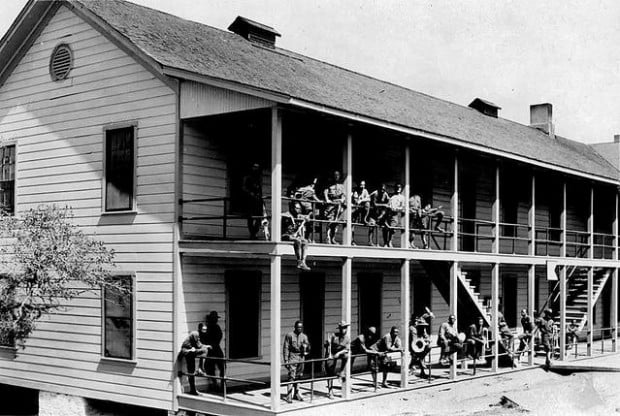
Black Americans moved here because of the cotton industry and to make a better life for themselves. Some were soldiers stationed at Fort Apache or Fort Huachuca.
Others homesteaded and became ranchers or opened up shoeshine parlors and restaurants. Some worked for the railroad repairing the track, or as porters, baggage handlers and machinists. Some became barbers or cooks at local hotels or worked in Arizona mines.
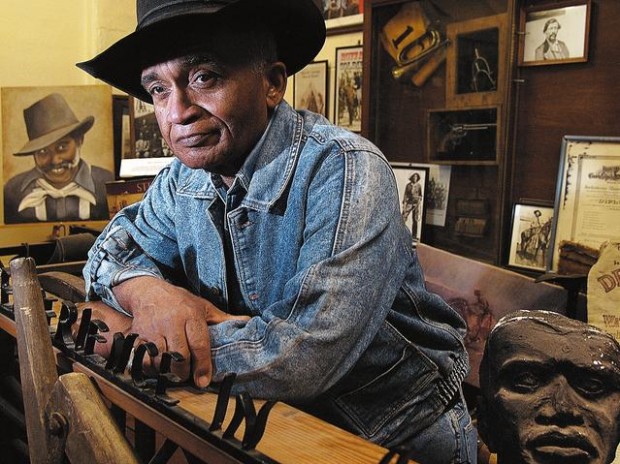
Charles Kendrick, curator of an African-American museum at 1834 S. Park Ave., has documented history and has a wealth of knowledge.
1970s to the present
The Sun Belt region continues to attract a diverse population. Pima County was the 47th-most populous county in 2004. Last year a U.S. Census Bureau survey shows that of 902,720 residents, people are claiming nearly 30 different ancestries.
In 1903, Anglos were the majority in this area, but the picture changed in 2005, said city planner David Taylor. Tucson no longer has a racial or ethnic group with 50 percent or more of the population.
By 2050, said Taylor, the majority will likely be the Latino population — depending on growth, migration and annexation trends.
Southern Arizona's diversity offers rich histories and traditions to newcomers and natives alike.


