

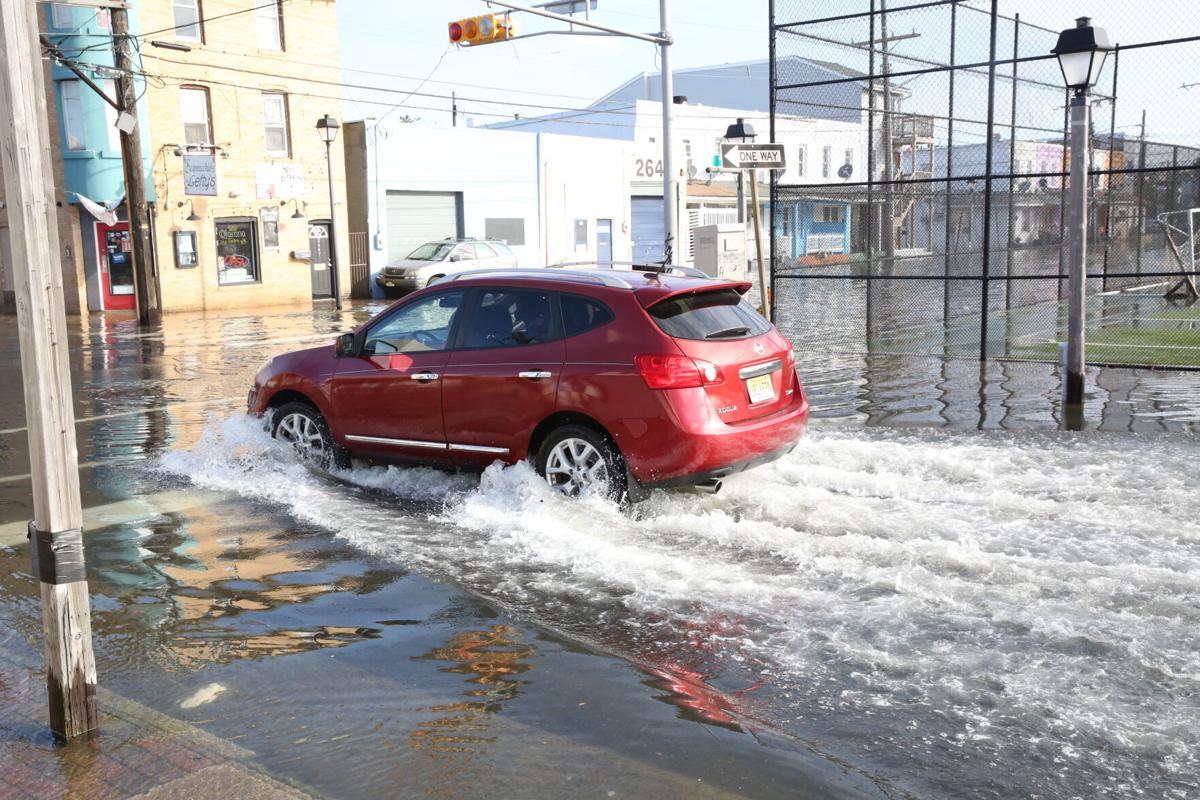
ATLANTIC CITY — A $20 million grant will be used to complete a series of capital improvement projects throughout the city, including bulkhead repair and replacement, flood-proofing public buildings and upgrading traffic lights.
The Community Development Block Grant Disaster Recovery grant was awarded to the city to repair and replace infrastructure damaged in 2012 from Superstorm Sandy. City Council inserted the grant funding into the 2020 operating budget during Wednesday’s public meeting.
A total of seven projects have been identified by the city administration and the state Department of Community Affairs to be funded, either partially or fully, with the grant money. Other grant money will be used in combination with the CDBG to complete the projects, officials said Wednesday.
The projects that will be funded through the Atlantic City Resilience Program include:
People are also reading…
bulkhead replacements in Lower Chelsea, Ducktown and Chelsea
bulkhead stabilization and dredging in Gardner’s Basin
bulkhead construction along South Boulevard
inspection and replacement of check valves for drainage near Back Bay, flood-proofing public buildings, such as City Hall and the All Wars Memorial Building
and replacement of 27 traffic signals throughout the city.
All seven projects are in or just beginning the design phase. Upon completion of design and engineering, detailed project budgets are to be submitted to the DCA for approval before a project can begin construction. Upon approval of detailed project budgets, DCA will allocate funding by project, city officials said.
The DCA — the agency with direct oversight of Atlantic City following the 2016 Municipal Stabilization and Recovery Act — announced the state’s intention to redistribute the federal funds to the city last year.
The funds must be spent by September 2022.
“This process has been going on, publicly, for close to a year, just to get to this point,” DCA Deputy Commissioner Rob Long said Wednesday. Long added that the list of projects was vetted and the approved items “were specifically determined to be the ones that were the most urgent and could also be finished,” by the 2022 deadline.
Long estimated that nearly $10 million of the CDBG will be used for the various projects related to bulkheads.
When the redistribution was announced in November 2019, Lt. Gov. Sheila Oliver, who also serves as DCA commissioner, said that by allocating the CDBG funds the state was “protecting a more than $100 million investment we’ve already made in Atlantic City in restoring homes and rebuilding small businesses damaged by Superstorm Sandy. Also, in the longer-term, these projects will help guard against repetitive flooding and fortify Atlantic City to attract future investment.”
Gov. Phil Murphy said, at the time, the money would “bolster Atlantic City ... to minimize damage in future storms, and to protect the community for generations to come.”
The Lower Chelsea project would replace existing bulkheads along the Back Bay, west of Albany Avenue, with new elevated bulkheads to prevent damage by flood inundation and wave-overtopping.
In Gardner’s Basin, the plan is to stabilize the section of the bulkhead in the park that is collapsing into the water to alleviate environmental and pedestrian risks and mitigate regular flooding. The dredging will extricate stormwater outlet pipes that are submerged under layers of mud to enable drainage.
New bulkheads along the waterfront on South Boulevard in Chelsea Heights will help alleviate regular flooding at high tide, which is causing significant erosion. Likewise, the new bulkheads in Ducktown and along the bayfront in Chelsea are expected to protect the area against 50-year flood conditions.
The more than 100 outflow pipes in the Back Bay will be individually inspected and, if necessary, replaced.
At City Hall, the floodproofing will include protecting the emergency generators on the first floor. The All Wars building will have steel flood doors installed.


