

Williamsville resident Megan Witzleben has spent part of every summer near the Ontario beaches of Lake Erie since before she could walk. Her own children, now ages 5 and 7, equate summer with their grandparents' Ridgeway cottage and the beaches that dot the shoreline west of Fort Erie.
That's where she saw her parents and in-laws, where her children hung out with their cousins and summer buddies, and where she got some much-needed work done while grandma and grandpa took her children to play in the sand.
"It's always been such a friendly border," she said, wistfully.
Not anymore.
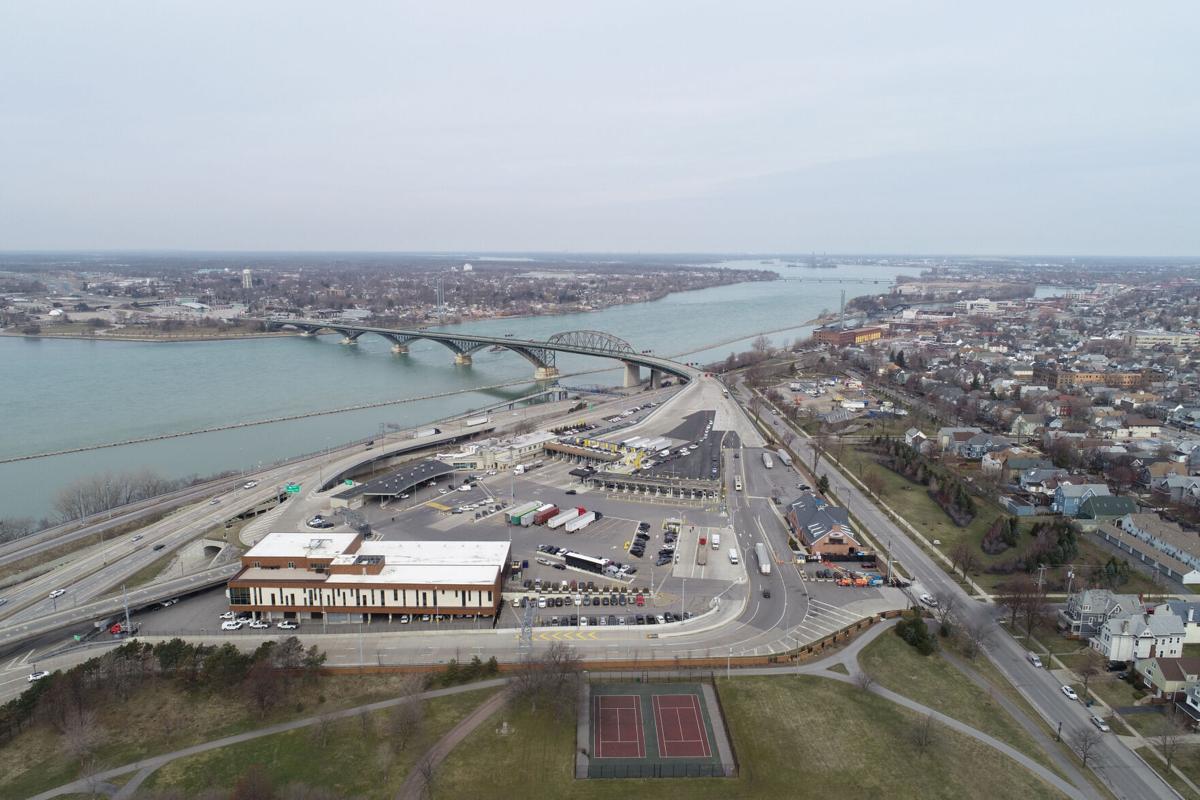
The U.S.-Canada border has been closed to non-essential cross-border traffic since March 21, with repeated 30-day extensions. Canadian Prime Minister Justin Trudeau announced two weeks ago that the border would again remain closed through at least July 21 as parts of the United States see another surge in Covid-19 cases.
People are also reading…
Bipartisan efforts by Congress members representing northern border districts to get some travel restrictions eased have made little headway so far.
"The bottom line is, they don’t want Americans over there, and neither does the European Union," Rep. Brian Higgins said Friday.
He, along with Republican Rep. Tom Reed and 27 other representatives, urged a resolution to the lingering uncertainty in a letter sent Friday to top leaders with the U.S. Department of Homeland Security and Canada's minister of Public Safety and Emergency Preparedness.
"The social and economic partnership between our two nations necessitates a clear pathway forward," the letter states. "The continual 30-day extensions without a plan for how restrictions will be modified prolongs uncertainty for both communities and creates unnecessary tension as we approach each new expiration."
The letter calls for the establishment of a "comprehensive framework for phased reopening of the border based on objective metrics and accounting for the varied circumstances across border regions."
Higgins ticked off a series of economic blows to Western New York caused by the lack of cross border traffic, such as the heavy loss of Canadian travelers through the Buffalo airport, millions in lost Canadian health care revenue and diminished retail activity.
He also criticized the lack of a coordinated federal response to the coronavirus pandemic in the United States, compared with Canada, which has led to much lower infection rates in Ontario and our northern neighbors lobbying for Americans to remain on their own side of the border.
A poll conducted in early June by the Association for Canadian Studies showed that while 48% of Americans would like to see the U.S.-Canadian border reopened by the end of this month, and nearly 70% would like to see the border reopened by September, only 20% of Canadians said they thought opening the border by the end of July was a good idea.
Even more telling, 51% of Canadians surveyed said the border should remain closed through the end of the year.
Witzleben said she understands their concerns.
"The one thing I don’t want to do is cry about a beach club when people are dying," she said.
But that doesn't resolve problems for families like hers, which has relied on the open border to support her extended family's way of life.
Even though her parents are Florida residents, they spend May through October living in Ridgeway, Ont., in a cottage they've owned for 40 years. Since they've given up their home in Western New York and are barred from Canada, they're essentially trapped on the Gulf Coast, even though they see doctors in Buffalo.
"Our family is actually being separated by this," she said.
Meanwhile, outdoor activities that the extended family enjoyed in Canada and would limit risk to coronavirus exposure aren't an option any longer. The family also shoulders a costly beach club membership in Canada that they can't use. Witzleben said she knows of others who are suffering even tougher family separations.
Even if they could get into Canada, they'd have to self-quarantine for 14-days, making any work-related commuting impossible.
Higgins said he's advocated for an expanded definition of "essential travel" between the borders and hopes the Canadian government will at least consider a carve-out for regions such as Western New York, where Covid-19 cases have shown a stable, downward-sloping trendline.
Though it's hard to know if anyone is listening, Higgins said, "that doesn’t mean you give up."


