

ST. LOUIS • Gov. Jay Nixon says a plan to increase drivers license fees would cost Missouri drivers $22 million a year without providing any extra service for that extra money.
Supporters of the bill counter that it would actually provide the most important service of all: new licensing offices, badly needed in some underserved parts of the state.
Which of those arguments prevails will be determined this week, when the Legislature decides whether to override Nixon’s veto of that bill and 28 other measures.
It’s still unclear whether Nixon’s veto of the drivers license bill will be among those that lawmakers try to override when they meet today in Jefferson City to begin their annual veto session. The bill’s sponsor said this week he was assessing its chances.
The bill would hike the fees that drivers pay at offices around the state that process drivers licenses, vehicle titles and related documentation. There are some 180 of those offices statewide. They are privately run, making their money from state-set fees added to the transactions.
People are also reading…
The current fees vary, and generally are between $2.50 and $7 per transaction. Some office operators, who bid to get the state contracts to run the offices, have said the fees are too low for them to turn a profit.
The bill as passed by the Legislature would raise some of those fees incrementally and double others.
It would hike the fee for annual car registration from the current $3.30 to $5. Biennial registration would rise from $7 to $10. The title application fee would rise from $2.50 to $5. The fees for issuing drivers licenses would rise from $2.50 to $5 for a license of less than three years, and from and $5 to $10 for of license of more than three years.
Nixon vetoed the bill Aug. 26, then conducted a St. Louis news conference that day to deride the Legislature for “doubling fees on every Missourian.”
“Folks, if we’re going to ask for a single penny from our citizens, we’d better have a darn good reason to do it,” Nixon said.
He said the bill “increases the price tag of government while doing nothing to improve the product. It’s taking money for the sake of taking it. ... (It) does not add or improve a single service.”
But the bill’s sponsor, Sen. Brian Munzlinger, R-Williamstown, disputes Nixon’s characterization that this is just more money for the same service. In some rural counties, he noted, “they have no service, because there is no office there, because (the private contractors) can’t make it work.”
As for those fee hikes, Munzlinger said, “People spend more on gas on getting to (licensing) offices in the neighboring counties” when their own counties don’t have them available. Among Nixon’s other vetoes that could be challenged are on a tax-cut bill that he claims would benefit primarily the rich and corporations while blowing a hole in the state budget; a measure that would remove names from the state’s sex-offender registry if the offenders were minors when they committed the crime; and a bill that would declared some federal gun-control laws unenforceable in Missouri.
To override the Democratic governor on a veto, lawmakers must muster a two-thirds vote in each chamber — 109 votes in the House and 23 votes in the Senate. Republicans control narrowly veto-proof majorities in both chambers, and some have vowed to use the veto session as a show of party solidarity.
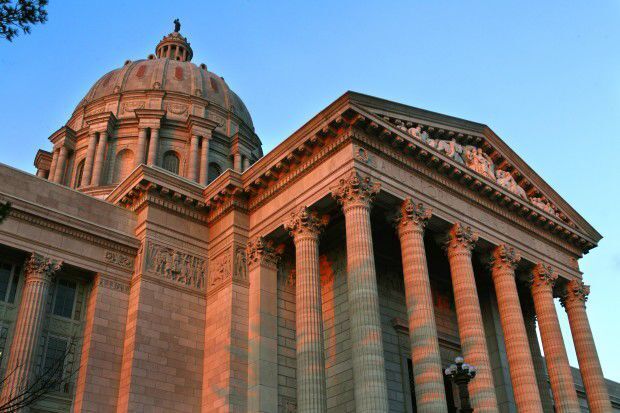
The Missouri State Capitol in Jefferson City on May 17, 2013. Photo by Robert Cohen, rcohen@post-dispatch.com
Follow Kevin McDermott on Twitter @kevinmcdermott


