Rancher Brian Quigley doesn’t beat around the bush — he believes it’s time to take a firm hand with grizzlies.
“Problem bears, regardless of whether it’s a sow or a boar or whatever, need to be shot,” he said.
People are also reading…
He isn’t advocating for extirpation of the species, however. And he’s willing to fight fur with fur – employing a pack of specially bred guard dogs to defend his cows.
“The grizzly bear has as much a right to be here as you, me and anybody else. When they start destroying my property, and they’re killing my livestock, they’re in violation of my constitutional right,” he said.
American jurisprudence has found wildlife are a public trust, belonging to all Americans, however. That builds tension between the hundreds of millions of people who want grizzly bears protected and the thousands of ranchers who live with grizzlies in their midst.
Quigley said the big bears have been present on the landscape near Avon throughout his lifetime. Now there are just more of them. He has had at least three on his property this year.

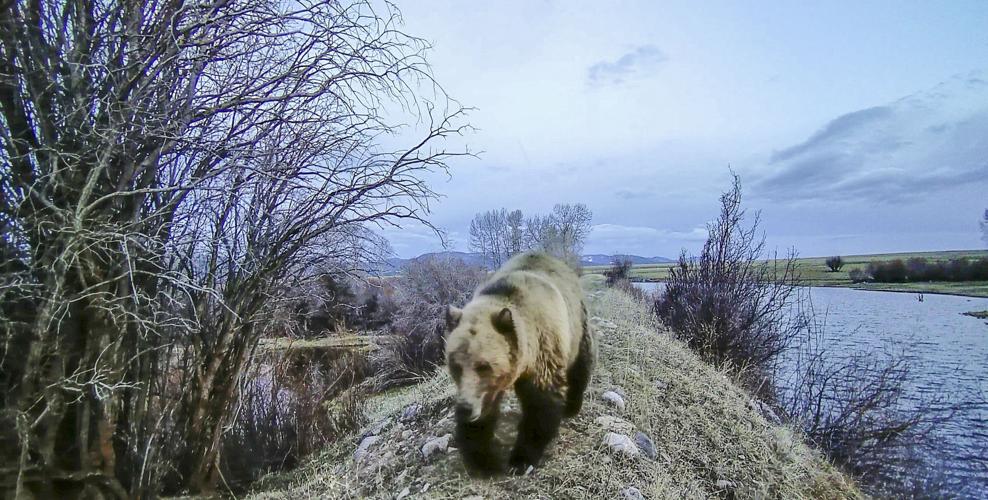
One of several grizzly bears that have been roaming Avon this year is captured on a game camera by People and Carnivores, a Montana non-profit dedicated to reducing conflicts between people and large carnivores.
Though he hasn’t confirmed cattle losses in 2021, he said grizzlies have been responsible for losses on his property the last two years, and in years before that as well.
Delisting the Northern Continental Divide and Greater Yellowstone ecosystems' grizzly populations is long overdue, Quigley believes. He also thinks the official counts underestimate grizzly numbers and supports the slate of new Montana laws allowing livestock owners to kill bears that pose a problem and prevent FWP from taking “a problem bear from my neighborhood and dumping it into somebody else’s neighborhood.”
He also believes in a grizzly bear hunting season.
But since the grizzly is protected by the federal Endangered Species Act, the Montana Legislature lacks authority to give landowners killing rights. And given the growing divide between Montana’s anti-predator wildlife policies and the federal government’s ESA duties, the chance of grizzlies getting delisted, and therefore becoming huntable, has declined.
Quigley has taken steps to protect his property within the bounds of current laws.
He has used livestock guardian dogs for six years to protect his animals from wolves and other predators, including grizzlies.

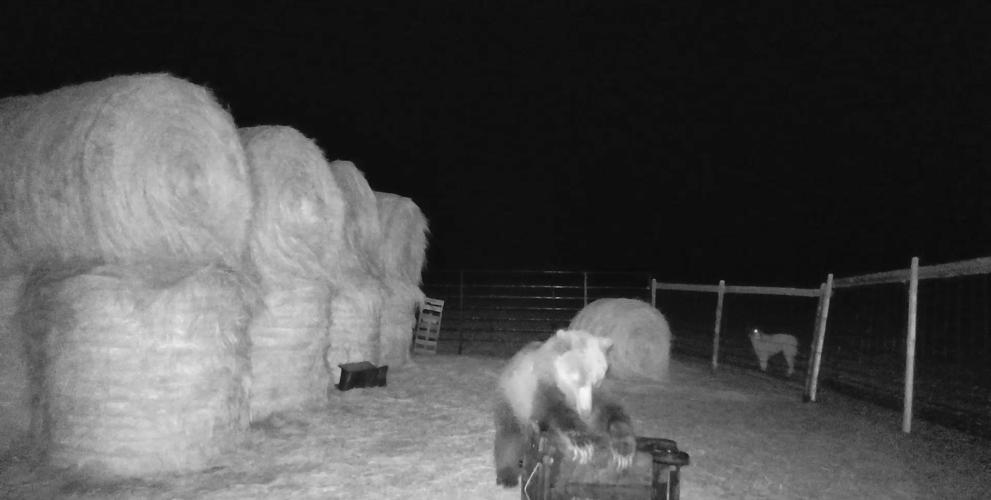
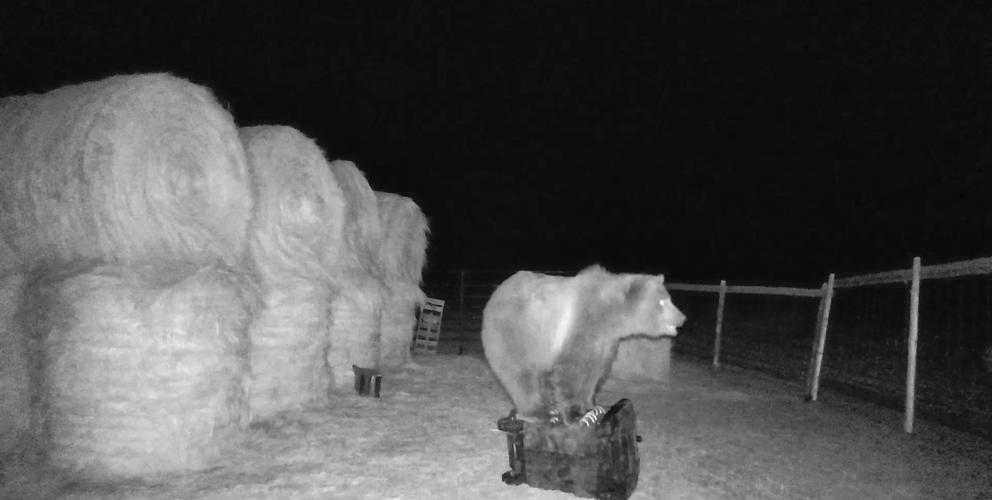
One of the grizzlies that has been active at Brian Quigley's ranch in Avon is seen in Quigley's stackyard trying to break into a bear-resistant garbage container holding food for livestock guardian dogs. Quigley has been working with non-profit People and Carnivores to protect his property from grizzly bears.
“They’re not a cure-all,” he said. “They’re kind of a neutralizer. They try to push the predators out.”
This year, his game cameras captured video evidence: his dogs going berserk on a grizzly in his stockyard while a bear tried to get into a bear-resistant container holding their feed.
Quigley has been working with Kim Johnson of the nonprofit organization People and Carnivores to reduce grizzly threats. Johnston connected Quigley with a breeder for some additional guardian dogs — Turkish Boz-Kangal crosses.
“These dogs seem to be really effective with these apex predators like wolves and bears,” Johnston said. “They're also good patrolling dogs, which is good for cattle.”
Nothing is easy on a ranch.
With roaming guardian dogs, it’s necessary to have the dogs’ food secured out on the landscape as well – another potential lure for predators.
Quigley secured the feed in bear-resistant containers, but a grizzly managed to get into two containers stationed in remote locations late this summer.
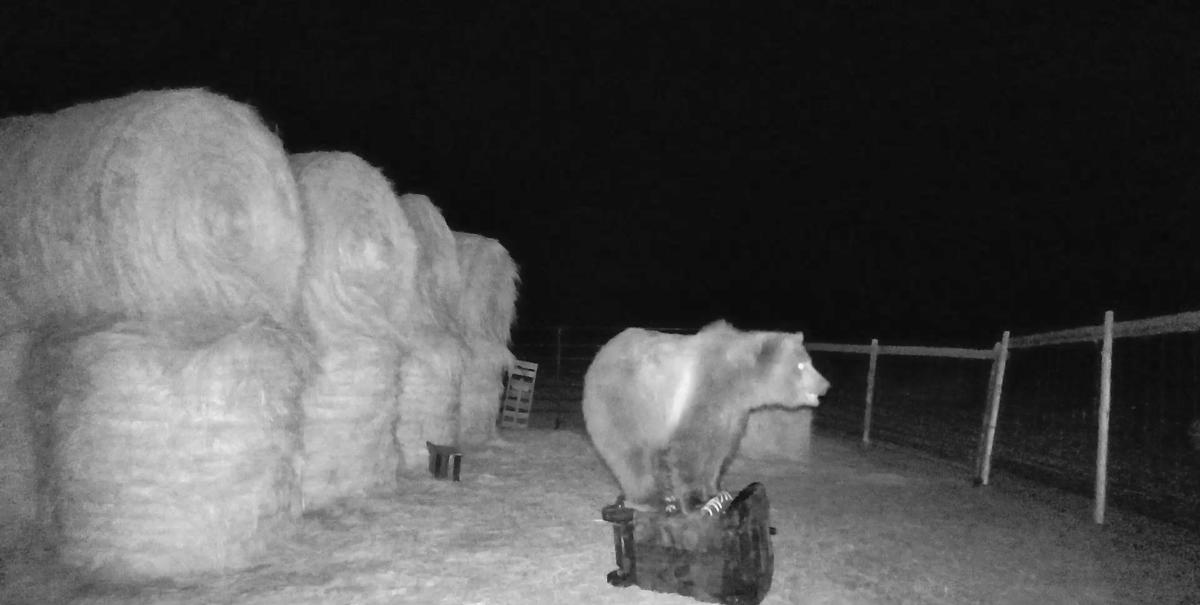
A grizzly bear is captured on camera by People and Carnivores trying to tear into a bear-resistant container on a ranch.
"You'll never catch me saying ‘bear proof’ and there's a reason,” Johnston explained. “When they do the certification testing on the containers, the criteria is that they test it with actual live grizzly bears for 60 minutes of paws-on, full-force contact.”
She wasn’t out there in the night, but Johnston speculated that the grizzly, motivated by a food reward, put in some serious time and work.
Montana Fish, Wildlife & Parks bear manager Rory Trimbo dropped off some heavy-duty metal tool boxes early September as replacements. So far, they’ve worked as expected.
Johnston knows grizzlies. Before joining People and Carnivores, she was a bear management technician with FWP and worked at the Grizzly and Wolf Discovery Center in West Yellowstone, Montana. She loves collaborating with working landowners.

Grizzly tries to get into bear-resistant container in Avon this year. Non-profit People and Carnivores has been working with a rancher in the community to protect livestock from grizzlies as they expand their range.
"When you get on the ground and visit with these people — most ranchers, people in Montana, they appreciate the wildlife we have,” Johnson said “It's just finding solutions when it's their family or their kids and their property (at stake).”
Ranchers often have an excellent understanding of the movement of local wildlife, she added.
Quigley has likewise enjoyed working with Johnston, and said he benefited from her grizzly expertise.
“She’s been very helpful to me,” he said.
They’ve been hard at work training the new dogs, and are using a phone app and SPOT GPS tracking system Johnston rigged up for dog collars that’s more affordable than traditional tracking systems and has a longer battery life.
On Sept. 11, one of Quigley’s older livestock guardian dogs was killed by a grizzly, and the depredation was confirmed by U.S. Wildlife Services trapper Bart Smith. The trapper was unable to capture the bear that was responsible.
“They’re important to my business as a livestock producer,” Quigley said. “Right now I have six dogs left. I’ll probably have to replace what I lost.”
Confirmation allows the rancher to seek reimbursement from the Montana Livestock Loss Board for the dog that was killed.
Quigley and Johnston continue to work together, and grizzlies were still digging for caraway roots in Quigley’s hay fields as of early October, very close to his home.
“If you kill one bear, another bear is just going to come in,” Johnson said. “It might help for the moment, but a lot of times it doesn’t help them in the long-term. I’ve talked to a lot of ranchers that see that lethal control is not the only solution. We really do think conflict prevention is much more effective than killing bears to help that rancher sleep at night.”


 Tucson's iconic Arizona Inn to add rental homes to its property