

OCEAN CITY, N.J. — It's summer on the Jersey Shore. For many young people, that means one thing: Party time!
But officials and residents of several beachside towns say New Jersey's criminal justice reforms in recent years — such as decriminalizing marijuana use — are having an unintended effect, emboldening large groups of teenagers to run amok on beaches and boardwalks, knowing there’s little chance they'll get in trouble for it.
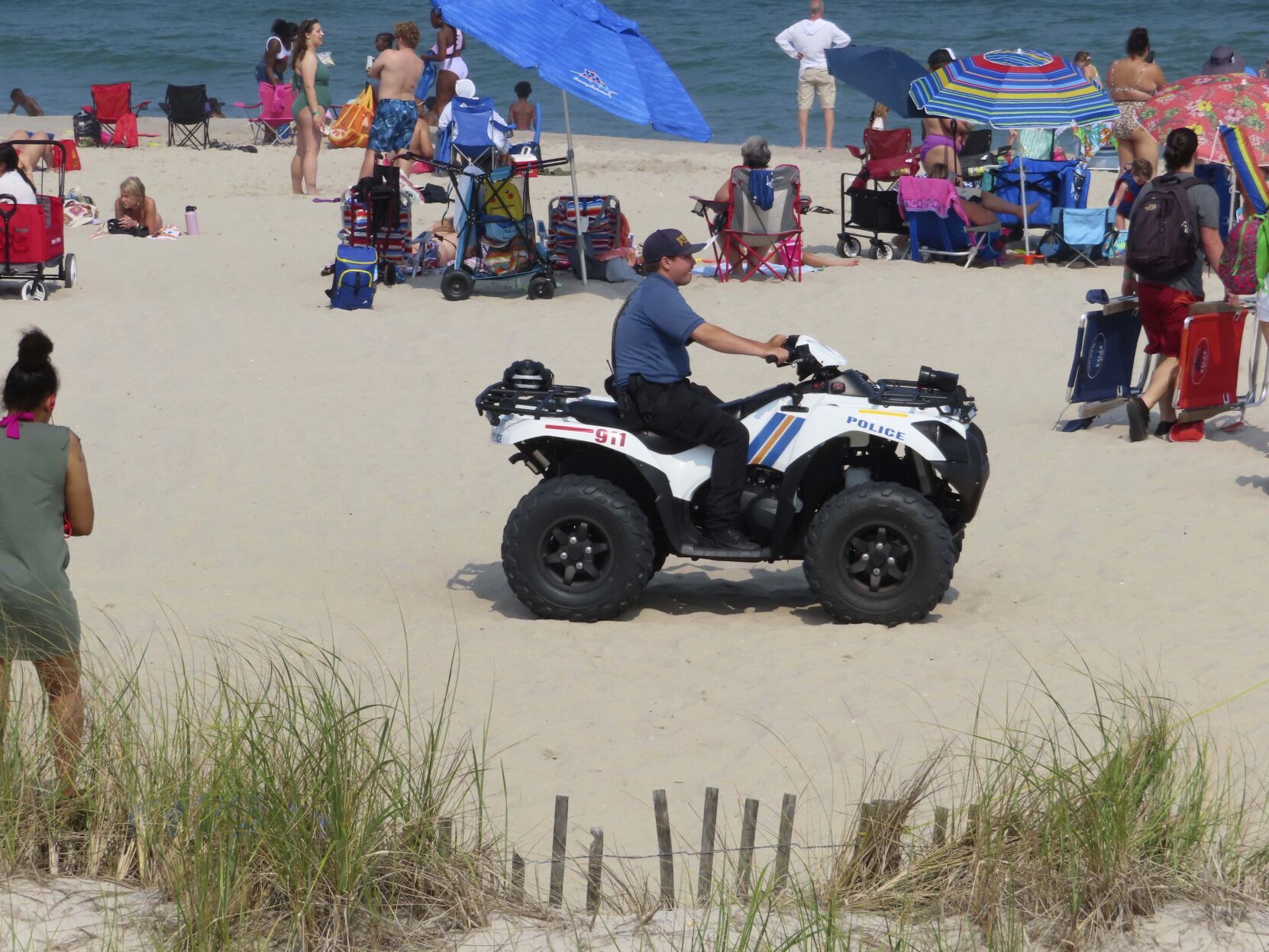
A police officer in a dune vehicle patrols the beach June 29 in Seaside Heights, N.J.
Now, some lawmakers are trying to walk back parts of those laws, which also involve alcohol use and possession. The laws were designed to keep more juveniles out of the court system, and imposed a number of restrictions on police officers' interactions with them.
“You don’t want to see a kid with a record that will last the rest of his life, but you can’t let them believe they can do anything they want,” said Mayor Anthony Vaz of Seaside Heights. “That’s unacceptable.”
People are also reading…
During Memorial Day weekend, police and media outlets reported episodes of underage drinking, drug use, fights and assaults in Ocean City and Seaside Heights — home to the infamous MTV series “Jersey Shore” in which a bunch of summer renters generally raised hell in town.
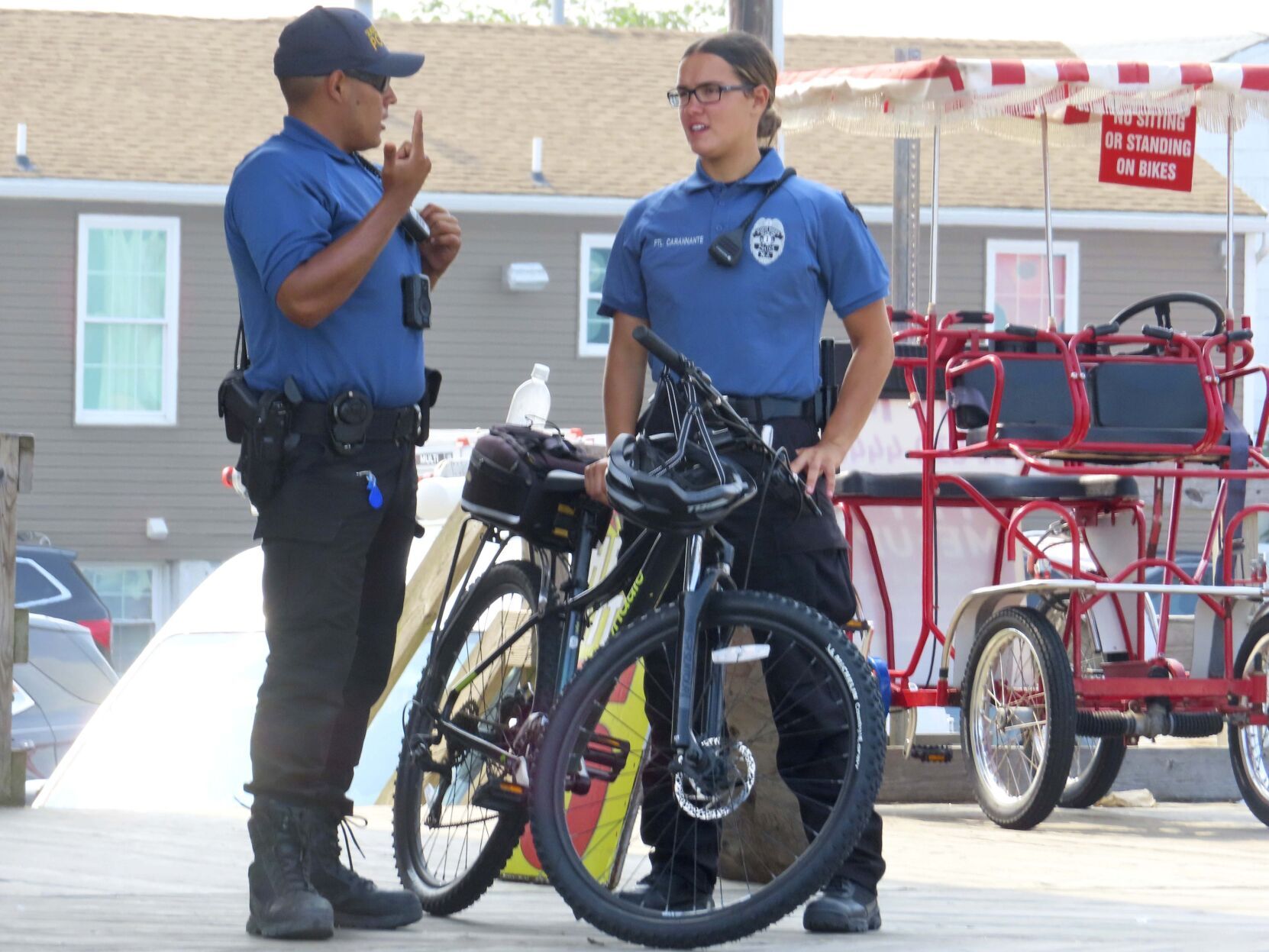
Bicycle police officers talk while patrolling the boardwalk June 29 in Seaside Heights, N.J.
Although teens have been drinking and smoking marijuana at the Jersey Shore for generations, long before the state altered its laws, some elected officials and residents say the situation has drastically worsened in the last two years.
Over Memorial Day, teens were hanging from a motel balcony in Seaside Heights and climbing onto the roof of another motel. In Ocean City, eight teens drank themselves unconscious on the boardwalk and had to be hospitalized. Restroom attendants were assaulted and spit on by youths. Several teens were carrying knives and one had a replica gun that police say looked just like the real thing.
“Enough is enough,” Ocean City Mayor Jay Gillian wrote in a message to residents on the city's website. “It’s become clear over the past two summers that these crowds will only grow larger and unrulier unless something changes.”
Holly Kisby, an Ocean City resident who has worked on the boardwalk for over 30 years, said teens were drinking, smoking marijuana, setting off fireworks into the crowd, fighting, destroying property and stealing from stores, among other things.

Young people gather peacefully on the beach June 2 in Seaside Heights, N.J. Officials and residents of several New Jersey shore towns say the state's law decriminalizing marijuana use is having an unintended effect: emboldening large groups of teenagers to run amok on beaches and boardwalks.
“You're getting well more than 300 kids, if I had to guess, 700-plus a few nights, all acting wild,” she said. “Like a bad house party without the house. This is by far the worst it’s ever been.”
Ocean City Police Chief Jay Prettyman said most of the troublemakers were drinking underage, but added that New Jersey's recently adopted cannabis law says that someone under the age of 21 cannot consent to a police search for marijuana or alcohol.
Previously, teens caught with those things could be arrested. Now, they get a warning, or get taken to police headquarters for a parent or guardian to pick them up except in the most serious situations.
Word spread fast among teens, who know they don't have to give officers their names as long as they don't walk away from the officer during questioning. The kids even know that officers themselves could face charges if they violate the rights of teens in these circumstances.
The New Jersey Attorney General's Office did not respond to requests for comment. The American Civil Liberties Union supported the changes, saying teens should be offered alternatives to criminal prosecution where possible.
Above the Seaside Heights boardwalk recently, a small plane towed a banner asking, “Do you know the signs of alcohol poisoning?” Sitting on a bench with friends, 22-year-old Santiago Caceres said police should not be able to search people for illicit substances.
“People of color are way more likely to be searched than white people,” he said. “People are in jail because of this.”
“A lot of underage people make a dumb mistake and they get a criminal record,” ruining the rest of their life, added his friend Angel Aguero, 23. Both had come down to the beach from West New York, a town in New Jersey just across from Manhattan.
Nick DiMattina, a 15-year-old from Beachwood, New Jersey, said police should be allowed to conduct searches of underage people like himself. He learned of the change in the law on TikTok.
“If kids are allowed to do it and don't get searched, then they're going to do it,” said DiMattina, who said he does not drink or use cannabis.
Several lawmakers from both parties have introduced bills reinstating fines for underage possession of alcohol and marijuana, and allowing police officers to search teens observed to be in possession of the items.
Prettyman, the Ocean City police chief, said officers throughout the state are hesitant to engage teens regarding alcohol or marijuana for fear of being charged themselves with a third-degree crime of depriving the teens of their rights. He said bills removing that provision, and reinstating penalties for underage possession and consumption of alcohol and pot, will help undo some of the excesses of the current law.
Sen. Michael Testa, a Republican, was shocked by the “lawlessness” on the Jersey Shore over Memorial Day weekend. He's sponsoring a package of bills including one that would remove the threat of charges against police officers acting in good faith, and another allowing towns to designate alcohol and marijuana-free zones.
New Jersey is not alone in reforming its laws to try to keep more juveniles out of the criminal justice system. Several Maryland law enforcement officers say that state's juvenile reforms have made it harder to question and investigate teens suspected of committing crimes, although the state's Department of Juvenile Services says the laws are having a positive effect.
Seaside Heights' mayor said he heard kids as young as 13 mouthing off to police officers, with impunity.
“A few of them actually said, ‘You can’t do anything to me,’” Vaz said. “I heard it with my own ears."
Every state that has legalized recreational marijuana
Intro

Gov. J.B. Pritzker signed legislation June 25 making Illinois the 11th state in the nation to legalize recreational marijuana.
The law allows residents to purchase and possess up to 1 ounce (30 grams) of marijuana at a time. Non-residents could have up to 15 grams.
Here's a look at other U.S. states (and one district) that have also legalized marijuana.
Above: A DeKalb, Ill., man smokes marijuana from a bowl at his home June 10, 2019. (Mark Busch/Northwest Herald via AP)
Alaska — February 2015

Alaska became the third U.S. state to legalize the recreational use of marijuana in February 2015, though lawmakers continued to hash out further details on pot use for years. As recently as March, Lt. Gov. Kevin Meyer signed and filed rules for the use of recreational marijuana at authorized pot shops.
Above: Tourist Jeff White, who lives near Louisville, Kentucky, smells the marijuana for sale at The High Expedition Co. in Talkeetna, Alaska, on July 12, 2017. (AP Photo/Mark Thiessen)
California — December 2017

California in December 2017 became the nation’s largest state to offer legal recreational marijuana sales. In general, the state treats cannabis like alcohol, allowing people 21 and older to possess up to an ounce of pot and grow six marijuana plants at home.
Above: Christy Banda, a representative for the Jack Herer cannabis company, takes a puff from a vape pen during WeedCon West 2019 in Los Angeles on June 20, 2019. (AP Photo/Richard Vogel)
Colorado — December 2012

Voters approved an amendment legalizing recreational marijuana use in Colorado on Nov. 6, 2012. The measure took effect in December after Gov. John Hickenlooper declared it to be part of the state's constitution.
Above: Attendees celebrate at 4:20 p.m. by lighting up marijuana during the Mile High 420 Festival Friday, April 20, 2018, in Denver. (AP Photo/David Zalubowski)
District of Columbia
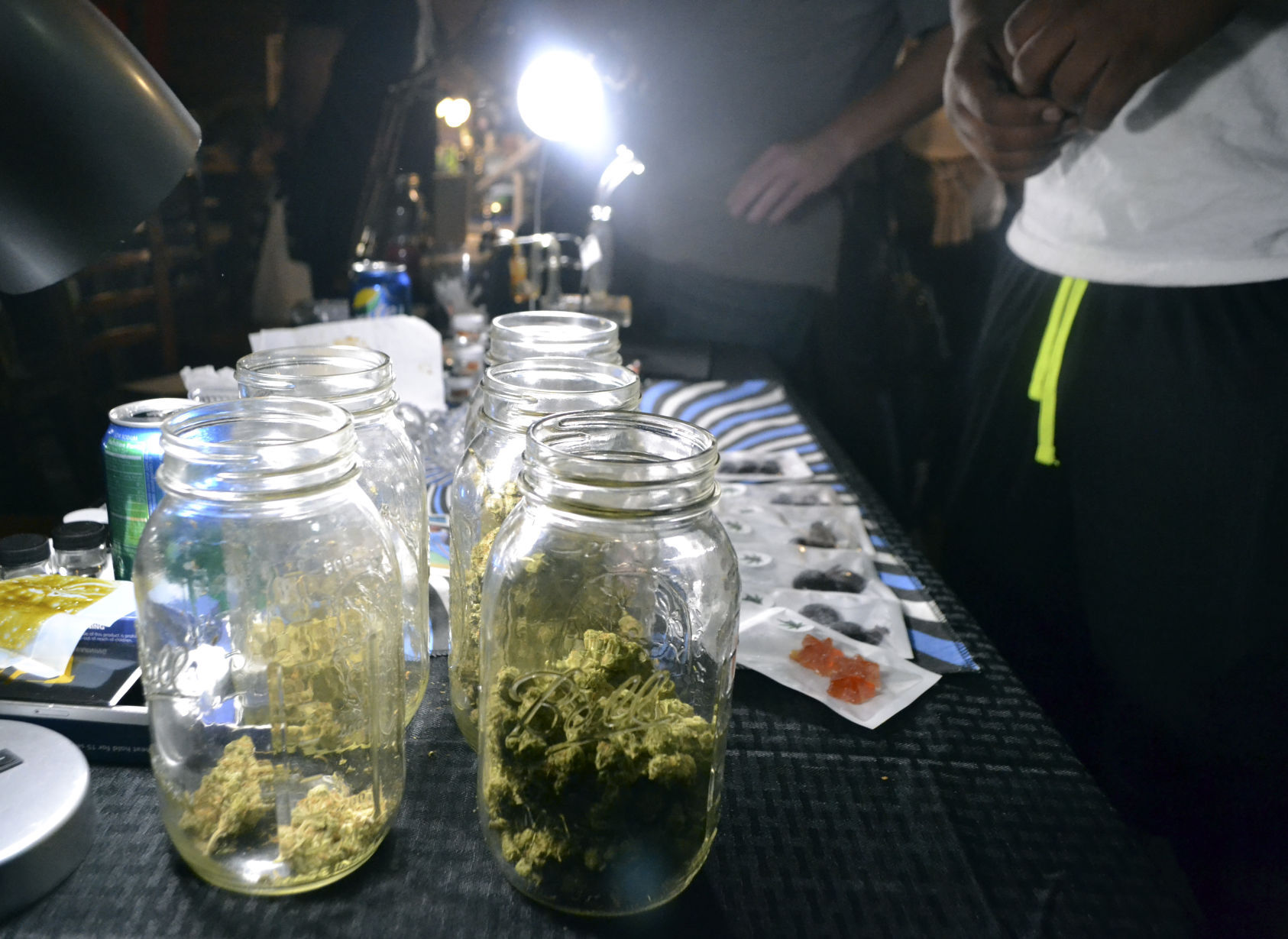
Above: Jars of marijuana buds are displayed in Washington at a marijuana event Sept. 11, 2017. (AP Photo/P. Solomon Banda)
Maine — November 2016
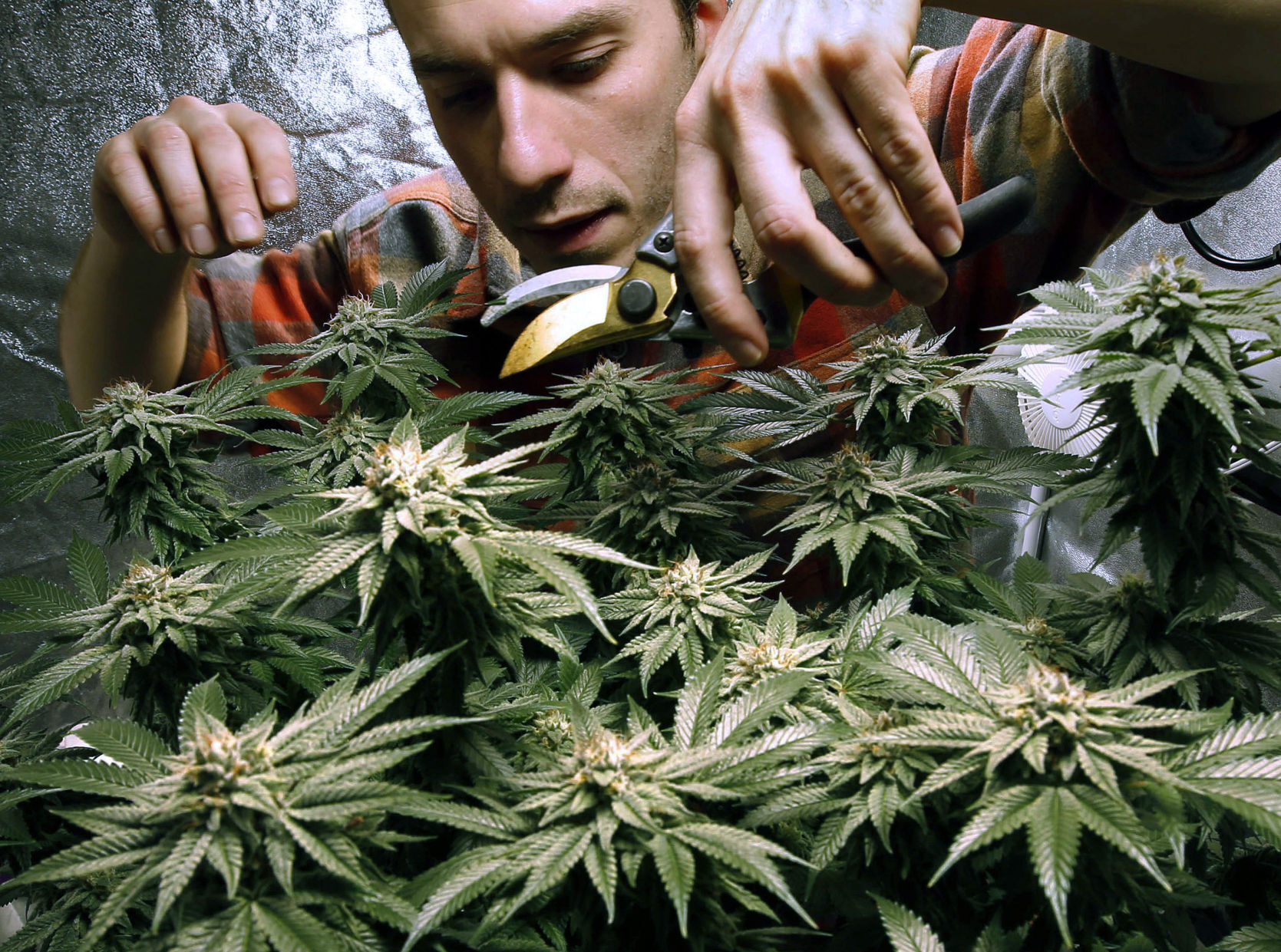
Though Maine’s voters chose to legalize both the use and sale of recreational marijuana among adults in , months of delays and political squabbles slowed the implementation of a commercial industry. But with Gov. Janet Mills signing a bill June 27 setting up a legal framework for the sale of recreational marijuana to adults, the state now has a legal road map for marijuana to arrive in stores as soon as early 2020. Maine already has legal medical marijuana.
Above: James MacWilliams prunes a marijuana plant growing indoors in Portland, Maine, on Dec. 13, 2017. (AP Photo/Robert F. Bukaty, File)
Massachusetts

Above: Stephen Mandile, right, an Iraq War veteran from Uxbridge, Mass., is the first to purchase recreational marijuana at the Cultivate dispensary on the first day of legal sales in Leicester, Mass., on Nov. 20, 2018. (AP Photo/Steven Senne)
Michigan

Above: An attendant weighs marijuana at the Far West Holistic Center dispensary in Detroit on Nov. 7, 2018. (AP Photo/Carlos Osorio, File)
Nevada

Above: Gabe Williams works on a exhibit at the Cannabition cannabis museum in Las Vegas on Sept. 18, 2018. (AP Photo/John Locher)
Oregon
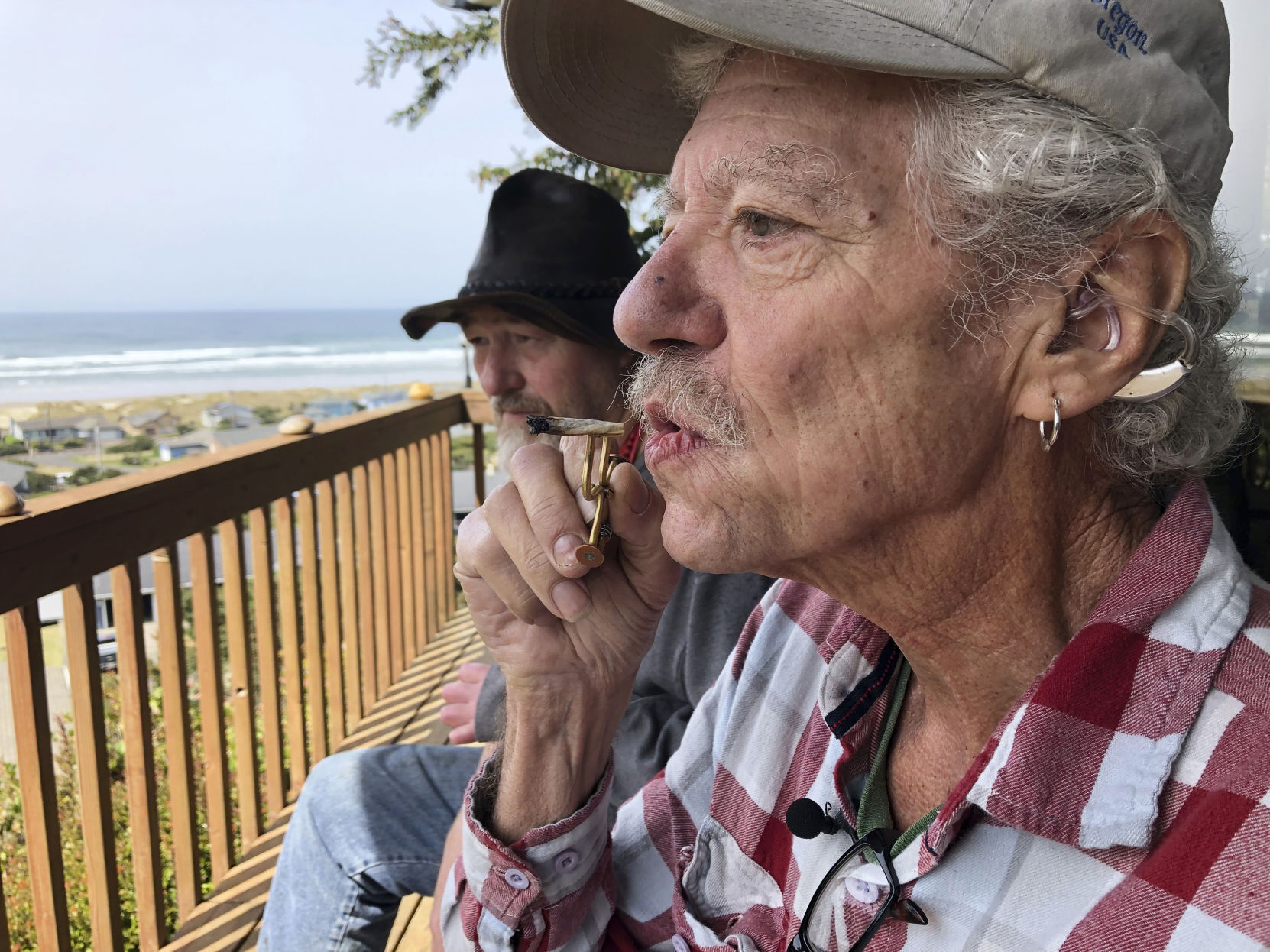
Above: Two-time cancer survivor and medical marijuana cardholder Bill Blazina, 73, smokes a marijuana joint on the deck of his neighbor's home in Waldport, Ore., on April 25, 2019. (AP Photo/Gillian Flaccus)
Vermont

Above: Bernie Barriere poses for a photo as he tends to two marijuana plants he legally grows in a basement in Bennington, Vt., on April 8, 2019. (AP Photo/ Michael Hill)
Washington

Above: A store employee assists customers at a marijuana shop in Seattle on March 28, 2019. (AP Photo/Elaine Thompson)


