

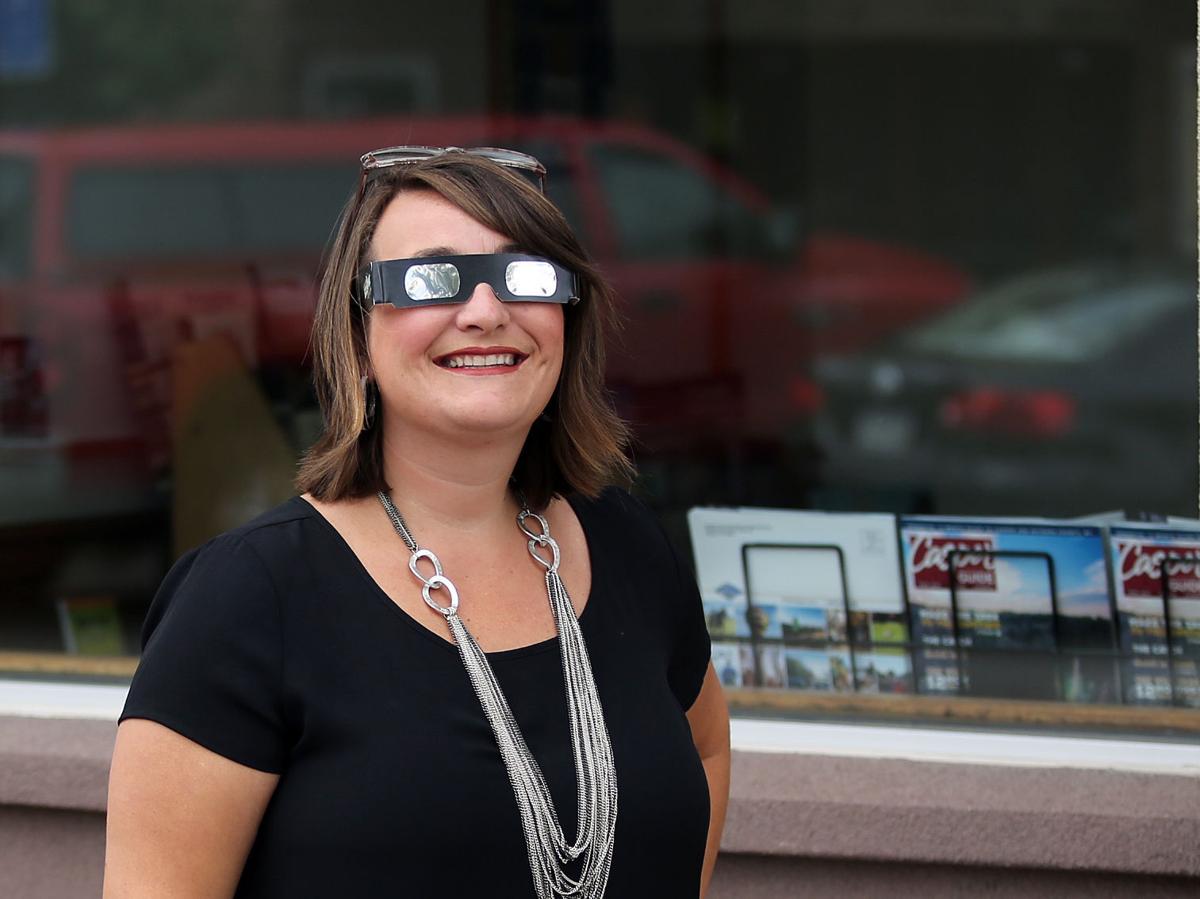
How does a city of roughly 60,000 prepare for an invasion of (maybe) 35,000 eclipse enthusiasts? With lots of calls, and meetings, and more calls, and patience. To get an idea of the logistics and planning that go into preparing for the celestial celebration, the Star-Tribune spoke recently with Anna Wilcox. The executive director of the eclipse festival, Wilcox was hired last year to ready the city and to ensure nobody would be in the dark before they were really in the dark.
What goes into planning an event like this?
Unfortunately, there’s no blueprint or guide on how to do that. I don’t think a lot of previous experience can play into different routes you will take. It’s just such an anomaly. Completely, utterly unique. One of the key things we did was listen to the community, listen to business owners, listen to folks who were planning on events or thinking about planning events and kind of use that to kind of figure out what our goals and overall mission would be. I think what we found and what we followed through with is one general office, one central location, one person who could communicate with all these different agencies and be the holder of that information and connect.
People are also reading…
A lot of what we did was look at it from an umbrella and say these people are planning this, these people are concerned about this. … When we started getting all of the event hosts together, talking about what they’re doing, they affiliated with the festival. Started having a series of meetings. It was more than likely all would have a need for food and different things like that. To bring in the county health department and put that person in front of 30 to 40 people vs. having a back and forth with each and every event.
Same with pulling together police and fire, and county health, and representatives from the city and (the Wyoming Department of Transportation) and representatives to the facility to speak once a month and when we got closer once every other week. We wanted to make sure people were on the same page, not duplicating efforts. We were able to take that information they had and communicate that directly. That eliminated the need for somebody who’s going to visit to check the resources for each and every different agency or each and every different event that was happening. It became that hub.
What was the hardest part of that process?
Making sure we had the right people at the table and were having the right conversations with the right people. Once we identified that and started meeting regularly, we saw a huge shift. And then just making sure we were available to the right people. If we have businesses reaching out, want or need or are worried about potential issues, they can bring them to us and we can communicate it back.
Kind of looked at it from perspective of, whether it’s an event host or a visit or a resident of Casper, if one person asks a question, probably 10 or 20 or more are wondering the same thing. Let’s get the answer out and figure out how to get that out there for them.
Another big challenge was working with the community itself, whether just residents or business owners, and saying ‘this is happening, and this is going to be big.’ We were also able to pull up information and we had the resources and how this had been done in different communities and in communities also planning for this particular eclipse. It’s hard for us to walk into a restaurant and say this is exactly what should be done to prepare for the eclipse. How long are they expecting (visitors), what are they going to be doing here, etc.? Take that to the resident or the business owner and say, OK, this is what we need to plan for. Now we know how much extra food we need to have on plan. We’re not open on Sundays, but Sunday might be the biggest day. In no situation did we dictate or set how things are going to happen — we just wanted to make sure we were a good resource for them.
How do you prepare a town of 60,000 people to accommodate, potentially, 35,000 more? What’s your biggest concern going into the weekend?
I think if you speak to anybody in emergency services, they have definitely used as large numbers as possible to make sure they have contingencies in place. As far as the festival, how many T-shirts, how many guides — we, of course, left a lot of flexibility in there. Most of the events, they have specific capacities. “We’re full, we’ve got as many people as we can on the property.”
There are so many other options of things they could do. One perspective was for all the different things that were happening, they all hit completely different targets. You don’t have one big event that’s going to target 35,000 people that are coming plus 15,000 residents who might come down and participate.
Instead a number, a variety of all sorts of things are going on. Five thousand people here enjoying this, 2,000 people here. How many events is too many events? And right now we’re looking at 40 different events, activities, even businesses that are doing the normal thing they normally do with one added special thing to make it special for eclipse weekend. Casper offers so many amazing things as far as recreation and things that happen everyday in Casper. This gives us and anybody trying to manage it from a safety perspective — this is how people are going to gather. Versus, there’s 30,000 people in town, we have no idea where they’re at and what they’re doing.
For us to have gotten all of these folks in a pattern and communicating with each other so plans can be made based on that, resources can be distributed based on that, that was a huge goal that was reached.
Yeah, getting 40 different events, plus different agencies, all on the same page, seems like it must’ve been difficult. What was that process like?
We started back in December of last year, communicating and meeting regularly with all of those event hosts. Our affiliation program was a huge part of that. Someone who was planning an event and affiliated with us, in exchange for getting that information from them that was needed to make sure we had a grasp of what was going on, we could promote it.
So there was an incentive for business and events to work with you guys?
Absolutely.
What are you still on edge about, now that we’re a few days away from the big day?
Still making sure everybody has good information. That will be – this last week, whether it’s last minute emails coming in, whether it’s people just deciding to come up here or things people didn’t think about. Over weekend, we’re have information booths, all manned, all of them have been trained.
We’re really making sure everybody knows where they need to go, how they need to get there. That’s our focus. Get as many people out to as many events that all of these amazing organizations have worked so hard to make happen. One of the most beautiful things of this event is we wanted to refer to it as a single activity or event, every single activity or event has been planned. We wanted residents to know that they’re sending that money and that money is staying in the community. Whether they’re eating at a food truck or they bought a ticket to an actual event.
I think the symphony said they’d sold 1,400 tickets to the symphony on Sunday, and that completely supports the symphony.
Just the extreme pride people have for Wyoming and for Casper, and I think this is the perfect time to go out there and be supportive, as well as be among visitors and share that pride with them. We’re going to have a great time together because we love our state, we love our city, we love our community.
So here’s the most important question: Where are you watching the eclipse?
I didn’t know until yesterday, but we had some staff in the downtown area, and I anticipated being down here as well. We have a number of interviews and some great national coverage. We’re going to make sure to be up there and meet with them and talk with them and make sure they have everything they need. I’ll be one of the how many thousands of people trying to get up to the event center and get my perfect spot.
— Seth Klamann, Star-Tribune
This interview has been edited lightly for clarity.


