

A Casper prep guide to the Aug. 21 eclipse
From the Countdown to Totality: Your updating guide to the Aug. 21 total solar eclipse series
Tens of thousands of people will descend Wyoming to view the Aug. 21 total solar eclipse. Now's the time to prepare. Learn what you need to know with our roundup of tips and information, from how to photograph the eclipse to the best way to survive the crowds.
- Mandy Burton, 307-266-0605
- Updated
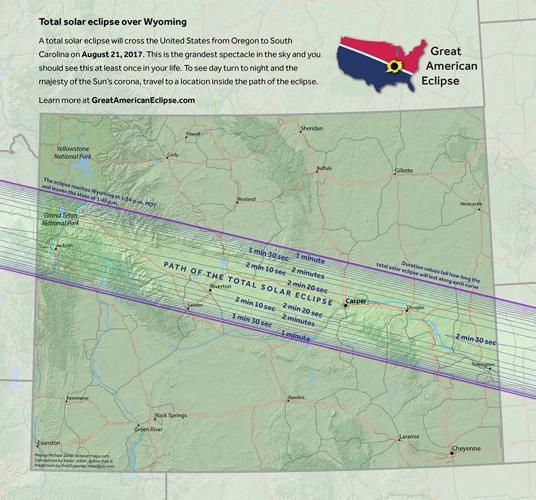
Casper will be in the dark for more than two minutes on Aug. 21, as the moon passes directly in front of the sun -- a total solar eclipse. Here's why that's happening and what observers can expect to see.
What happens during a solar eclipse?
The new moon crosses directly in front of the sun, so the moon’s shadow is cast onto the Earth.
A solar eclipse happens only during a new moon phase, when the side of the moon that faces the Earth is in darkness.
Every month has a new moon, but solar eclipses are rare because the moon’s orbit is tilted 5 degrees compared with Earth’s. This means the moon's shadow often either goes above the Earth or below. An eclipse happens when the two celestial bodies align.
What will people watching the eclipse see?
In Casper and other places along the path of totality, which stretches from Oregon to South Carolina, observers will see the dark disc of the moon slowly encroach into the sun, bit by bit, until the sun is covered. But that cover doesn’t mean it will be as dark as night – the shadow won’t be strong enough for that. It will probably be more like twilight.
Those in Casper will see "first contact" – where the moon first touches the sun – at 10:22 a.m. Full totality will occur at 11:42 a.m., and for Casper viewers, it will last 2 minutes and 26 seconds. The duration of the eclipse varies depending on where observers are located. In nearby Alcova, for example, totality is expected to last only 1 minute and 45 seconds.
People outside the path of totality will see a far less dramatic effect. Most people in the United States will see at least a partial eclipse – where the moon encroaches on the sun but never completely covers it. Others farther away will see no eclipse at all.
What else should observers look for?
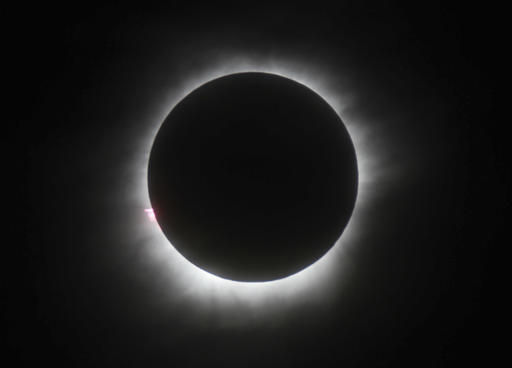
The moon isn’t a perfect circle; it has mountains and canyons, just like the Earth. That means some light from the sun will be visible around the perimeter of the moon, and that leads to unusual effects, usually seen just before totality.
- Baily’s beads: These bits of bright sunlight stream out from behind the moon.
- Diamond ring: When one stream of sunlight is more visible than the others, the eclipse takes on the appearance of a jeweled ring – a slender band of illumination sporting a gemstone of sunlight.
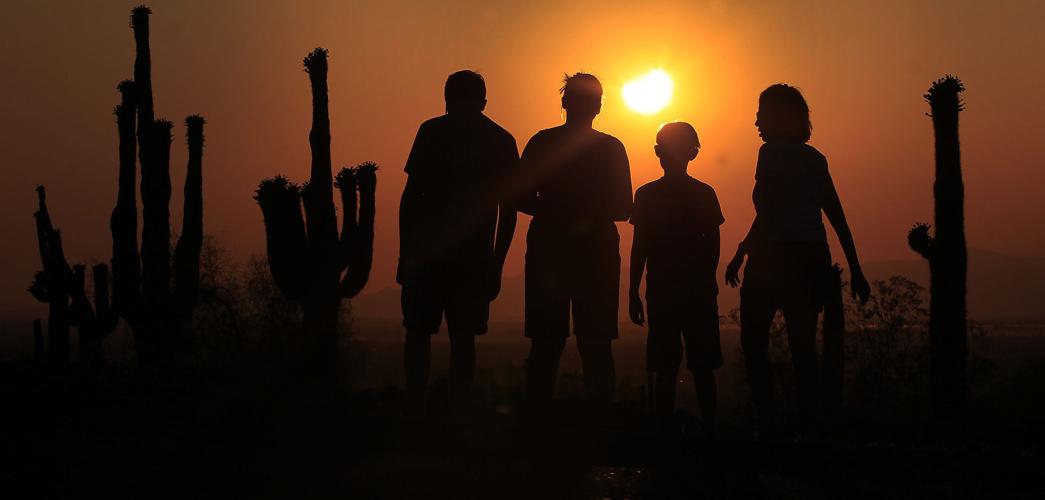
There might also be effects on the ground. Some animals might behave as if night was descending – such as chickens roosting. Temperatures are likely to drop quickly as the sun is blotted out. Observers may also see a bright light at the horizon, similar to a sunset, and planets and constellations may stand out.
Sources: Casper Planetarium educator Rod Kennedy, NASA.
- Elise Schmelzer 307-266-0574,
- Updated
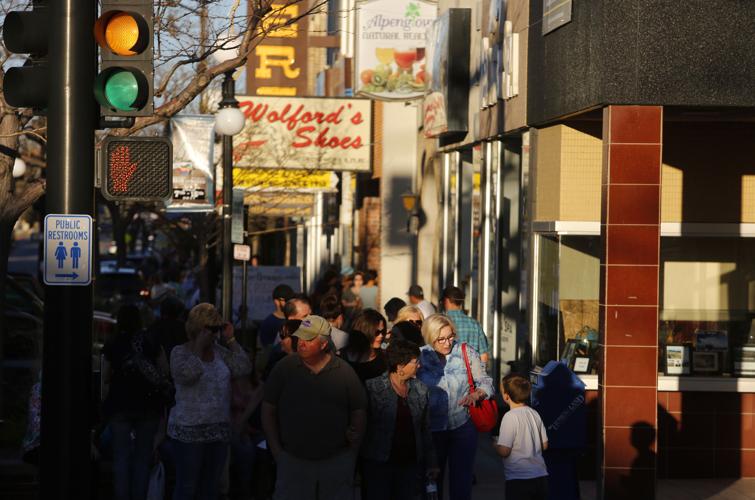
For years, local officials have prepared to handle the day that Casper's population is expected to swell by half.
They've mapped traffic plans, organized events and scheduled first aid tents. But local residents, too, can prepare for the crowds.
Casper is considered one of the country’s best places to view the eclipse because it is in the path of the totality of the celestial event. Visitors from around the country and the world are expected to arrive in town on the days leading up to the eclipse.
Eclipse festival organizers expect 25,000 visitors to stay in the city during the eclipse festival, which runs Aug. 18 to 21, the day of the event. They expect another 10,000 to pass through or visit for the day.
Local officials have been prepping for years for the eclipse, its festivities and its expected crowds. But residents are advised to think ahead as well.
Here's what officials say local residents in any area where the eclipse will appear in full can do to minimize headaches:
- Stock up on groceries the weekend before. Aisles will be crowded and lines will be long once tens of thousands of extra people show up in town.
- Fill prescriptions early.
- Avoid scheduling routine or non-essential medical appointments on the days around the eclipse. Medical resources will likely be stretched.
- Need your vehicle inspected? Or a background check run? Try to complete these tasks early as law enforcement will likely be tied up during the days leading up to the event.
- Plan extra travel time if you intend to drive anywhere in town or on large highways.
- Expect cell phone service and internet to be less reliable as tens of thousands more people attempt to use local towers and bandwidth.
- Get cash ahead of time as lines for ATMs may be long.
Audrey Gray, public health preparedness manager with Casper-Natrona County Health Department, said officials are not expecting issues with the electrical grid or water. However, she said residents should have enough food and water on hand to last their household for three days, though people should have such supplies stocked year round anyways.
Pretending as though the festival and its tens of thousands of attendees won't affect all of Casper just isn’t an option, Anna Wilcox, head of the Wyoming Eclipse Festival, previously said.
“There’s nobody that’s going to be able to hide from it,” she said.
For more information geared toward Casper residents, including a transit guide, check out the Wyoming Eclipse Festival website at eclipsecasper.com/casperresidentresources. Questions can also be directed to the city's eclipse hotline at 307-235-7568.
- Alan Rogers 307-266-0548,
Are you planning to capture the eclipse on camera? Here are a few tips for safely and effectively photographing the sun no matter what your budget or skill level is.
Protect your eyes
You've heard it a thousand times in the lead-up to the eclipse, but the warning is worth repeating: Don't look at the sun without eclipse glasses or another type of solar filter. Supervise kids at all times to make sure they're using their glasses correctly.
... and your camera
Focused, direct sunlight can damage a digital camera sensor, and looking at the sun through an optical viewfinder can cause permanent eye damage. Don't point your lens at the sun without a solar filter attached.
There are a variety of professional-grade, screw-on filters designed for this purpose, as well as low-cost cardboard filters that are simply held in front of the lens. The latter are a good option if you plan to take photos with a smartphone.
You can also purchase a Mylar or black polymer filter sheet and use it to craft a DIY solar protector.
A piece of No. 14 welder's glass costs only a few dollars and can be used as an improvised filter. However, it will give your photos a greenish color cast.
Choose your gear
Any old camera (or smartphone) can be used to photograph the eclipse, provided it has a solar filter attached. If you want to capture an up-close shot of the moon passing in front of the sun, you'll need a serious telephoto lens, ideally 400mm or larger. But don't worry -- you can still make great photos with a wide-angle lens, point-and-shoot camera or smartphone.
Choose your location
Scout out your shooting location in advance. Look for trees, power lines or buildings that could get in the way of the perfect shot, and for any unsightly scenery that might spoil your images.
Practice
The sun sits up in the sky all day, every day, so don't wait until the eclipse to try photographing it. Experiment ahead of time to figure out the best camera settings to use (don't forget your solar filter and eclipse glasses). Become familiar with any equipment you plan to rent, borrow or buy for the event.
If you want to get technical, you can find information online on calculating the proper shutter speed and f-stop for the various phases of the eclipse.
Get set
It goes without saying that things will get dark when the sun and moon align. You'll want a tripod, or at least a stable surface, to steady your camera.
Go unfiltered
There's one exception to the safety rules. If you're in the path of totality, you'll need to remove the solar filter from your camera during the total phase. During the 2 minutes and 40 seconds the sun is completely blocked, it's safe to view with the naked eye and too dim to photograph through a filter.
Don't forget to replace your filter and eclipse glasses after this brief phase.
Enjoy the moment
Unless you're a dedicated astronomy buff, this could be the only total eclipse you witness in your lifetime. Don't let all your memories of the day involve fumbling with camera gear or checking your Instagram notifications.
More resources
NASA: Solar Eclipse Photography
Canon: A Total Guide to Totality
- Dallas Bower, 307-266-0542,
The solar eclipse is a celestial phenomenon that is expected to draw tens of thousands of people to locations along the path of totality -- all with their eyes trained to the sky. But anyone eager to view the event should keep in mind some safety tips.
While we avoid staring at the sun on instinct, the temptation to look may overcome the common sense that keeps our eyes averted. During the totality phase, which lasts a little more than two minutes, it’s safe to look directly at the sun. But in the time before and after totality, even looking at a small sliver of the sun peeking out from behind the moon can irreversibly damage your retinas, according to Russell N. Van Gelder, spokesman for the American Academy of Ophthalmology.
So it’s crucial that you ready yourself with the necessary equipment.
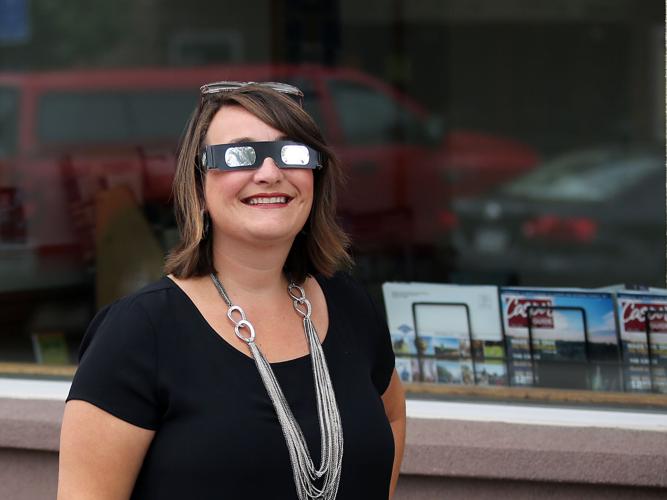
For most, this will likely be the paper eclipse glasses with solar filters that you can find for a few dollars at various local retailers. Keep in mind when purchasing your glasses, or if you’ve already gotten yours, that they’re only safe if they’re certified. Check for the code ISO-12312-2 somewhere on the back.
There are also several other ways to safely view an eclipse without the certified paper glasses, as well as some alternatives that, while they might seem like a good idea, still pose just as much risk to your vision.
Remember these tips to safely view the eclipse:
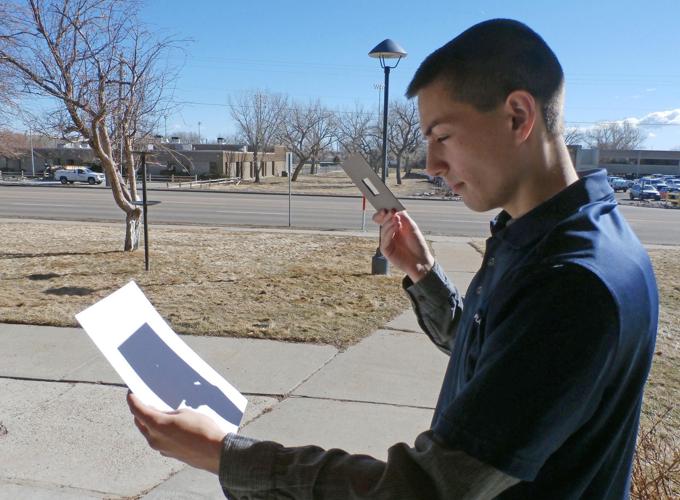
- A pinhole projector, which can be made from material you likely have around your house, will allow you to view the reflection of the eclipse as it happens. Simply cut a square out of the middle of a piece of cardboard, tape a sheet of aluminum foil over the opening and then poke a pinhole in the foil. Hold the cardboard up to the sun, and let the sunlight fall through the hole onto another piece of cardboard.
- A cereal box can be used in almost the same way. Find instructions on how to make a cereal box pinhole viewer here: https://eclipse2017.nasa.gov/sites/default/files/EclipseCerealBoxViewer.pdf
- You can also hold a colander toward the sun during the partial eclipse and see many tiny images of the eclipsed sun reflected on the ground or a wall.
- A welding helmet will protect your eyes from the harsh ultraviolet and infrared waves.
- Looking at the eclipse through a telescope or binoculars is even more dangerous than looking at it directly, because they concentrate the rays. Telescopes are safe for viewing an eclipse only with a special certified lens.
- If you don't want to buy a certified lens, learn how to eclipse-proof your binoculars here: http://bit.ly/2tiJ2Ay
- Joshua Wolfson 307-266-0575,
- Updated
It's been 38 years since the continental United States experienced a total solar eclipse. The rare celestial event is generating interest and enthusiasm across the country and world, with cities along the eclipse's path expected to attract thousands of visitors.
Here's a look at the eclipse by the numbers:
4 The number of continents where at least a partial eclipse will be visible.
14 The number of states in the path of the total eclipse.
15 The temperature can drop by this many degrees during totality.
70 The width in miles of the path of totality -- the area where the total eclipse will be visible.
99 The number of years since a total solar eclipse crossed over the entire U.S. mainland.
146 The maximum number of seconds when the sun will be completely covered in Casper.
4:09 The time in the afternoon when the lunar shadow leaves the U.S.
452 The theoretical maximum number of seconds that a total eclipse could last on Earth.
9:05 The time in the morning of Aug. 21 when the eclipse first crosses into the United States, at Lincoln Beach, Oregon.
2024 The next year when a total solar eclipse will pass through the continental United States.
35,000 The number of people expected to visit Casper to witness the eclipse.
60,000 The number of people who live in Casper.
12.25 million The number of people who live within the path of totality.
Sources: NASA, National Weather Service, GreatAmericanEclipse.com, Astronomy Magazine
- Arno Rosenfeld 307-266-0634,
- Updated
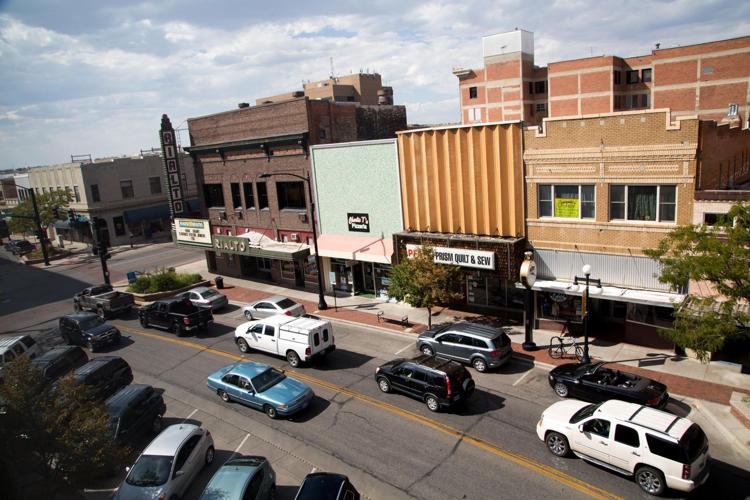
Casper has dramatically scaled back downtown parking restrictions during the Wyoming Eclipse Festival in August.
Police originally planned to close 30 blocks in the city core to on-street parking to increase access for emergency vehicles. That plan has now been scrapped in favor of closing just Second Street to all east-west traffic between Oak Street and Park Street and perhaps restricting access to the other streets surrounding David Street Station.
Traffic will still be able to cross Second Street traveling north and south.
“There’d essentially be no restriction to downtown parking,” Sgt. Scott Jones told City Council on Tuesday.
Parking will also be barred along David Street in front of the Hall of Justice and City Hall to allow space for vehicles belonging to out-of-town law enforcement in Casper to help with the festival.
About 35,000 visitors are expected between Aug. 18 and 21.
Jones said that the original plan to bar parking in most of downtown would have crowded residential neighborhoods nearby. That plan restricted parking roughly between A Street to the north, Fifth Street to the south, Park Street to the east and Spruce Street to the west, while also closing Second Street to east-west traffic.
Despite police removing the other restrictions, Downtown Development Authority officials, who are overseeing the plaza’s operation, requested that David and Ash streets on either side of the plaza be closed to traffic for pedestrian safety.
“It would allow people to freely go back and forth across the street to access things going on near the David Street Station,” Jones said.
But police spokesman Det. John Hatcher said on Friday those closures were still tentative and that as of now the only confirmed street closure is Second Street.
City Council agreed to grant Interim Police Chief Steve Schulz the authority to close any streets or intersections as necessary for safety during the eclipse festivities. Jones said that, along with the ability to stage equipment needed to close streets, was important because it was impossible to predict exactly where choke points and traffic problems would emerge during the festival.
“At some point in time it may become necessary to add further barricades,” Jones said.
Councilman and former police chief Chris Walsh gave his hearty blessing to Jones’ request.
“You know what you’re doing,” he said. “Don’t worry about our approval on stopping anything else that becomes a problem.”
City Attorney Bill Luben said Casper’s parking regulations would be amended by a simple vote of Council to allow Schulz to close additional streets.
While the Casper Police Department has not requested additional officers from other jurisdictions, employees will be barred from taking vacation during the festival, and special patrols have been created for officers on bicycle downtown and at special events.
Hatcher noted that plans are subject to change as the festival moves closer.
- Arno Rosenfeld 307-266-0634,
- Updated
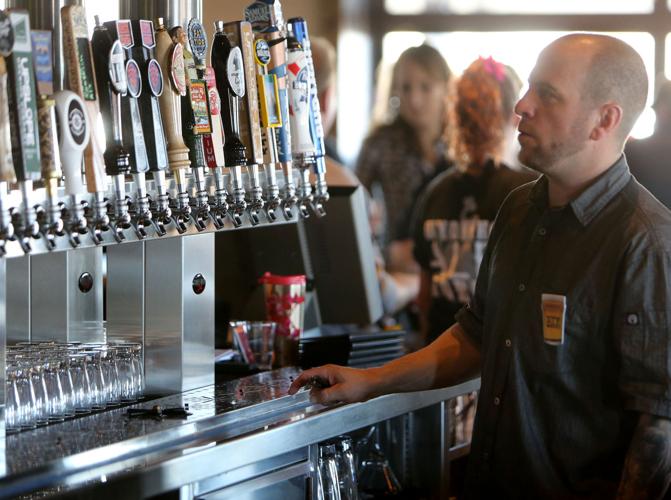
Casper is making an exception to its blue laws for bar owners during the eclipse festival in August. Bars and liquor stores in the Oil City are allowed to serve and sell until 2 a.m. on every day but Sunday — when they must close four hours earlier.
But with the total solar eclipse falling on a Monday, liquor dealers in Natrona County are hoping to capitalize on the 35,000 anticipated visitors coming to Casper to view the celestial event.
“We think it’s going to be a really good weekend,” bar owner and dealer representative Matt Galloway told City Council in May.
Galloway requested an extension allowing bars and package liquor stores to serve until 2 a.m. on Monday, August 21. Bars and liquor stores are required to close by 10 p.m. on Sunday nights. Council is allowed to grant four such exemptions per year.
In a letter to city staff, Galloway explained that the exemption would allow liquor dealers to “capitalize on the significant influx of visitors to the community for Eclipse 2017.”
City Council approved the request on Tuesday, allowing dealers to operate from 6 a.m. until 2 a.m. on the Sunday during the festival.
The move is the latest in a series of ordinance changes made to accommodate liquor dealers. Council recently expanded the definition of dispensing rooms to match state law that effectively eliminated restrictions on where alcohol can be served in licensed buildings. The body also eliminated the restriction on gambling in bars to allow for off-track horse betting at Galloway’s Irish Pub.
The Wyoming Eclipse Festival is expected to draw about 25,000 overnight visitors and an additional 10,000 on the day of the eclipse, which takes place around 11 a.m. But organizers say that weather and other variables make it hard to precisely estimate how many people will travel to Casper.
A number of bars are hoping to open or complete renovations before the festival. Bars currently under construction include the Wonder Bar on Center Street, Gaslight Social — formerly Roaring 22 — on the corner of Ash Street and Midwest Avenue and the Old Yellowstone Bar and Grill on West Yellowstone Highway.
- Arno Rosenfeld and Elise Schmelzer Star-Tribune staff writers
- Updated
- 8 min to read
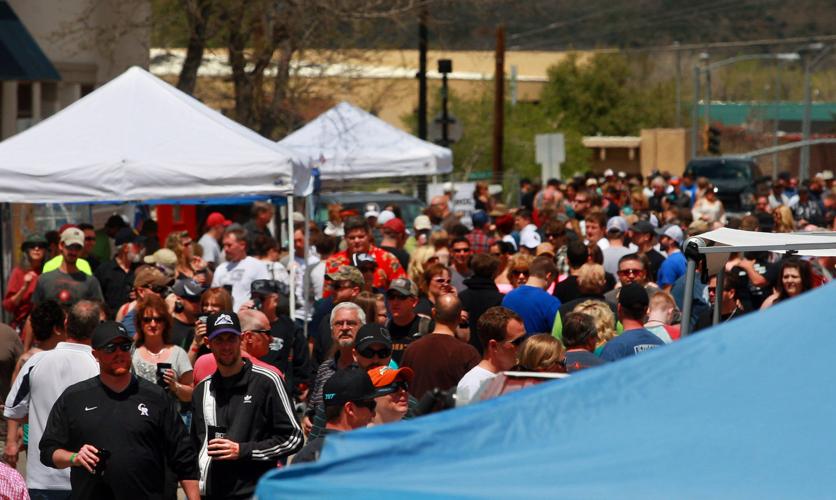
Eclipse tourism is weird.
Popular travel destinations typically evolve over decades to accommodate a gradually increasing number of visitors. More hotels open, tour guides spring up, restaurants learn to prepare for the high season.
But most of those places have a perpetual draw: national parks and skiing in Jackson Hole, white sand beaches in Hawaii, cultural events and shopping in New York City.
Eclipses, on the other hand, are one-off attractions and ever so fleeting.
“You look up and you do so for several minutes and then you’re kind of done,” said science historian Alex Soojung-Kim Pang.
Even music festivals and conventions, which draw thousands of visitors for just a few days, have the advantage of repetition, and attendance can be regulated by capping ticket sales.
But the path of total solar eclipses varies, and they rarely pass over the same location twice, meaning that planning for all those skygazing visitors — when they do show up — is a unique challenge.
Anna Wilcox, the woman responsible for managing the estimated 35,000 tourists who are expected to come to Casper for the August eclipse, acknowledges the difficulty of planning the Wyoming Eclipse Festival.
“It’s not Coachella — an event that takes place in the exact same place every year — where they have the chance to perfect it,” she said.
The town of Gettysburg, Pennsylvania, faced a similar challenge in 2013. That July was the 150th anniversary of the Battle of Gettysburg, and local organizers knew the number of people that regularly visit in the summer months would dramatically swell.
“In a normal year we pretty much run at capacity anyway,” said Destination Gettysburg president Norris Flowers.
Flowers said the planning began two years in advance, including monthly meetings with local stakeholders, but included last-minute additions when hotter-than-expected temperatures led organizers to purchase a tractor-trailer full of bottled water to hand out and thousands of pounds of ice to keep the water cool.
He was also forced to adapt when 40,000 people, twice the anticipated total, showed up for a reenactment of the battle’s climactic assault.
“Early on it was like, ‘We don’t have enough transportation,’” Flowers recalled. “We scrambled getting more buses and it actually worked very well.”
But while Gettysburg saw 150,000 more visitors that week, Flowers’ job was eased by virtue of working in a community that is used to large numbers of tourists.
Wilcox said her main challenge has been persuading Casper businesses and residents to take the eclipse seriously — “getting out there and convincing people this was happening and it was happening at this scale.”
Since January, she said, the message has seemed to get through, and planning in the community is well underway.
Preparations near done
Festival preparation is in the home stretch, and Wilcox — who was hired 11 months ago specifically for the eclipse — expects to have all the logistics finalized by June 1.
“The exciting part is finally here,” she said.
Casper is considered one of the country’s best places to view the eclipse. Wilcox expects 25,000 visitors to stay in the city during the eclipse festival, stretching from Friday, Aug. 18, to the day of the eclipse that Monday, and another 10,000 to pass through or visit for the day.
Officials have suggested that Casper residents buy groceries before the weekend to avoid long lines at the store.
There are 18 events planned, according to a rolling count maintained by city staff, and people have inquired about everything from running rickshaws — a wheeled passenger cart pulled by hand — in the downtown area to constructing temporary campgrounds.
National media is expected to attend as well, with Time magazine, the Los Angeles Times and a San Francisco newspaper having announced plans to be in Casper for the eclipse.
The city is trying to balance the work necessary to accommodate a massive increase in Casper’s population without breaking the bank.
“We’re focused on our core with staff and finances to make this a celebratory event but not go beyond our means,” Interim City Manager Liz Becher told City Council last week.
Becher warned council members that RV rental space at the Casper Events Center was full and joked that they might be stuck at City Hall for the weekend.
“If you wanted to be up there, councilmen, it’s way too late,” she said.
Hotels and official campsites are nearing capacity, and many homeowners have listed their properties on short-term rental websites like Airbnb and VRBO.
Transportation will be one of the biggest challenges during the event, with far more cars and pedestrians than usual.
The city is planning to use at least five school buses to run shuttles from parking lots to downtown and other event locations. CATC, the city’s public transit service, has barred drivers from taking vacation during the festival.
“Everybody is probably going to have to plan for a little bit of extra time to get from Point A to Point B, but I don’t think it’ll be absolute gridlock,” Wilcox said.
One vendor has inquired about setting up a bicycle valet system in downtown parking lots.
Public safety a priority
For months, the leaders of Casper’s emergency services have met to work through a variety of hypothetical crises that could occur during the eclipse weekend. What happens if there’s a boat crash at Alcova Lake? What if there’s a major car wreck downtown? Or, worse, what if there are multiple serious emergency calls at once?
While hopefully none of the events actually happen, the exercises are meant to help emergency resources prepare in a non-pressured environment, said Lt. Stewart Anderson, Natrona County’s emergency management coordinator. Put simply, Casper has never seen an event like this, he said, and first responders need to be prepared for a variety of scenarios.
Dr. Andy Dunn, medical director of Mesa and Sage primary cares, is part of the effort to coordinate medical services during the eclipse. The medical community has been working to create a system that will divert people from the emergency room except for those with the most serious conditions, he said.
A number of first-aid tents will be scattered throughout the biggest events that weekend. Those tents will be able to treat minor injuries and conditions and refer more serious conditions to Sage and Mesa primary care clinics, which will act as urgent care facilities. The more than a dozen providers who work at those locations did not schedule any appointments the Friday before and the Monday of the eclipse so they will be free to help anyone who comes through the doors. Providers from other local medical facilities will also make themselves available to help, he said.
“It’s been really awesome to have the whole medical community come together,” he said.
Dr. Dunn said Wyoming Medical Center has increased the number of staff on-call that weekend. The hospital’s emergency room, which has less than 20 beds, will need to stay open to treat those with immediate health crises as well as people in critical condition from nearby communities.
The medical community will sponsor a series of public announcements reminding people to stay hydrated, drink alcohol in moderation, wear sunscreen and to look out for each other.
“I kind of compare it to a big Fourth of July weekend at the lake,” he said.
Traffic and parking
One of the biggest challenges, agencies agree, will be traffic. Not only will there be a dramatic increase in the number of cars on the road and parked around the city, but roads will also need to remain clear enough that emergency vehicles can reach their destinations quickly.
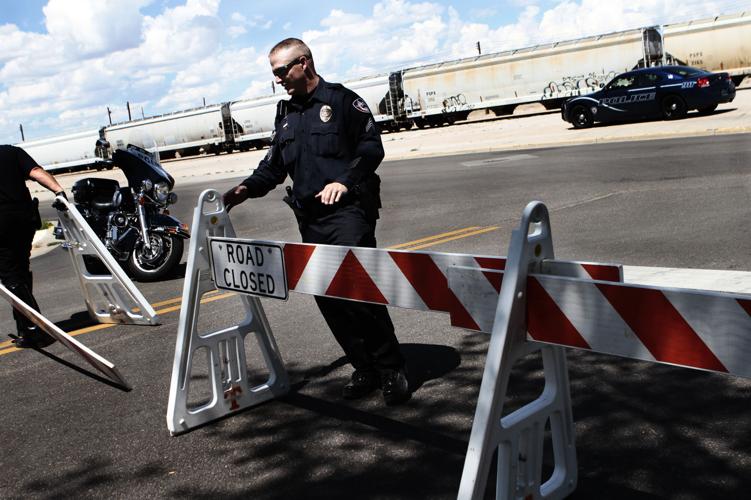
Casper Police Chief Jim Wetzel said one of the challenges will be the limited number of routes in and out of downtown, where many events will be focused. To help combat congestion, there will be no street parking in the downtown area the day of the eclipse and the preceding weekend. The downtown stretch of Second Street will be closed to all vehicle traffic, though cars will be able to cross the street at certain intersections.
Law enforcement officials also anticipate responding to an increased number of traffic calls, which will tax already busy officers. Wetzel said it will be important to educate visitors and residents about traffic patterns before the crowds arrive so that there is less confusion and, for example, an out-of-towner doesn’t try to drive an RV through the too-small underpass on Center Street.
Neither the Casper Police Department nor Casper Fire-EMS plan to bring in additional people from other agencies to increase their staffing for the weekend. However, both will increase the number of employees on duty. Police staff aren’t allowed to take time off that weekend, and the fire department said it will have double the regular number of staff working at any given time.
“I’m confident we will have enough officers to handle the event,” Wetzel said.
Besides dehydration and sunburns, August in Wyoming also brings another danger — wildfires. Anderson, the emergency management coordinator, said that educating visitors to expect a burn ban will be a crucial part of preventing such a disaster. Campers should erase any hopes of bonfires or cooking marshmallows over an open flame. Instead, they should bring a propane stove to cook.
Anderson said the agencies have already begun to push out information about safety during the event through social media and each respective website. Visitors need to be aware of the realities of a high-altitude climate during the summer.
Anderson and the police department have also been working with cellphone companies to make sure the towers will be equipped to better handle an increased number of calls and data usage. He said that the towers are already configured to prioritize 911 calls over any other use so that emergency calls will always make it to the dispatch center. However, that means that others might be abruptly kicked off other less-important calls or have difficulty connecting to internet by using data from their phone.
In short, people shouldn’t expect to livestream the eclipse over social media to all their friends.
“This is going to test cell systems across the country like nothing else has,” he said.
Similar cases offer guidance
Every August, hundreds of thousands of bikers roll into the town of Sturgis, South Dakota, population 6,700. And while the tiny town has had 77 years to perfect its accommodations, town leaders are constantly faced with new challenges, spokeswoman Christina Steele said.
One lesson organizers have learned over the years is that an assortment of events is important to keep visitors busy.
“If there aren’t organized things, they will find other things to entertain themselves with,” she said. “And those aren’t always the best.”
While the town has a wide array of camping and hotel options, Steele said that the city encourages residents to rent out rooms and yards to visitors.
Steele also said trends nationwide are often reflected in the crowds of visitors. For example, she said, as there has been an increase of illegal opioid use, the city has increased its supply of naloxone, a drug used to temporarily halt the effects of an overdose. It’s also important to have a variety of medical services available so that emergency rooms don’t fill up with people with minor injuries.
Above all, however, the key to success is good communication and keeping people healthy, she said.
“If you get them where they need to be and keep them healthy while they’re there, you’ll be good,” she said.
Wilcox, the Casper festival director, said she’s been in touch with Sturgis business owners — including a restaurateur who has a completely separate business model for those two weeks every August — as well as others with experience running events with similar challenges as the eclipse.
Those events include the Ragbrai, an annual bicycle ride across Iowa that cycles 10,000 riders through different towns each year and must prepare those communities for a sudden influx, and the Super Bowl celebration in Denver, where organizers had only days to prepare for a massive downtown celebration.
She’s also communicated with other towns on the path of the eclipse. But Wilcox found that Casper was one of the only cities that wasn’t planning to segregate eclipse festivities to a fairground or other distinct area.
Pretending as though the festival and its thousands of attendees wouldn’t affect all of Casper just wasn’t an option.
“There’s nobody that’s going to be able to hide from it,” Wilcox said.

- Arno Rosenfeld 307-266-0634,
- Updated
Casper is trying hard to make sure it’s ready for its moment in the sun — or lack thereof — when the total solar eclipse takes place next summer.
The city unveiled a new hotline Wednesday to answer questions from local businesses about regulations during the eclipse festivities, which take place Aug. 17-21, as well as help prospective visitors learn about lodging options and where you are and aren’t allowed to camp or park an RV.
“For questions and information related to city services during the Eclipse Festival, don’t be left in the dark,” Casper’s customer service supervisor Carla Mills-Laatsch wrote in a statement.
Mills-Laatsch said that the hotline was mainly targeted at visitors.
Tens of thousands of people are expected to descend on the Oil City to watch the sun disappear behind the moon for 146 seconds on Aug. 21.
Casper is one of the best locations in the country to see the total eclipse, an event that was last visible in the continental United States in 1979, because it has one of the longest durations of eclipse and is expected to have relatively clear weather.
Despite heavy competition from other cities in the region and country — from Oregon to Tennessee — Wyoming Eclipse Festival director Anna Wilcox has said she is focused on visitor experience rather than attracting more tourists.
“It would be difficult, at this point, to market when 90 percent of our phone calls are, ‘Hey, I’m looking for accommodations and I can’t find any,” Wilcox said in September.
As of November, almost every Casper hotel that was accepting reservations for August was already sold out, and rooms were going for as much as $750 per night.
Mills-Laatsch said that the city had booked 42 out of 281 camp sites at Highland Park and 22 out of 47 RV sites at the Casper Events Center.
“We’ve been getting calls for several months,” Mills-Laatsch said.
- Elysia Conner 307-266-0509,
- Updated
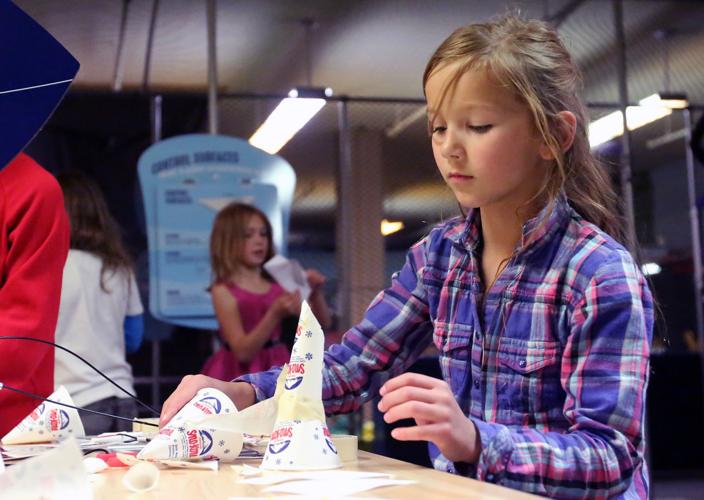
Students cut out paper fins and attached them to their snow-cone cup rockets. A boy taped one side of a paper triangle over a hole he cut out to catch air, which he hoped would send the rocket farther than last time. A girl beside him cut several holes in her rocket. Second-graders from Glenrock’s Grant Elementary School compared strategies for paper rockets and took turns launching them recently at the Science Zone’s latest exhibition.
“Mission Aerospace” is timed for the eclipse and gives visitors of all ages opportunities to immerse themselves in the history of flight, navigation and NASA exploration, according to information at the museum. The exhibition is on loan from Minotaur Mazes through August and features a walk-in maze and more activities. Several other interactive displays in a new “Space Room” at the museum demonstrate how eclipses happen.
“With this exhibit we tried to make sure we had something a bit tied into NASA, space and to the eclipse,” Science Zone Executive Director Steven Schnell said.
“We figured right now it makes sense to focus on what’s happening with the eclipse, because it’s getting national attention and we want to make sure people are educated, aware and are kind of prepared for what’s going to happen.”
The students spun a wheel and watched a dial display air pressure. With the touch of a button, the rockets took off.
“I hit Venus!” a boy said and raised his arms in victory.
The paper airplanes and rocket launch activities were hits with many of the kids, including Riley Messer. Her best rocket was one she cut holes into.
“I punched holes in it, so that air would go through and make it fly by the wings,” Riley said.
Students also wound through a maze in the new exhibit filled with information about aeronautics. Visitors can spin a wheel outside the maze for a question and then hunt for the answer in puzzle-piece displays inside.
The exhibit also features a runway where visitors’ paper airplanes can take off for cities from Paris to Rio de Janeiro.
The Science Zone is one of the first three museums around the country to debut the “Mission Aerospace,” and some of its pieces have never before been displayed. The Casper museum even provided some ideas for developers at Minotaur Mazes, which was creating the exhibit when Schnell contacted them looking for ways to explain and celebrate the eclipse, he said.
It was the Science Zone staff’s idea, for example, to use a hand crank for students to create their own air pressure. They can watch the crank and pistons working through clear Plexiglass, Schnell said. The Science Zone also contributed the idea for a sloped launching range so students can quickly grab their rockets and tweak them for another test.
Three displays also glow and light up in the new “Space Room.”
Science Zone Director of Education Leah Ritz designed and helped build a full-body display called “Revolution versus Rotation.” The display puts visitors in the perspective of the moon moving around the Earth as they walk around a gazing ball.
Another exhibit, which the museum commissioned, shows models of the Earth, moon and sun. A button spins the moon around the Earth, and visitors also can find out about moon rise and set times as well as why you can sometimes see the moon in the middle of the day.
“There’s a lot of information packed into it,” Schnell said, “but what’s nice is you can focus on one specific thing at a time.”
Casper College built another exhibit Ritz designed, with moons atop dowels so people can create their own miniature eclipses.
“It really showcases why we don’t get an eclipse every month, because the orbit of the moon and the Earth is not always the same,” Schnell said.
More exhibits are on the way in the coming weeks including a “moon bike” — a chair that positions the rider as the Earth to see different moon phases, Schnell said.
“I’m very excited to be able to add additional things to this, up until basically the eclipse,” he added.
The exhibits are designed for people of all ages.
“There’s opportunity for just gross motor skill development, in the fact that it’s a maze, all the way up through learning how to plot a navigational course for airplanes and learning about gyroscopes,” Schnell said. “Even adults can learn things from it, or at the very least, if they know everything, they can have fun in the maze.”
- Katie King 307-266-0581,
- Updated
An estimated 35,000 tourists are expected to descend on Casper to view the total solar eclipse on Aug. 21, but there’s no reason for local residents to panic because officials are prepared.
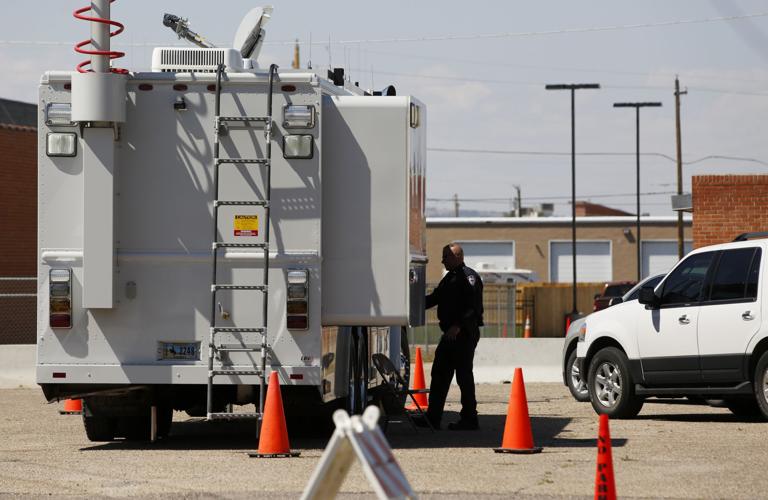
That was the message conveyed by emergency and law personnel at an event for the media Thursday afternoon at the Public Safety Communication Center.
“We feel comfortable that we’re as ready as we can be for this eclipse,” said John Hatcher, a detective with the Casper Police Department.
Hatcher said residents have expressed concerns that police will be too busy responding to visitors’ calls to look out for local residents, but the detective said that won’t be the case.
On a typical day in Casper, about 10 police officers are patrolling the streets, and the same number will be standing by during the eclipse to handle routine matters, according to Hatcher.
Additional officers will be on hand to handle festival-related incidents, explained Hatcher.
The detective said he could not reveal the exact number of additional officers due to security reasons.
The Natrona County Detention Center has stocked up on extra cots to prepare for potential overcrowding, but Hatcher said law enforcement officers will make every effort to safely solve conflicts without making arrests.
Hatcher also advised residents to stock up on groceries and fill up on gasoline prior to the festival to avoid long lines, and said everyone should be prepared for unreliable cellphone service, as the influx of people will likely strain the system. Paul Fritzler, the district manager of the Department of Family Services, urged families who plan on partaking in the festivities to designate a family meeting place in case children get separated from their parents and cell phones are down.
As authorities seek to avoid overcrowding at the jail, health officials are trying to avoid a similar situation at emergency rooms.
Anyone who needs medical attention but does not require emergency care should use clinics in order to keep the emergency rooms free for those in life-threatening situations, said Audrey Gray, the public health preparedness manager for the Casper-Natrona County Health Department.
Those who require basic medical care can also seek help from any of the nine first aid stations that the health department will have operating throughout Casper, said Gray.
She advised visitors to be wary of altitude sickness or heat exhaustion, and advised everyone to stay hydrated and wear sunscreen.
Representatives from the Casper Fire Department and the Wyoming Department of Transportation both confirmed that their departments will have extra staff working at all times during the festival.
Although it’s necessary to be prepared for negative situations, Hatcher said there’s no reason to think the eclipse festival will be anything other than an exciting, memorable event in Casper and encouraged everyone to responsibly enjoy themselves and to be kind to visitors.
“This is a very positive thing,” he remarked.

- Elysia Conner 307-266-0509,
- Updated
Thousands of people will visit Casper for the Aug. 21 solar eclipse. And while the 2 minutes and 26 seconds of darkness will be the highlight, there will be plenty more to do.
There are a plethora of entertainment options for eclipse weekend, from celestial-themed music to community theater. The Wyoming Eclipse Festival in Casper, for example, is a collection of events that includes live music, street parties, theater, visual art, crafts and dance.
Downtown Casper will become a pedestrian walkway Aug. 18-21 to make way for an estimated 35,000 visitors. Businesses and venues throughout town, meanwhile, are hosting a variety of events, executive director of the Wyoming Eclipse Festival Anna Wilcox said.
Many businesses will be open from 10 a.m. to 10 p.m. Aug. 20 for the All Day Downtown Festival.
“I think it’s really amazing how so many businesses and organizations have stepped up and are putting on something that is very true to them and tied to Casper, for not only our visitors to enjoy but also the folks who are in Casper to get out that whole weekend,” Wilcox said. “They’re supporting the community by getting out and attending some of these events.”
Besides a variety of live performances, several museums are hosting eclipse-themed shows and preparing for extra visitors. Casper museums plan to be open all weekend, said Rachel Hedges, marketing coordinator for the Casper Museum Consortium.
“When people come to town, they want to know what this town is about,” Hedges said. “What’s the history? What’s great about this town? They’ll seek out the museums.”
The Casper Star-Tribune compiled this guide of highlights from Wyoming Eclipse Festival website and event planners to help you sort through the options.
For more information and options, go to eclipsecasper.com.
Music
The Machine performs a mix of Pink Floyd’s repertoire with a dramatic, interstellar laser light and multimedia show. The New York band plays major music festivals and sells out theaters, large clubs and casinos across the world. The Machine “duplicates the sound and hits of Pink Floyd with chilling accuracy,” according to a review by Rolling Stone magazine. Townsquare media presents the show 9:30 p.m. Aug. 18 at Mike Lansing Field, with local openers EasySide at 8 p.m. Bring lawn chairs and blankets, or take a seat in the grandstands. Tickets are $35 through Aug. 17, $45 at the gate or $70 for VIP with a special seating section, private bar and up-close parking. Get tickets at http://bit.ly/2vlGmq6.
The Wyoming Symphony Orchestra presents “Close Encounters of the Symphonic Kind” outdoors with violin virtuoso of Alexander Markov performing his rock concerto on a gold, six-string, electric violin. The concert will take place Aug. 20 at Washington Park and features hits from “Star Wars Suite” “E.T.,” “Adventures on Earth” and “Apollo 13.” The Casper Children’s Chorale opens with a piece specially commissioned for the Eclipse. Info: wyomingsymphony.org/eclipse.
Wyoming Eclipse Festival at David Street Station headlines Chancey Williams and the Younger Brothers Band with support from local and regional favorites The Barrel House Band, Chad Lore and the Lore Four, John Kirlin, Steve Frame & his Western Rebels, John May, JD Blues Band and the Oil City Slickers. Entertainment also includes in-character storytelling, country dance lessons, magic shows, dance performances and the Caper Troopers Drum and Bugle Corp. The festival features a vendor market, kid’s zone, food trucks and beer and malt beverages for sale. This free event runs from 10 a.m. to 10 p.m. Aug. 18-21. Chancey Williams takes the stage at 4 p.m. Aug. 21. For a schedule, go to davidstreetstation.com.
The Uprising Music Festival features Dove-award winning Christian group Sidewalk Prophets Aug. 20 at Mike Lansing Field. The event features six other regional and national Christian artists and an after-party hosted by Denver electronic dance music group Transform DJs.
The event begins with a community worship service at 12 p.m. with music from 1:30 to 10 p.m.
The event is free, and merchandise vendors will be available. For more information, go to The Uprising on Facebook.
Yellowstone Garage features a free festival with food, a beer garden and live music 6-10 p.m. Aug. 17, 12 p.m.-12 a.m. Aug. 18, 10 a.m.-12 a.m. August 19-20 and 8 a.m.-6 p.m. Aug. 21 at 355 W. Yellowstone Hightway. For information, go to yellowstonegarage.com.
Backwards Distilling Company hosts eclipse viewing with singer/songwriter Inda Eaton. Tickets include catered lunch, snacks, water, eclipse viewing glasses and a cocktail in a souvenir cup. The party is 10 a.m. to 4 p.m. Aug. 21. Limited tickets are $75 at (307) 472-1275 or backwardsdistilling.com.
Urban Bottle features John Kirlin back in his hometown 7-10 p.m. Aug. 19 at Urban Bottle, 410 S. Ash St.
The Eagles Lodge No. 306 features Steve Frame 8 p.m.-12 a.m. Aug. 18. Karaoke night is 8 p.m.-12 a.m. Aug. 19. Admission is a $5 temporary Eagles membership. The lodge is located at 306 N. Durbin. For information, call (307) 235-5130
Riverfest features live music, beer tasting, food trucks and the the Casper Rotary Club’s annual Duck Derby 12:30-5:30 p.m. Aug. 19 at Mike Lansing Field, 1101 N Poplar St. Local and regional music includes Barrel House, Grant Sabin and The Kris Lager Band along with games and vendor booths. Admission is free, craft brew tasting with commemorative cup is available for $25 in advance, $30 at the gates. For information, go to casperriverfest.com or call (307) 577-1206
The Eclipse Block Party At Vintage features Casper’s One Child Left Behind 4-8 p.m. Aug. 19 at Vintage Fine Wine and Martini Bar, 1016 S Poplar St.
Rock the Rooftop features an eclipse viewing party with Steve Frame & Western Rebels Monday, 8 a.m.-3 p.m. Aug. 21 on the roof of the Wyoming Medical Center’s west parking garage, 1233 E. Second St. The event features food, kids’ karaoke and Safe Kids activities. Tickets are $10 and include viewing glasses. Tailgaiting packages are $120 and include 10 event passes and a reserved viewing spots. Proceeds benefit the WMC Volunteers Caring Closet Program, which provides clothing for patients who need them for discharge. For tickets or more information, call (307) 577-2794. The Eastridge Mall Eclipse Fest offers free entertainment and activities all day for all ages Aug. 18-21 at 601 S.E. Wyoming Blvd. Highlights include evening outdoor concerts including Red Butte 5 to 6 p.m. Aug. 19; Mastermind of Monkey 4:30-6:30 p.m. Aug. 20; and Steve Frame 7 to 10 p.m. Aug. 20. The event also features a beer garden, car show, local artists, vendors, bouncy houses, petting zoo and carnival games. For information, go to eclipsecasper.com
Visual Art
A free reception with E.K. Wimmer for his show, “A Trace of Memory” is 5 to 8 p.m. Aug. 18 at Scarlows Gallery, 122 W. Second St. The event includes space-themed music, a pop-up cash bar by Urban Bottle and other eclipse-themed art in the gallery loft.
“Space and time, beginning and end. What does it mean to exist and why do we feel the need to explain it?” Wimmer said in his artist statement. “These basic existential questions are the foundation of ‘A Trace of Memory...’”
For more information, go to goedickescasperart.com
Casper Artist Melanie Myron’s exhibit “Not Totally Eclipsed” and the open-call “Space and Eclipse Art Show” are on display this month at ART 321, 321 W. Midwest Ave.
The Nicolaysen Art Musuem features three eclipse and space themed shows at at 400 E. Collins St.
Wyoming artist Patrick Kikut will give a talk about his show, “Square States and Moonscapes” 2 p.m. Aug. 19. Kikut’s paintings place images of the moon in context with the Western landscape. Kikut drew inspiration from a 2013 lunar eclipse he saw while driving a Wyoming highway and expanded ideas of Western landscapes.
Renowned art dealer Fred Taraba of Casper will give a talk from 2-3 p.m. Aug. 19: “Out of this World: Sci-Fi Art from the Collection of Fred Taraba.” The show features original illustration art for sci-fi magazines from the 1940s to 1970s.
“To the Stars: Space Photography from the Nasa Jet Propulsion Laboratory” features images of distant planets, moons and stars.
Stage performances
“Prometheus” re-tells of the ancient story of the Titan god who gave the gift of fire to the human race. The play, written and directed by Casper College’s William Conte, debuts at Stage III Community Theatre, 900 N. Center St.
In a special 10 a.m. Aug. 21 performance, Prometheus’s theft of fire from the sun coincides with the moment of the eclipse. Other performances are 7 p.m. Aug. 17, 19 and 20. Admission is $10 and includes free eclipse glasses Aug. 21.
Stage III also features a new escape room Aug. 19-21. Groups have 45 minutes to search the throne room for Persephone’s pearls. Tickets are $20 at stageiiitheatre.org.
The Keyhole Peepshow burlesque troupe performs “A Total Eclipse of the Bum!” 9 p.m. Aug. 19 at the Black Gold Grille, 1650 W. English Ave. The “all new, anything goes show” features games, show girls and two new guest performers. Ages 18 and older are permitted. Tickets are $12 in advance at http://bit.ly/2vwyHF4, $15 at the door and $30 for VIP.
- Shane Sanderson 307-266-0624
- Updated
The festivities surrounding the solar eclipse are bringing police bike patrols to the streets of Casper. And don’t expect them to disappear when the sun returns.
Casper Police Sgt. Ben Mattila leads the bike patrol, which will be riding around town through Monday, in an attempt to increase police presence this weekend as the eclipse attracts thousands of visitors. With Second Street scheduled to close for the Wyoming Eclipse Festival, Mattila said responding to downtown incidents should be easier via bike.
The bike patrol attended Wednesday night’s dedication of the Davis Street Station. On Thursday, officers began riding early in the afternoon and were planning on being on their bikes into the evening. Over the course of the festival, bike officers will patrol all across town, from hotels to the Eastridge Mall to the Tate Pumphouse. Mattila said the patrol will “hit every single event we can.”
Police plan to continue using bike patrols after the eclipse festivities. Bicycles will help police response times, Mattila said. And because officers can put bikes on the back of their vehicles, if police have to go somewhere a car can’t – like the bike trail – they can take their bikes rather than walking or running, Det. John Hatcher said.
In addition to improving response times, Hatcher said he hopes the bike patrols will make drivers more aware of all cyclists, improving safety for cyclists riding around town.
The department has eight officers certified to work from bicycles and six bikes available to them, Mattila said.
Officers should be getting new bike uniforms that make it easier to transition between bike and car, he added.
Police officers will also perform foot patrols downtown this weekend to check on bars, Hatcher said.
- Updated
How does a city of roughly 60,000 prepare for an invasion of (maybe) 35,000 eclipse enthusiasts? With lots of calls, and meetings, and more calls, and patience. To get an idea of the logistics and planning that go into preparing for the celestial celebration, the Star-Tribune spoke recently with Anna Wilcox. The executive director of the eclipse festival, Wilcox was hired last year to ready the city and to ensure nobody would be in the dark before they were really in the dark.
What goes into planning an event like this?
Unfortunately, there’s no blueprint or guide on how to do that. I don’t think a lot of previous experience can play into different routes you will take. It’s just such an anomaly. Completely, utterly unique. One of the key things we did was listen to the community, listen to business owners, listen to folks who were planning on events or thinking about planning events and kind of use that to kind of figure out what our goals and overall mission would be. I think what we found and what we followed through with is one general office, one central location, one person who could communicate with all these different agencies and be the holder of that information and connect.
A lot of what we did was look at it from an umbrella and say these people are planning this, these people are concerned about this. … When we started getting all of the event hosts together, talking about what they’re doing, they affiliated with the festival. Started having a series of meetings. It was more than likely all would have a need for food and different things like that. To bring in the county health department and put that person in front of 30 to 40 people vs. having a back and forth with each and every event.
Same with pulling together police and fire, and county health, and representatives from the city and (the Wyoming Department of Transportation) and representatives to the facility to speak once a month and when we got closer once every other week. We wanted to make sure people were on the same page, not duplicating efforts. We were able to take that information they had and communicate that directly. That eliminated the need for somebody who’s going to visit to check the resources for each and every different agency or each and every different event that was happening. It became that hub.
What was the hardest part of that process?
Making sure we had the right people at the table and were having the right conversations with the right people. Once we identified that and started meeting regularly, we saw a huge shift. And then just making sure we were available to the right people. If we have businesses reaching out, want or need or are worried about potential issues, they can bring them to us and we can communicate it back.
Kind of looked at it from perspective of, whether it’s an event host or a visit or a resident of Casper, if one person asks a question, probably 10 or 20 or more are wondering the same thing. Let’s get the answer out and figure out how to get that out there for them.
Another big challenge was working with the community itself, whether just residents or business owners, and saying ‘this is happening, and this is going to be big.’ We were also able to pull up information and we had the resources and how this had been done in different communities and in communities also planning for this particular eclipse. It’s hard for us to walk into a restaurant and say this is exactly what should be done to prepare for the eclipse. How long are they expecting (visitors), what are they going to be doing here, etc.? Take that to the resident or the business owner and say, OK, this is what we need to plan for. Now we know how much extra food we need to have on plan. We’re not open on Sundays, but Sunday might be the biggest day. In no situation did we dictate or set how things are going to happen — we just wanted to make sure we were a good resource for them.
How do you prepare a town of 60,000 people to accommodate, potentially, 35,000 more? What’s your biggest concern going into the weekend?
I think if you speak to anybody in emergency services, they have definitely used as large numbers as possible to make sure they have contingencies in place. As far as the festival, how many T-shirts, how many guides — we, of course, left a lot of flexibility in there. Most of the events, they have specific capacities. “We’re full, we’ve got as many people as we can on the property.”
There are so many other options of things they could do. One perspective was for all the different things that were happening, they all hit completely different targets. You don’t have one big event that’s going to target 35,000 people that are coming plus 15,000 residents who might come down and participate.
Instead a number, a variety of all sorts of things are going on. Five thousand people here enjoying this, 2,000 people here. How many events is too many events? And right now we’re looking at 40 different events, activities, even businesses that are doing the normal thing they normally do with one added special thing to make it special for eclipse weekend. Casper offers so many amazing things as far as recreation and things that happen everyday in Casper. This gives us and anybody trying to manage it from a safety perspective — this is how people are going to gather. Versus, there’s 30,000 people in town, we have no idea where they’re at and what they’re doing.
For us to have gotten all of these folks in a pattern and communicating with each other so plans can be made based on that, resources can be distributed based on that, that was a huge goal that was reached.
Yeah, getting 40 different events, plus different agencies, all on the same page, seems like it must’ve been difficult. What was that process like?
We started back in December of last year, communicating and meeting regularly with all of those event hosts. Our affiliation program was a huge part of that. Someone who was planning an event and affiliated with us, in exchange for getting that information from them that was needed to make sure we had a grasp of what was going on, we could promote it.
So there was an incentive for business and events to work with you guys?
Absolutely.
What are you still on edge about, now that we’re a few days away from the big day?
Still making sure everybody has good information. That will be – this last week, whether it’s last minute emails coming in, whether it’s people just deciding to come up here or things people didn’t think about. Over weekend, we’re have information booths, all manned, all of them have been trained.
We’re really making sure everybody knows where they need to go, how they need to get there. That’s our focus. Get as many people out to as many events that all of these amazing organizations have worked so hard to make happen. One of the most beautiful things of this event is we wanted to refer to it as a single activity or event, every single activity or event has been planned. We wanted residents to know that they’re sending that money and that money is staying in the community. Whether they’re eating at a food truck or they bought a ticket to an actual event.
I think the symphony said they’d sold 1,400 tickets to the symphony on Sunday, and that completely supports the symphony.
Just the extreme pride people have for Wyoming and for Casper, and I think this is the perfect time to go out there and be supportive, as well as be among visitors and share that pride with them. We’re going to have a great time together because we love our state, we love our city, we love our community.
So here’s the most important question: Where are you watching the eclipse?
I didn’t know until yesterday, but we had some staff in the downtown area, and I anticipated being down here as well. We have a number of interviews and some great national coverage. We’re going to make sure to be up there and meet with them and talk with them and make sure they have everything they need. I’ll be one of the how many thousands of people trying to get up to the event center and get my perfect spot.
— Seth Klamann, Star-Tribune
More like this...
- Mandy Burton, 307-266-0605
Casper will be in the dark for more than two minutes on Aug. 21, as the moon passes directly in front of the sun -- a total solar eclipse. Here's why that's happening and what observers can expect to see.
What happens during a solar eclipse?
The new moon crosses directly in front of the sun, so the moon’s shadow is cast onto the Earth.
A solar eclipse happens only during a new moon phase, when the side of the moon that faces the Earth is in darkness.
Every month has a new moon, but solar eclipses are rare because the moon’s orbit is tilted 5 degrees compared with Earth’s. This means the moon's shadow often either goes above the Earth or below. An eclipse happens when the two celestial bodies align.
What will people watching the eclipse see?
In Casper and other places along the path of totality, which stretches from Oregon to South Carolina, observers will see the dark disc of the moon slowly encroach into the sun, bit by bit, until the sun is covered. But that cover doesn’t mean it will be as dark as night – the shadow won’t be strong enough for that. It will probably be more like twilight.
Those in Casper will see "first contact" – where the moon first touches the sun – at 10:22 a.m. Full totality will occur at 11:42 a.m., and for Casper viewers, it will last 2 minutes and 26 seconds. The duration of the eclipse varies depending on where observers are located. In nearby Alcova, for example, totality is expected to last only 1 minute and 45 seconds.
People outside the path of totality will see a far less dramatic effect. Most people in the United States will see at least a partial eclipse – where the moon encroaches on the sun but never completely covers it. Others farther away will see no eclipse at all.
What else should observers look for?
The moon isn’t a perfect circle; it has mountains and canyons, just like the Earth. That means some light from the sun will be visible around the perimeter of the moon, and that leads to unusual effects, usually seen just before totality.
- Baily’s beads: These bits of bright sunlight stream out from behind the moon.
- Diamond ring: When one stream of sunlight is more visible than the others, the eclipse takes on the appearance of a jeweled ring – a slender band of illumination sporting a gemstone of sunlight.
There might also be effects on the ground. Some animals might behave as if night was descending – such as chickens roosting. Temperatures are likely to drop quickly as the sun is blotted out. Observers may also see a bright light at the horizon, similar to a sunset, and planets and constellations may stand out.
Sources: Casper Planetarium educator Rod Kennedy, NASA.
- Elise Schmelzer 307-266-0574,
For years, local officials have prepared to handle the day that Casper's population is expected to swell by half.
They've mapped traffic plans, organized events and scheduled first aid tents. But local residents, too, can prepare for the crowds.
Casper is considered one of the country’s best places to view the eclipse because it is in the path of the totality of the celestial event. Visitors from around the country and the world are expected to arrive in town on the days leading up to the eclipse.
Eclipse festival organizers expect 25,000 visitors to stay in the city during the eclipse festival, which runs Aug. 18 to 21, the day of the event. They expect another 10,000 to pass through or visit for the day.
Local officials have been prepping for years for the eclipse, its festivities and its expected crowds. But residents are advised to think ahead as well.
Here's what officials say local residents in any area where the eclipse will appear in full can do to minimize headaches:
- Stock up on groceries the weekend before. Aisles will be crowded and lines will be long once tens of thousands of extra people show up in town.
- Fill prescriptions early.
- Avoid scheduling routine or non-essential medical appointments on the days around the eclipse. Medical resources will likely be stretched.
- Need your vehicle inspected? Or a background check run? Try to complete these tasks early as law enforcement will likely be tied up during the days leading up to the event.
- Plan extra travel time if you intend to drive anywhere in town or on large highways.
- Expect cell phone service and internet to be less reliable as tens of thousands more people attempt to use local towers and bandwidth.
- Get cash ahead of time as lines for ATMs may be long.
Audrey Gray, public health preparedness manager with Casper-Natrona County Health Department, said officials are not expecting issues with the electrical grid or water. However, she said residents should have enough food and water on hand to last their household for three days, though people should have such supplies stocked year round anyways.
Pretending as though the festival and its tens of thousands of attendees won't affect all of Casper just isn’t an option, Anna Wilcox, head of the Wyoming Eclipse Festival, previously said.
“There’s nobody that’s going to be able to hide from it,” she said.
For more information geared toward Casper residents, including a transit guide, check out the Wyoming Eclipse Festival website at eclipsecasper.com/casperresidentresources. Questions can also be directed to the city's eclipse hotline at 307-235-7568.
- Alan Rogers 307-266-0548,
Are you planning to capture the eclipse on camera? Here are a few tips for safely and effectively photographing the sun no matter what your budget or skill level is.
Protect your eyes
You've heard it a thousand times in the lead-up to the eclipse, but the warning is worth repeating: Don't look at the sun without eclipse glasses or another type of solar filter. Supervise kids at all times to make sure they're using their glasses correctly.
... and your camera
Focused, direct sunlight can damage a digital camera sensor, and looking at the sun through an optical viewfinder can cause permanent eye damage. Don't point your lens at the sun without a solar filter attached.
There are a variety of professional-grade, screw-on filters designed for this purpose, as well as low-cost cardboard filters that are simply held in front of the lens. The latter are a good option if you plan to take photos with a smartphone.
You can also purchase a Mylar or black polymer filter sheet and use it to craft a DIY solar protector.
A piece of No. 14 welder's glass costs only a few dollars and can be used as an improvised filter. However, it will give your photos a greenish color cast.
Choose your gear
Any old camera (or smartphone) can be used to photograph the eclipse, provided it has a solar filter attached. If you want to capture an up-close shot of the moon passing in front of the sun, you'll need a serious telephoto lens, ideally 400mm or larger. But don't worry -- you can still make great photos with a wide-angle lens, point-and-shoot camera or smartphone.
Choose your location
Scout out your shooting location in advance. Look for trees, power lines or buildings that could get in the way of the perfect shot, and for any unsightly scenery that might spoil your images.
Practice
The sun sits up in the sky all day, every day, so don't wait until the eclipse to try photographing it. Experiment ahead of time to figure out the best camera settings to use (don't forget your solar filter and eclipse glasses). Become familiar with any equipment you plan to rent, borrow or buy for the event.
If you want to get technical, you can find information online on calculating the proper shutter speed and f-stop for the various phases of the eclipse.
Get set
It goes without saying that things will get dark when the sun and moon align. You'll want a tripod, or at least a stable surface, to steady your camera.
Go unfiltered
There's one exception to the safety rules. If you're in the path of totality, you'll need to remove the solar filter from your camera during the total phase. During the 2 minutes and 40 seconds the sun is completely blocked, it's safe to view with the naked eye and too dim to photograph through a filter.
Don't forget to replace your filter and eclipse glasses after this brief phase.
Enjoy the moment
Unless you're a dedicated astronomy buff, this could be the only total eclipse you witness in your lifetime. Don't let all your memories of the day involve fumbling with camera gear or checking your Instagram notifications.
More resources
NASA: Solar Eclipse Photography
Canon: A Total Guide to Totality
- Dallas Bower, 307-266-0542,
The solar eclipse is a celestial phenomenon that is expected to draw tens of thousands of people to locations along the path of totality -- all with their eyes trained to the sky. But anyone eager to view the event should keep in mind some safety tips.
While we avoid staring at the sun on instinct, the temptation to look may overcome the common sense that keeps our eyes averted. During the totality phase, which lasts a little more than two minutes, it’s safe to look directly at the sun. But in the time before and after totality, even looking at a small sliver of the sun peeking out from behind the moon can irreversibly damage your retinas, according to Russell N. Van Gelder, spokesman for the American Academy of Ophthalmology.
So it’s crucial that you ready yourself with the necessary equipment.
For most, this will likely be the paper eclipse glasses with solar filters that you can find for a few dollars at various local retailers. Keep in mind when purchasing your glasses, or if you’ve already gotten yours, that they’re only safe if they’re certified. Check for the code ISO-12312-2 somewhere on the back.
There are also several other ways to safely view an eclipse without the certified paper glasses, as well as some alternatives that, while they might seem like a good idea, still pose just as much risk to your vision.
Remember these tips to safely view the eclipse:
- A pinhole projector, which can be made from material you likely have around your house, will allow you to view the reflection of the eclipse as it happens. Simply cut a square out of the middle of a piece of cardboard, tape a sheet of aluminum foil over the opening and then poke a pinhole in the foil. Hold the cardboard up to the sun, and let the sunlight fall through the hole onto another piece of cardboard.
- A cereal box can be used in almost the same way. Find instructions on how to make a cereal box pinhole viewer here: https://eclipse2017.nasa.gov/sites/default/files/EclipseCerealBoxViewer.pdf
- You can also hold a colander toward the sun during the partial eclipse and see many tiny images of the eclipsed sun reflected on the ground or a wall.
- A welding helmet will protect your eyes from the harsh ultraviolet and infrared waves.
- Looking at the eclipse through a telescope or binoculars is even more dangerous than looking at it directly, because they concentrate the rays. Telescopes are safe for viewing an eclipse only with a special certified lens.
- If you don't want to buy a certified lens, learn how to eclipse-proof your binoculars here: http://bit.ly/2tiJ2Ay
- Joshua Wolfson 307-266-0575,
It's been 38 years since the continental United States experienced a total solar eclipse. The rare celestial event is generating interest and enthusiasm across the country and world, with cities along the eclipse's path expected to attract thousands of visitors.
Here's a look at the eclipse by the numbers:
4 The number of continents where at least a partial eclipse will be visible.
14 The number of states in the path of the total eclipse.
15 The temperature can drop by this many degrees during totality.
70 The width in miles of the path of totality -- the area where the total eclipse will be visible.
99 The number of years since a total solar eclipse crossed over the entire U.S. mainland.
146 The maximum number of seconds when the sun will be completely covered in Casper.
4:09 The time in the afternoon when the lunar shadow leaves the U.S.
452 The theoretical maximum number of seconds that a total eclipse could last on Earth.
9:05 The time in the morning of Aug. 21 when the eclipse first crosses into the United States, at Lincoln Beach, Oregon.
2024 The next year when a total solar eclipse will pass through the continental United States.
35,000 The number of people expected to visit Casper to witness the eclipse.
60,000 The number of people who live in Casper.
12.25 million The number of people who live within the path of totality.
Sources: NASA, National Weather Service, GreatAmericanEclipse.com, Astronomy Magazine
- Arno Rosenfeld 307-266-0634,
Casper has dramatically scaled back downtown parking restrictions during the Wyoming Eclipse Festival in August.
Police originally planned to close 30 blocks in the city core to on-street parking to increase access for emergency vehicles. That plan has now been scrapped in favor of closing just Second Street to all east-west traffic between Oak Street and Park Street and perhaps restricting access to the other streets surrounding David Street Station.
Traffic will still be able to cross Second Street traveling north and south.
“There’d essentially be no restriction to downtown parking,” Sgt. Scott Jones told City Council on Tuesday.
Parking will also be barred along David Street in front of the Hall of Justice and City Hall to allow space for vehicles belonging to out-of-town law enforcement in Casper to help with the festival.
About 35,000 visitors are expected between Aug. 18 and 21.
Jones said that the original plan to bar parking in most of downtown would have crowded residential neighborhoods nearby. That plan restricted parking roughly between A Street to the north, Fifth Street to the south, Park Street to the east and Spruce Street to the west, while also closing Second Street to east-west traffic.
Despite police removing the other restrictions, Downtown Development Authority officials, who are overseeing the plaza’s operation, requested that David and Ash streets on either side of the plaza be closed to traffic for pedestrian safety.
“It would allow people to freely go back and forth across the street to access things going on near the David Street Station,” Jones said.
But police spokesman Det. John Hatcher said on Friday those closures were still tentative and that as of now the only confirmed street closure is Second Street.
City Council agreed to grant Interim Police Chief Steve Schulz the authority to close any streets or intersections as necessary for safety during the eclipse festivities. Jones said that, along with the ability to stage equipment needed to close streets, was important because it was impossible to predict exactly where choke points and traffic problems would emerge during the festival.
“At some point in time it may become necessary to add further barricades,” Jones said.
Councilman and former police chief Chris Walsh gave his hearty blessing to Jones’ request.
“You know what you’re doing,” he said. “Don’t worry about our approval on stopping anything else that becomes a problem.”
City Attorney Bill Luben said Casper’s parking regulations would be amended by a simple vote of Council to allow Schulz to close additional streets.
While the Casper Police Department has not requested additional officers from other jurisdictions, employees will be barred from taking vacation during the festival, and special patrols have been created for officers on bicycle downtown and at special events.
Hatcher noted that plans are subject to change as the festival moves closer.
- Arno Rosenfeld 307-266-0634,
Casper is making an exception to its blue laws for bar owners during the eclipse festival in August. Bars and liquor stores in the Oil City are allowed to serve and sell until 2 a.m. on every day but Sunday — when they must close four hours earlier.
But with the total solar eclipse falling on a Monday, liquor dealers in Natrona County are hoping to capitalize on the 35,000 anticipated visitors coming to Casper to view the celestial event.
“We think it’s going to be a really good weekend,” bar owner and dealer representative Matt Galloway told City Council in May.
Galloway requested an extension allowing bars and package liquor stores to serve until 2 a.m. on Monday, August 21. Bars and liquor stores are required to close by 10 p.m. on Sunday nights. Council is allowed to grant four such exemptions per year.
In a letter to city staff, Galloway explained that the exemption would allow liquor dealers to “capitalize on the significant influx of visitors to the community for Eclipse 2017.”
City Council approved the request on Tuesday, allowing dealers to operate from 6 a.m. until 2 a.m. on the Sunday during the festival.
The move is the latest in a series of ordinance changes made to accommodate liquor dealers. Council recently expanded the definition of dispensing rooms to match state law that effectively eliminated restrictions on where alcohol can be served in licensed buildings. The body also eliminated the restriction on gambling in bars to allow for off-track horse betting at Galloway’s Irish Pub.
The Wyoming Eclipse Festival is expected to draw about 25,000 overnight visitors and an additional 10,000 on the day of the eclipse, which takes place around 11 a.m. But organizers say that weather and other variables make it hard to precisely estimate how many people will travel to Casper.
A number of bars are hoping to open or complete renovations before the festival. Bars currently under construction include the Wonder Bar on Center Street, Gaslight Social — formerly Roaring 22 — on the corner of Ash Street and Midwest Avenue and the Old Yellowstone Bar and Grill on West Yellowstone Highway.
- Arno Rosenfeld and Elise Schmelzer Star-Tribune staff writers
- 8 min to read
Eclipse tourism is weird.
Popular travel destinations typically evolve over decades to accommodate a gradually increasing number of visitors. More hotels open, tour guides spring up, restaurants learn to prepare for the high season.
But most of those places have a perpetual draw: national parks and skiing in Jackson Hole, white sand beaches in Hawaii, cultural events and shopping in New York City.
Eclipses, on the other hand, are one-off attractions and ever so fleeting.
“You look up and you do so for several minutes and then you’re kind of done,” said science historian Alex Soojung-Kim Pang.
Even music festivals and conventions, which draw thousands of visitors for just a few days, have the advantage of repetition, and attendance can be regulated by capping ticket sales.
But the path of total solar eclipses varies, and they rarely pass over the same location twice, meaning that planning for all those skygazing visitors — when they do show up — is a unique challenge.
Anna Wilcox, the woman responsible for managing the estimated 35,000 tourists who are expected to come to Casper for the August eclipse, acknowledges the difficulty of planning the Wyoming Eclipse Festival.
“It’s not Coachella — an event that takes place in the exact same place every year — where they have the chance to perfect it,” she said.
The town of Gettysburg, Pennsylvania, faced a similar challenge in 2013. That July was the 150th anniversary of the Battle of Gettysburg, and local organizers knew the number of people that regularly visit in the summer months would dramatically swell.
“In a normal year we pretty much run at capacity anyway,” said Destination Gettysburg president Norris Flowers.
Flowers said the planning began two years in advance, including monthly meetings with local stakeholders, but included last-minute additions when hotter-than-expected temperatures led organizers to purchase a tractor-trailer full of bottled water to hand out and thousands of pounds of ice to keep the water cool.
He was also forced to adapt when 40,000 people, twice the anticipated total, showed up for a reenactment of the battle’s climactic assault.
“Early on it was like, ‘We don’t have enough transportation,’” Flowers recalled. “We scrambled getting more buses and it actually worked very well.”
But while Gettysburg saw 150,000 more visitors that week, Flowers’ job was eased by virtue of working in a community that is used to large numbers of tourists.
Wilcox said her main challenge has been persuading Casper businesses and residents to take the eclipse seriously — “getting out there and convincing people this was happening and it was happening at this scale.”
Since January, she said, the message has seemed to get through, and planning in the community is well underway.
Preparations near done
Festival preparation is in the home stretch, and Wilcox — who was hired 11 months ago specifically for the eclipse — expects to have all the logistics finalized by June 1.
“The exciting part is finally here,” she said.
Casper is considered one of the country’s best places to view the eclipse. Wilcox expects 25,000 visitors to stay in the city during the eclipse festival, stretching from Friday, Aug. 18, to the day of the eclipse that Monday, and another 10,000 to pass through or visit for the day.
Officials have suggested that Casper residents buy groceries before the weekend to avoid long lines at the store.
There are 18 events planned, according to a rolling count maintained by city staff, and people have inquired about everything from running rickshaws — a wheeled passenger cart pulled by hand — in the downtown area to constructing temporary campgrounds.
National media is expected to attend as well, with Time magazine, the Los Angeles Times and a San Francisco newspaper having announced plans to be in Casper for the eclipse.
The city is trying to balance the work necessary to accommodate a massive increase in Casper’s population without breaking the bank.
“We’re focused on our core with staff and finances to make this a celebratory event but not go beyond our means,” Interim City Manager Liz Becher told City Council last week.
Becher warned council members that RV rental space at the Casper Events Center was full and joked that they might be stuck at City Hall for the weekend.
“If you wanted to be up there, councilmen, it’s way too late,” she said.
Hotels and official campsites are nearing capacity, and many homeowners have listed their properties on short-term rental websites like Airbnb and VRBO.
Transportation will be one of the biggest challenges during the event, with far more cars and pedestrians than usual.
The city is planning to use at least five school buses to run shuttles from parking lots to downtown and other event locations. CATC, the city’s public transit service, has barred drivers from taking vacation during the festival.
“Everybody is probably going to have to plan for a little bit of extra time to get from Point A to Point B, but I don’t think it’ll be absolute gridlock,” Wilcox said.
One vendor has inquired about setting up a bicycle valet system in downtown parking lots.
Public safety a priority
For months, the leaders of Casper’s emergency services have met to work through a variety of hypothetical crises that could occur during the eclipse weekend. What happens if there’s a boat crash at Alcova Lake? What if there’s a major car wreck downtown? Or, worse, what if there are multiple serious emergency calls at once?
While hopefully none of the events actually happen, the exercises are meant to help emergency resources prepare in a non-pressured environment, said Lt. Stewart Anderson, Natrona County’s emergency management coordinator. Put simply, Casper has never seen an event like this, he said, and first responders need to be prepared for a variety of scenarios.
Dr. Andy Dunn, medical director of Mesa and Sage primary cares, is part of the effort to coordinate medical services during the eclipse. The medical community has been working to create a system that will divert people from the emergency room except for those with the most serious conditions, he said.
A number of first-aid tents will be scattered throughout the biggest events that weekend. Those tents will be able to treat minor injuries and conditions and refer more serious conditions to Sage and Mesa primary care clinics, which will act as urgent care facilities. The more than a dozen providers who work at those locations did not schedule any appointments the Friday before and the Monday of the eclipse so they will be free to help anyone who comes through the doors. Providers from other local medical facilities will also make themselves available to help, he said.
“It’s been really awesome to have the whole medical community come together,” he said.
Dr. Dunn said Wyoming Medical Center has increased the number of staff on-call that weekend. The hospital’s emergency room, which has less than 20 beds, will need to stay open to treat those with immediate health crises as well as people in critical condition from nearby communities.
The medical community will sponsor a series of public announcements reminding people to stay hydrated, drink alcohol in moderation, wear sunscreen and to look out for each other.
“I kind of compare it to a big Fourth of July weekend at the lake,” he said.
Traffic and parking
One of the biggest challenges, agencies agree, will be traffic. Not only will there be a dramatic increase in the number of cars on the road and parked around the city, but roads will also need to remain clear enough that emergency vehicles can reach their destinations quickly.
Casper Police Chief Jim Wetzel said one of the challenges will be the limited number of routes in and out of downtown, where many events will be focused. To help combat congestion, there will be no street parking in the downtown area the day of the eclipse and the preceding weekend. The downtown stretch of Second Street will be closed to all vehicle traffic, though cars will be able to cross the street at certain intersections.
Law enforcement officials also anticipate responding to an increased number of traffic calls, which will tax already busy officers. Wetzel said it will be important to educate visitors and residents about traffic patterns before the crowds arrive so that there is less confusion and, for example, an out-of-towner doesn’t try to drive an RV through the too-small underpass on Center Street.
Neither the Casper Police Department nor Casper Fire-EMS plan to bring in additional people from other agencies to increase their staffing for the weekend. However, both will increase the number of employees on duty. Police staff aren’t allowed to take time off that weekend, and the fire department said it will have double the regular number of staff working at any given time.
“I’m confident we will have enough officers to handle the event,” Wetzel said.
Besides dehydration and sunburns, August in Wyoming also brings another danger — wildfires. Anderson, the emergency management coordinator, said that educating visitors to expect a burn ban will be a crucial part of preventing such a disaster. Campers should erase any hopes of bonfires or cooking marshmallows over an open flame. Instead, they should bring a propane stove to cook.
Anderson said the agencies have already begun to push out information about safety during the event through social media and each respective website. Visitors need to be aware of the realities of a high-altitude climate during the summer.
Anderson and the police department have also been working with cellphone companies to make sure the towers will be equipped to better handle an increased number of calls and data usage. He said that the towers are already configured to prioritize 911 calls over any other use so that emergency calls will always make it to the dispatch center. However, that means that others might be abruptly kicked off other less-important calls or have difficulty connecting to internet by using data from their phone.
In short, people shouldn’t expect to livestream the eclipse over social media to all their friends.
“This is going to test cell systems across the country like nothing else has,” he said.
Similar cases offer guidance
Every August, hundreds of thousands of bikers roll into the town of Sturgis, South Dakota, population 6,700. And while the tiny town has had 77 years to perfect its accommodations, town leaders are constantly faced with new challenges, spokeswoman Christina Steele said.
One lesson organizers have learned over the years is that an assortment of events is important to keep visitors busy.
“If there aren’t organized things, they will find other things to entertain themselves with,” she said. “And those aren’t always the best.”
While the town has a wide array of camping and hotel options, Steele said that the city encourages residents to rent out rooms and yards to visitors.
Steele also said trends nationwide are often reflected in the crowds of visitors. For example, she said, as there has been an increase of illegal opioid use, the city has increased its supply of naloxone, a drug used to temporarily halt the effects of an overdose. It’s also important to have a variety of medical services available so that emergency rooms don’t fill up with people with minor injuries.
Above all, however, the key to success is good communication and keeping people healthy, she said.
“If you get them where they need to be and keep them healthy while they’re there, you’ll be good,” she said.
Wilcox, the Casper festival director, said she’s been in touch with Sturgis business owners — including a restaurateur who has a completely separate business model for those two weeks every August — as well as others with experience running events with similar challenges as the eclipse.
Those events include the Ragbrai, an annual bicycle ride across Iowa that cycles 10,000 riders through different towns each year and must prepare those communities for a sudden influx, and the Super Bowl celebration in Denver, where organizers had only days to prepare for a massive downtown celebration.
She’s also communicated with other towns on the path of the eclipse. But Wilcox found that Casper was one of the only cities that wasn’t planning to segregate eclipse festivities to a fairground or other distinct area.
Pretending as though the festival and its thousands of attendees wouldn’t affect all of Casper just wasn’t an option.
“There’s nobody that’s going to be able to hide from it,” Wilcox said.
- Arno Rosenfeld 307-266-0634,
Casper is trying hard to make sure it’s ready for its moment in the sun — or lack thereof — when the total solar eclipse takes place next summer.
The city unveiled a new hotline Wednesday to answer questions from local businesses about regulations during the eclipse festivities, which take place Aug. 17-21, as well as help prospective visitors learn about lodging options and where you are and aren’t allowed to camp or park an RV.
“For questions and information related to city services during the Eclipse Festival, don’t be left in the dark,” Casper’s customer service supervisor Carla Mills-Laatsch wrote in a statement.
Mills-Laatsch said that the hotline was mainly targeted at visitors.
Tens of thousands of people are expected to descend on the Oil City to watch the sun disappear behind the moon for 146 seconds on Aug. 21.
Casper is one of the best locations in the country to see the total eclipse, an event that was last visible in the continental United States in 1979, because it has one of the longest durations of eclipse and is expected to have relatively clear weather.
Despite heavy competition from other cities in the region and country — from Oregon to Tennessee — Wyoming Eclipse Festival director Anna Wilcox has said she is focused on visitor experience rather than attracting more tourists.
“It would be difficult, at this point, to market when 90 percent of our phone calls are, ‘Hey, I’m looking for accommodations and I can’t find any,” Wilcox said in September.
As of November, almost every Casper hotel that was accepting reservations for August was already sold out, and rooms were going for as much as $750 per night.
Mills-Laatsch said that the city had booked 42 out of 281 camp sites at Highland Park and 22 out of 47 RV sites at the Casper Events Center.
“We’ve been getting calls for several months,” Mills-Laatsch said.
- Elysia Conner 307-266-0509,
Students cut out paper fins and attached them to their snow-cone cup rockets. A boy taped one side of a paper triangle over a hole he cut out to catch air, which he hoped would send the rocket farther than last time. A girl beside him cut several holes in her rocket. Second-graders from Glenrock’s Grant Elementary School compared strategies for paper rockets and took turns launching them recently at the Science Zone’s latest exhibition.
“Mission Aerospace” is timed for the eclipse and gives visitors of all ages opportunities to immerse themselves in the history of flight, navigation and NASA exploration, according to information at the museum. The exhibition is on loan from Minotaur Mazes through August and features a walk-in maze and more activities. Several other interactive displays in a new “Space Room” at the museum demonstrate how eclipses happen.
“With this exhibit we tried to make sure we had something a bit tied into NASA, space and to the eclipse,” Science Zone Executive Director Steven Schnell said.
“We figured right now it makes sense to focus on what’s happening with the eclipse, because it’s getting national attention and we want to make sure people are educated, aware and are kind of prepared for what’s going to happen.”
The students spun a wheel and watched a dial display air pressure. With the touch of a button, the rockets took off.
“I hit Venus!” a boy said and raised his arms in victory.
The paper airplanes and rocket launch activities were hits with many of the kids, including Riley Messer. Her best rocket was one she cut holes into.
“I punched holes in it, so that air would go through and make it fly by the wings,” Riley said.
Students also wound through a maze in the new exhibit filled with information about aeronautics. Visitors can spin a wheel outside the maze for a question and then hunt for the answer in puzzle-piece displays inside.
The exhibit also features a runway where visitors’ paper airplanes can take off for cities from Paris to Rio de Janeiro.
The Science Zone is one of the first three museums around the country to debut the “Mission Aerospace,” and some of its pieces have never before been displayed. The Casper museum even provided some ideas for developers at Minotaur Mazes, which was creating the exhibit when Schnell contacted them looking for ways to explain and celebrate the eclipse, he said.
It was the Science Zone staff’s idea, for example, to use a hand crank for students to create their own air pressure. They can watch the crank and pistons working through clear Plexiglass, Schnell said. The Science Zone also contributed the idea for a sloped launching range so students can quickly grab their rockets and tweak them for another test.
Three displays also glow and light up in the new “Space Room.”
Science Zone Director of Education Leah Ritz designed and helped build a full-body display called “Revolution versus Rotation.” The display puts visitors in the perspective of the moon moving around the Earth as they walk around a gazing ball.
Another exhibit, which the museum commissioned, shows models of the Earth, moon and sun. A button spins the moon around the Earth, and visitors also can find out about moon rise and set times as well as why you can sometimes see the moon in the middle of the day.
“There’s a lot of information packed into it,” Schnell said, “but what’s nice is you can focus on one specific thing at a time.”
Casper College built another exhibit Ritz designed, with moons atop dowels so people can create their own miniature eclipses.
“It really showcases why we don’t get an eclipse every month, because the orbit of the moon and the Earth is not always the same,” Schnell said.
More exhibits are on the way in the coming weeks including a “moon bike” — a chair that positions the rider as the Earth to see different moon phases, Schnell said.
“I’m very excited to be able to add additional things to this, up until basically the eclipse,” he added.
The exhibits are designed for people of all ages.
“There’s opportunity for just gross motor skill development, in the fact that it’s a maze, all the way up through learning how to plot a navigational course for airplanes and learning about gyroscopes,” Schnell said. “Even adults can learn things from it, or at the very least, if they know everything, they can have fun in the maze.”
- Katie King 307-266-0581,
An estimated 35,000 tourists are expected to descend on Casper to view the total solar eclipse on Aug. 21, but there’s no reason for local residents to panic because officials are prepared.
That was the message conveyed by emergency and law personnel at an event for the media Thursday afternoon at the Public Safety Communication Center.
“We feel comfortable that we’re as ready as we can be for this eclipse,” said John Hatcher, a detective with the Casper Police Department.
Hatcher said residents have expressed concerns that police will be too busy responding to visitors’ calls to look out for local residents, but the detective said that won’t be the case.
On a typical day in Casper, about 10 police officers are patrolling the streets, and the same number will be standing by during the eclipse to handle routine matters, according to Hatcher.
Additional officers will be on hand to handle festival-related incidents, explained Hatcher.
The detective said he could not reveal the exact number of additional officers due to security reasons.
The Natrona County Detention Center has stocked up on extra cots to prepare for potential overcrowding, but Hatcher said law enforcement officers will make every effort to safely solve conflicts without making arrests.
Hatcher also advised residents to stock up on groceries and fill up on gasoline prior to the festival to avoid long lines, and said everyone should be prepared for unreliable cellphone service, as the influx of people will likely strain the system. Paul Fritzler, the district manager of the Department of Family Services, urged families who plan on partaking in the festivities to designate a family meeting place in case children get separated from their parents and cell phones are down.
As authorities seek to avoid overcrowding at the jail, health officials are trying to avoid a similar situation at emergency rooms.
Anyone who needs medical attention but does not require emergency care should use clinics in order to keep the emergency rooms free for those in life-threatening situations, said Audrey Gray, the public health preparedness manager for the Casper-Natrona County Health Department.
Those who require basic medical care can also seek help from any of the nine first aid stations that the health department will have operating throughout Casper, said Gray.
She advised visitors to be wary of altitude sickness or heat exhaustion, and advised everyone to stay hydrated and wear sunscreen.
Representatives from the Casper Fire Department and the Wyoming Department of Transportation both confirmed that their departments will have extra staff working at all times during the festival.
Although it’s necessary to be prepared for negative situations, Hatcher said there’s no reason to think the eclipse festival will be anything other than an exciting, memorable event in Casper and encouraged everyone to responsibly enjoy themselves and to be kind to visitors.
“This is a very positive thing,” he remarked.
- Elysia Conner 307-266-0509,
Thousands of people will visit Casper for the Aug. 21 solar eclipse. And while the 2 minutes and 26 seconds of darkness will be the highlight, there will be plenty more to do.
There are a plethora of entertainment options for eclipse weekend, from celestial-themed music to community theater. The Wyoming Eclipse Festival in Casper, for example, is a collection of events that includes live music, street parties, theater, visual art, crafts and dance.
Downtown Casper will become a pedestrian walkway Aug. 18-21 to make way for an estimated 35,000 visitors. Businesses and venues throughout town, meanwhile, are hosting a variety of events, executive director of the Wyoming Eclipse Festival Anna Wilcox said.
Many businesses will be open from 10 a.m. to 10 p.m. Aug. 20 for the All Day Downtown Festival.
“I think it’s really amazing how so many businesses and organizations have stepped up and are putting on something that is very true to them and tied to Casper, for not only our visitors to enjoy but also the folks who are in Casper to get out that whole weekend,” Wilcox said. “They’re supporting the community by getting out and attending some of these events.”
Besides a variety of live performances, several museums are hosting eclipse-themed shows and preparing for extra visitors. Casper museums plan to be open all weekend, said Rachel Hedges, marketing coordinator for the Casper Museum Consortium.
“When people come to town, they want to know what this town is about,” Hedges said. “What’s the history? What’s great about this town? They’ll seek out the museums.”
The Casper Star-Tribune compiled this guide of highlights from Wyoming Eclipse Festival website and event planners to help you sort through the options.
For more information and options, go to eclipsecasper.com.
Music
The Machine performs a mix of Pink Floyd’s repertoire with a dramatic, interstellar laser light and multimedia show. The New York band plays major music festivals and sells out theaters, large clubs and casinos across the world. The Machine “duplicates the sound and hits of Pink Floyd with chilling accuracy,” according to a review by Rolling Stone magazine. Townsquare media presents the show 9:30 p.m. Aug. 18 at Mike Lansing Field, with local openers EasySide at 8 p.m. Bring lawn chairs and blankets, or take a seat in the grandstands. Tickets are $35 through Aug. 17, $45 at the gate or $70 for VIP with a special seating section, private bar and up-close parking. Get tickets at http://bit.ly/2vlGmq6.
The Wyoming Symphony Orchestra presents “Close Encounters of the Symphonic Kind” outdoors with violin virtuoso of Alexander Markov performing his rock concerto on a gold, six-string, electric violin. The concert will take place Aug. 20 at Washington Park and features hits from “Star Wars Suite” “E.T.,” “Adventures on Earth” and “Apollo 13.” The Casper Children’s Chorale opens with a piece specially commissioned for the Eclipse. Info: wyomingsymphony.org/eclipse.
Wyoming Eclipse Festival at David Street Station headlines Chancey Williams and the Younger Brothers Band with support from local and regional favorites The Barrel House Band, Chad Lore and the Lore Four, John Kirlin, Steve Frame & his Western Rebels, John May, JD Blues Band and the Oil City Slickers. Entertainment also includes in-character storytelling, country dance lessons, magic shows, dance performances and the Caper Troopers Drum and Bugle Corp. The festival features a vendor market, kid’s zone, food trucks and beer and malt beverages for sale. This free event runs from 10 a.m. to 10 p.m. Aug. 18-21. Chancey Williams takes the stage at 4 p.m. Aug. 21. For a schedule, go to davidstreetstation.com.
The Uprising Music Festival features Dove-award winning Christian group Sidewalk Prophets Aug. 20 at Mike Lansing Field. The event features six other regional and national Christian artists and an after-party hosted by Denver electronic dance music group Transform DJs.
The event begins with a community worship service at 12 p.m. with music from 1:30 to 10 p.m.
The event is free, and merchandise vendors will be available. For more information, go to The Uprising on Facebook.
Yellowstone Garage features a free festival with food, a beer garden and live music 6-10 p.m. Aug. 17, 12 p.m.-12 a.m. Aug. 18, 10 a.m.-12 a.m. August 19-20 and 8 a.m.-6 p.m. Aug. 21 at 355 W. Yellowstone Hightway. For information, go to yellowstonegarage.com.
Backwards Distilling Company hosts eclipse viewing with singer/songwriter Inda Eaton. Tickets include catered lunch, snacks, water, eclipse viewing glasses and a cocktail in a souvenir cup. The party is 10 a.m. to 4 p.m. Aug. 21. Limited tickets are $75 at (307) 472-1275 or backwardsdistilling.com.
Urban Bottle features John Kirlin back in his hometown 7-10 p.m. Aug. 19 at Urban Bottle, 410 S. Ash St.
The Eagles Lodge No. 306 features Steve Frame 8 p.m.-12 a.m. Aug. 18. Karaoke night is 8 p.m.-12 a.m. Aug. 19. Admission is a $5 temporary Eagles membership. The lodge is located at 306 N. Durbin. For information, call (307) 235-5130
Riverfest features live music, beer tasting, food trucks and the the Casper Rotary Club’s annual Duck Derby 12:30-5:30 p.m. Aug. 19 at Mike Lansing Field, 1101 N Poplar St. Local and regional music includes Barrel House, Grant Sabin and The Kris Lager Band along with games and vendor booths. Admission is free, craft brew tasting with commemorative cup is available for $25 in advance, $30 at the gates. For information, go to casperriverfest.com or call (307) 577-1206
The Eclipse Block Party At Vintage features Casper’s One Child Left Behind 4-8 p.m. Aug. 19 at Vintage Fine Wine and Martini Bar, 1016 S Poplar St.
Rock the Rooftop features an eclipse viewing party with Steve Frame & Western Rebels Monday, 8 a.m.-3 p.m. Aug. 21 on the roof of the Wyoming Medical Center’s west parking garage, 1233 E. Second St. The event features food, kids’ karaoke and Safe Kids activities. Tickets are $10 and include viewing glasses. Tailgaiting packages are $120 and include 10 event passes and a reserved viewing spots. Proceeds benefit the WMC Volunteers Caring Closet Program, which provides clothing for patients who need them for discharge. For tickets or more information, call (307) 577-2794. The Eastridge Mall Eclipse Fest offers free entertainment and activities all day for all ages Aug. 18-21 at 601 S.E. Wyoming Blvd. Highlights include evening outdoor concerts including Red Butte 5 to 6 p.m. Aug. 19; Mastermind of Monkey 4:30-6:30 p.m. Aug. 20; and Steve Frame 7 to 10 p.m. Aug. 20. The event also features a beer garden, car show, local artists, vendors, bouncy houses, petting zoo and carnival games. For information, go to eclipsecasper.com
Visual Art
A free reception with E.K. Wimmer for his show, “A Trace of Memory” is 5 to 8 p.m. Aug. 18 at Scarlows Gallery, 122 W. Second St. The event includes space-themed music, a pop-up cash bar by Urban Bottle and other eclipse-themed art in the gallery loft.
“Space and time, beginning and end. What does it mean to exist and why do we feel the need to explain it?” Wimmer said in his artist statement. “These basic existential questions are the foundation of ‘A Trace of Memory...’”
For more information, go to goedickescasperart.com
Casper Artist Melanie Myron’s exhibit “Not Totally Eclipsed” and the open-call “Space and Eclipse Art Show” are on display this month at ART 321, 321 W. Midwest Ave.
The Nicolaysen Art Musuem features three eclipse and space themed shows at at 400 E. Collins St.
Wyoming artist Patrick Kikut will give a talk about his show, “Square States and Moonscapes” 2 p.m. Aug. 19. Kikut’s paintings place images of the moon in context with the Western landscape. Kikut drew inspiration from a 2013 lunar eclipse he saw while driving a Wyoming highway and expanded ideas of Western landscapes.
Renowned art dealer Fred Taraba of Casper will give a talk from 2-3 p.m. Aug. 19: “Out of this World: Sci-Fi Art from the Collection of Fred Taraba.” The show features original illustration art for sci-fi magazines from the 1940s to 1970s.
“To the Stars: Space Photography from the Nasa Jet Propulsion Laboratory” features images of distant planets, moons and stars.
Stage performances
“Prometheus” re-tells of the ancient story of the Titan god who gave the gift of fire to the human race. The play, written and directed by Casper College’s William Conte, debuts at Stage III Community Theatre, 900 N. Center St.
In a special 10 a.m. Aug. 21 performance, Prometheus’s theft of fire from the sun coincides with the moment of the eclipse. Other performances are 7 p.m. Aug. 17, 19 and 20. Admission is $10 and includes free eclipse glasses Aug. 21.
Stage III also features a new escape room Aug. 19-21. Groups have 45 minutes to search the throne room for Persephone’s pearls. Tickets are $20 at stageiiitheatre.org.
The Keyhole Peepshow burlesque troupe performs “A Total Eclipse of the Bum!” 9 p.m. Aug. 19 at the Black Gold Grille, 1650 W. English Ave. The “all new, anything goes show” features games, show girls and two new guest performers. Ages 18 and older are permitted. Tickets are $12 in advance at http://bit.ly/2vwyHF4, $15 at the door and $30 for VIP.
- Shane Sanderson 307-266-0624
The festivities surrounding the solar eclipse are bringing police bike patrols to the streets of Casper. And don’t expect them to disappear when the sun returns.
Casper Police Sgt. Ben Mattila leads the bike patrol, which will be riding around town through Monday, in an attempt to increase police presence this weekend as the eclipse attracts thousands of visitors. With Second Street scheduled to close for the Wyoming Eclipse Festival, Mattila said responding to downtown incidents should be easier via bike.
The bike patrol attended Wednesday night’s dedication of the Davis Street Station. On Thursday, officers began riding early in the afternoon and were planning on being on their bikes into the evening. Over the course of the festival, bike officers will patrol all across town, from hotels to the Eastridge Mall to the Tate Pumphouse. Mattila said the patrol will “hit every single event we can.”
Police plan to continue using bike patrols after the eclipse festivities. Bicycles will help police response times, Mattila said. And because officers can put bikes on the back of their vehicles, if police have to go somewhere a car can’t – like the bike trail – they can take their bikes rather than walking or running, Det. John Hatcher said.
In addition to improving response times, Hatcher said he hopes the bike patrols will make drivers more aware of all cyclists, improving safety for cyclists riding around town.
The department has eight officers certified to work from bicycles and six bikes available to them, Mattila said.
Officers should be getting new bike uniforms that make it easier to transition between bike and car, he added.
Police officers will also perform foot patrols downtown this weekend to check on bars, Hatcher said.
How does a city of roughly 60,000 prepare for an invasion of (maybe) 35,000 eclipse enthusiasts? With lots of calls, and meetings, and more calls, and patience. To get an idea of the logistics and planning that go into preparing for the celestial celebration, the Star-Tribune spoke recently with Anna Wilcox. The executive director of the eclipse festival, Wilcox was hired last year to ready the city and to ensure nobody would be in the dark before they were really in the dark.
What goes into planning an event like this?
Unfortunately, there’s no blueprint or guide on how to do that. I don’t think a lot of previous experience can play into different routes you will take. It’s just such an anomaly. Completely, utterly unique. One of the key things we did was listen to the community, listen to business owners, listen to folks who were planning on events or thinking about planning events and kind of use that to kind of figure out what our goals and overall mission would be. I think what we found and what we followed through with is one general office, one central location, one person who could communicate with all these different agencies and be the holder of that information and connect.
A lot of what we did was look at it from an umbrella and say these people are planning this, these people are concerned about this. … When we started getting all of the event hosts together, talking about what they’re doing, they affiliated with the festival. Started having a series of meetings. It was more than likely all would have a need for food and different things like that. To bring in the county health department and put that person in front of 30 to 40 people vs. having a back and forth with each and every event.
Same with pulling together police and fire, and county health, and representatives from the city and (the Wyoming Department of Transportation) and representatives to the facility to speak once a month and when we got closer once every other week. We wanted to make sure people were on the same page, not duplicating efforts. We were able to take that information they had and communicate that directly. That eliminated the need for somebody who’s going to visit to check the resources for each and every different agency or each and every different event that was happening. It became that hub.
What was the hardest part of that process?
Making sure we had the right people at the table and were having the right conversations with the right people. Once we identified that and started meeting regularly, we saw a huge shift. And then just making sure we were available to the right people. If we have businesses reaching out, want or need or are worried about potential issues, they can bring them to us and we can communicate it back.
Kind of looked at it from perspective of, whether it’s an event host or a visit or a resident of Casper, if one person asks a question, probably 10 or 20 or more are wondering the same thing. Let’s get the answer out and figure out how to get that out there for them.
Another big challenge was working with the community itself, whether just residents or business owners, and saying ‘this is happening, and this is going to be big.’ We were also able to pull up information and we had the resources and how this had been done in different communities and in communities also planning for this particular eclipse. It’s hard for us to walk into a restaurant and say this is exactly what should be done to prepare for the eclipse. How long are they expecting (visitors), what are they going to be doing here, etc.? Take that to the resident or the business owner and say, OK, this is what we need to plan for. Now we know how much extra food we need to have on plan. We’re not open on Sundays, but Sunday might be the biggest day. In no situation did we dictate or set how things are going to happen — we just wanted to make sure we were a good resource for them.
How do you prepare a town of 60,000 people to accommodate, potentially, 35,000 more? What’s your biggest concern going into the weekend?
I think if you speak to anybody in emergency services, they have definitely used as large numbers as possible to make sure they have contingencies in place. As far as the festival, how many T-shirts, how many guides — we, of course, left a lot of flexibility in there. Most of the events, they have specific capacities. “We’re full, we’ve got as many people as we can on the property.”
There are so many other options of things they could do. One perspective was for all the different things that were happening, they all hit completely different targets. You don’t have one big event that’s going to target 35,000 people that are coming plus 15,000 residents who might come down and participate.
Instead a number, a variety of all sorts of things are going on. Five thousand people here enjoying this, 2,000 people here. How many events is too many events? And right now we’re looking at 40 different events, activities, even businesses that are doing the normal thing they normally do with one added special thing to make it special for eclipse weekend. Casper offers so many amazing things as far as recreation and things that happen everyday in Casper. This gives us and anybody trying to manage it from a safety perspective — this is how people are going to gather. Versus, there’s 30,000 people in town, we have no idea where they’re at and what they’re doing.
For us to have gotten all of these folks in a pattern and communicating with each other so plans can be made based on that, resources can be distributed based on that, that was a huge goal that was reached.
Yeah, getting 40 different events, plus different agencies, all on the same page, seems like it must’ve been difficult. What was that process like?
We started back in December of last year, communicating and meeting regularly with all of those event hosts. Our affiliation program was a huge part of that. Someone who was planning an event and affiliated with us, in exchange for getting that information from them that was needed to make sure we had a grasp of what was going on, we could promote it.
So there was an incentive for business and events to work with you guys?
Absolutely.
What are you still on edge about, now that we’re a few days away from the big day?
Still making sure everybody has good information. That will be – this last week, whether it’s last minute emails coming in, whether it’s people just deciding to come up here or things people didn’t think about. Over weekend, we’re have information booths, all manned, all of them have been trained.
We’re really making sure everybody knows where they need to go, how they need to get there. That’s our focus. Get as many people out to as many events that all of these amazing organizations have worked so hard to make happen. One of the most beautiful things of this event is we wanted to refer to it as a single activity or event, every single activity or event has been planned. We wanted residents to know that they’re sending that money and that money is staying in the community. Whether they’re eating at a food truck or they bought a ticket to an actual event.
I think the symphony said they’d sold 1,400 tickets to the symphony on Sunday, and that completely supports the symphony.
Just the extreme pride people have for Wyoming and for Casper, and I think this is the perfect time to go out there and be supportive, as well as be among visitors and share that pride with them. We’re going to have a great time together because we love our state, we love our city, we love our community.
So here’s the most important question: Where are you watching the eclipse?
I didn’t know until yesterday, but we had some staff in the downtown area, and I anticipated being down here as well. We have a number of interviews and some great national coverage. We’re going to make sure to be up there and meet with them and talk with them and make sure they have everything they need. I’ll be one of the how many thousands of people trying to get up to the event center and get my perfect spot.
— Seth Klamann, Star-Tribune
More like this...
In this Series
As featured on

This week: An eclipse playlist, frequently asked questions and once-in-a-lifetime road hazards.
Most Popular
-
 Lake Mead's drops raise prospect of unaffordable Hoover Dam electricity
 -
U of A coach Tommy Lloyd's new contract spells out direct relationship with Garimella
-
Speed limits lowered on streets across Tucson
-
Judge: Arizona broke law in stopping new homes needing groundwater in Phoenix area
-
A real hoot: Owl family now calls an Oro Valley bar home

