

DHAKA, Bangladesh — Josna Rani Das sat crying and clutching her husband's hand Saturday as she watched doctors struggle to find a vein on her unconscious 8-month-old daughter.
Das' daughter, Mukti, was one of several thousand people brought to the Bangladeshi capital to a special hospital that treats diarrheal diseases.
"The baby was minutes away from death," said Dr. Tahmeed Ahmed as he finally found the vein and inserted an intravenous saline drip to rehydrate the child. She survived.
At least 2,120 people have died this year in a particularly calamitous monsoon season in South Asia, double the number killed last year. About 600 have perished in the past two weeks; officials said at least 40 people died Saturday.
Many of the deaths could have been easily prevented, doctors said, blaming lack of access to basic medication and ignorance of how to treat the waterborne diseases that followed the deluge.
People are also reading…
Ignorance, distrust rampant
Ahmed said the case of Mukti Das, where the baby had been suffering from severe diarrhea and vomiting for five days before being brought to the hospital, was unfortunately typical among impoverished, illiterate villagers who mistrust doctors.
"The illiterate parents initially do not take their babies to doctors, and it is often too late when they take them to the hospital," Ahmed said.
Also, ignorance about how to rehydrate people with diarrhea using an oral solution, or simply by drinking water with some sugar and salt mixed in, led to many preventable serious cases or even deaths, he said.
Most of the cases occur because people don't have clean drinking water and drink from stagnant pools left behind by the flood waters or from wells contaminated by filth washed in by the floods.
About 1,000 people have visited the hospital daily compared to about 150 before the floods, said Alejandro Cra-vioto, executive director of the International Center for Diarrheal Diseases and Research, which runs the hospital.
To cope with the influx, tents were strung between palm trees on the hospital grounds.
Inside, makeshift beds covered with plastic sheets were set up in rows as health workers went from patient to patient, giving them rehydrating solutions and putting cool water on their foreheads to bring down fever.
Pakistan also hurt by rains
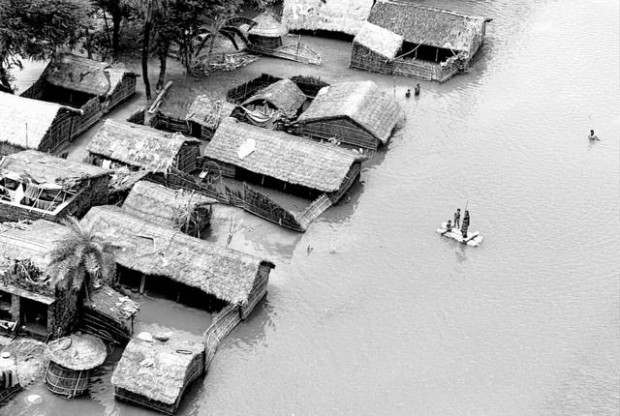
The devastating monsoon floods laid waste to much of northern India and Bangla-desh over the last few weeks, killing thousands and displacing millions.
More than 200 people have also died in Pakistan where the death toll from rains and a storm that struck southern Pakistan this week rose to at least 35 on Saturday, as buildings weakened by downpours continued to collapse.
Even as the waters drew back, doctors were still struggling to contain the diseases of the aftermath.
In the Indian state of Uttar Pradesh, "paramedics visiting affected villages don't have adequate supplies of medicines," said Ramakant Rai, chief of the state's Voluntary Health Association. He said clean drinking water was running low.
Families lined up for aid as health workers finally reached their villages.
Doctors have treated at least 1,500 people in Uttar Pradesh for diarrhea in the past 10 days, said L.B. Prasad, director-general of the state's health services.
Rai's group said the scope of the suffering was greater, with more than 22,000 people contracting waterborne diseases.
In neighboring Bihar state, the government canceled vacations for doctors in flood- ravaged districts.


 Faculty concerned about changes to U of A admissions policy


