
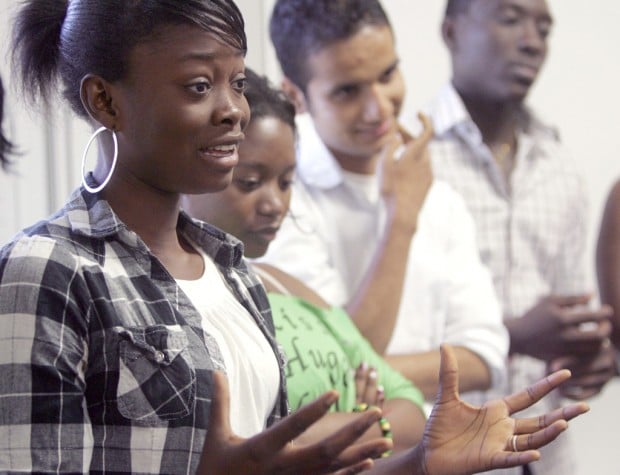
When 16-year-old Debora Lossou moved to Tucson from a refugee camp in Togo, Africa, three years ago, she was overwhelmed by loneliness.
While she had more education opportunities, material comfort and freedom here, she missed her friends, extended family and the sense of community she had in Togo. And she wasn't accustomed to standing out because of the color of her skin.
Not wanting others to experience the isolation she has felt, Lossou became part of a fledgling group of local teenage refugees who have formed the Refugee Youth Coalition.
The group of 15, working with the Tucson chapter of the International Rescue Committee, has been meeting since February.
The group has a mentor program and will offer young refugees help navigating school, social and work life. Many young refugees balance school with part-time jobs to help support their families.
People are also reading…
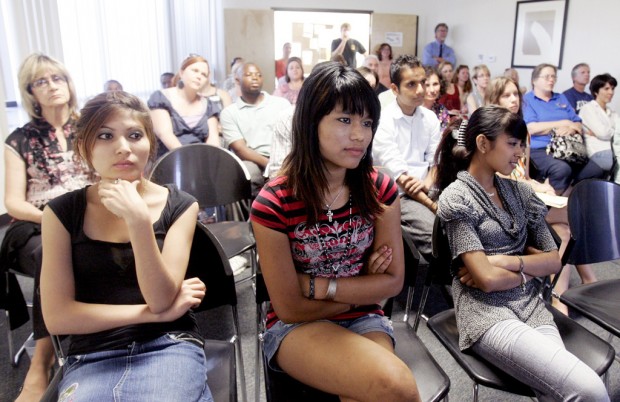
"We hope this group will start generating ideas that will lead to their integration and perhaps their family's integration into the community," local International Rescue Committee executive director Ken Briggs said last week, just before members of the new coalition made a public presentation about their goals.
The coalition includes students from Rincon, Amphi and Catalina high schools, but organizers say they want to expand to other schools, too.
Briggs and others with the organization say efforts to set up programs for refugee youths have failed in the past, perhaps because they were set up by adults.
This one is all in the hands of teens such as 18-year-old Kadija Ali, who is eager to provide others with the support system she needed when she moved to Tucson from a refugee camp in Kenya in 2004.
"Some people help us, some laugh and walk away. We understand that pain," said Ali, who encountered some teasing because of the head scarf she wears in keeping with her Muslim faith. "I would tell other refugee youth that if you have ambitions, don't give up. Some friends are good and some are not. Be friends with kids who are ambitious."
About 11,000 refugees from more than 50 countries live in Tucson and an estimated 800 move here each year, the International Rescue Committee says.
The United Nations defines refugees as people who are living outside their country of nationality because of a "well-founded fear" of being persecuted for race, religion, nationality, politics or membership in a particular social group.
The International Rescue Committee began as an organization that helped people suffering in Hitler's Germany. It now works in more than 40 countries and, among other aid, provided disaster response after the Haiti earthquake in 2010, and with the resettlement of Iraqis displaced by war.
At the moment, the biggest influx of refugees in Tucson is from Bhutan. Thousands of Bhutanese have been living in refugee camps in Nepal since 1991 because of political threats in their homeland. That means young Bhutanese refugees like Laxmi Dahal grew up entirely in Nepal.
Dahal, 18, moved to Tucson in 2008 and as a member of the youth coalition hopes to help other young refugees understand the education system. He graduated 24th in his class from Catalina High School last week and will attend Pima Community College in the fall. He plans to transfer to the University of Arizona eventually but was hesitant about going to such a large school right away.
"This is about youth power," Dahal said of the new coalition.
Lossou, who hopes to return to Togo one day as a nurse, said she's found much-needed camaraderie in the refugee coalition.
Indeed, one thing Dahal says he's learned about being a refugee is that it helps to have a community of other refugee youths. But equally important is making American friends, he said.
"I have a lot of American friends, and I like Tucson," he said. "I'd tell other refugee kids to be proud of your accent, and where you are from. Be proud of who you are."
How to Help
The local office of the International Rescue Committee needs school supplies for refugee children, many of whom will be attending school for the first time.
Backpacks, pocket folders, notebooks, crayons and calculators are needed most.
Donations are accepted on Mondays and Wednesdays during business hours at the IRC office, 3100 N. Campbell Ave.
Cash donations also are appreciated.
For more information or to volunteer, call 319-2128 or go to www.Rescue.org/Tucson
Contact reporter Stephanie Innes at sinnes@azstarnet.com or 573-4134.


 Second wall planned across Arizona as Trump administration doubles down on border