LOS ANGELES — California condors will receive a vaccine for a deadly strain of avian influenza that threatens to wipe out the already critically endangered vulture species, federal officials said.
The U.S. Department of Agriculture’s Animal and Plant Health Inspection Service has granted emergency approval for use of the vaccine after more than a dozen condors recently died from the bird flu, known as H5N1.

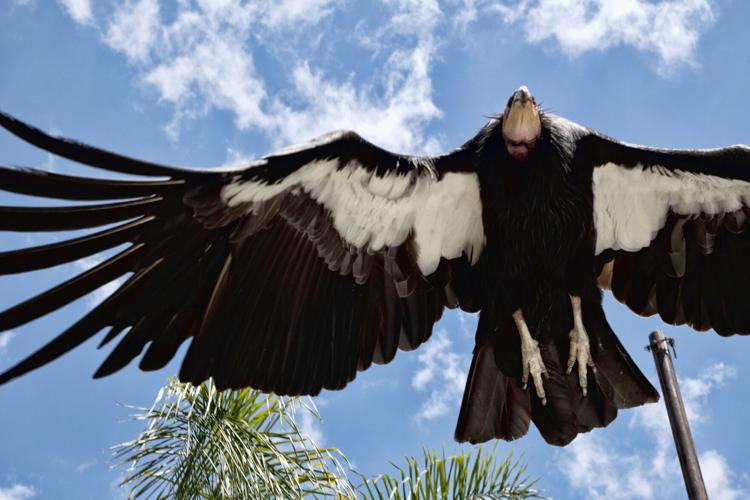
A California condor takes flight at the Los Angeles Zoo on May 2.
There are fewer than 350 California condors in the wild, in flocks that span from the Pacific Northwest to Baja California, Mexico.
A pilot safety study will begin this month in North American vultures, a similar species, allowing investigators to check for any adverse effects before they give vaccines to the endangered condors, according to an agriculture department statement.
The department approved the emergency vaccination “because these birds are critically endangered, closely monitored, and their population is very small which allows close monitoring of the vaccine,” the statement said.
People are also reading…
Over the past year and a half, millions of birds across the U.S. have died from avian flu, including more than 430 bald eagles and some 58 million turkeys and commercial chickens that were euthanized to prevent the spread of the disease.

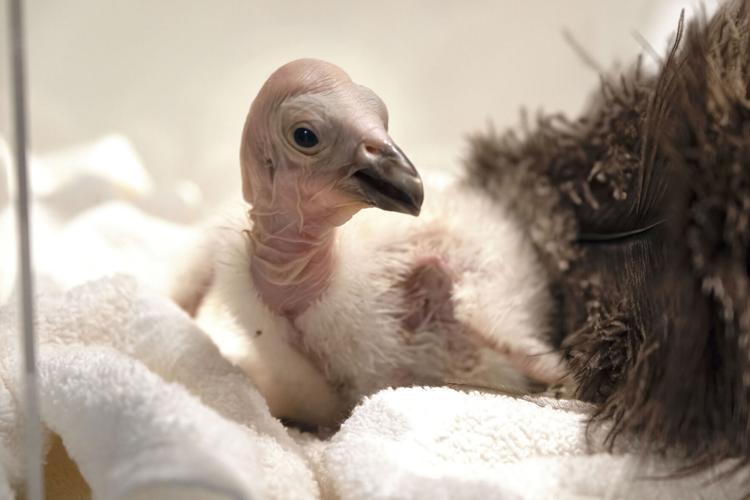
Condor chick LA1123, hatched April, 30, waits for its feeding in a temperature controlled enclosure at the Los Angeles Zoo on May 2.
California's population of iconic condors, with their 10-foot wingspans, was nearly wiped out by hunting during the California Gold Rush, as well as by poisoning from toxic pesticide DDT and ingesting lead ammunition.
In the 1980s, all 22 California condors left in the wild were put into captive breeding programs to save the species.
Zoo-bred birds were first released into the wild in 1992 and in the years since have been reintroduced into wild habitats.
Photos: California condor takes flight in wild after near extinction
Return of the Condor

In this Wednesday, June 21, 2017 photo, California condors huddle around a watering hole in the Ventana Wilderness east of Big Sur, Calif. Three decades after being pushed to the brink of extinction, the California condor is staging an impressive comeback, thanks to captive-breeding programs and reduced use of lead ammunition near their feeding grounds. (AP Photo/Marcio Jose Sanchez)
Return of the Condor

In this Wednesday, June 21, 2017 photo, California condors sit perched above an enclosure, where biologists trap them, to conduct research in the Ventana Wilderness east of Big Sur, Calif. Three decades after being pushed to the brink of extinction, the California condor is staging an impressive comeback, thanks to captive-breeding programs and reduced use of lead ammunition near their feeding grounds. (AP Photo/Marcio Jose Sanchez)
Return of the Condor

A California condor sits in the Ventana Wilderness east of Big Sur, Calif., in this June 21, 2017, photo.
Return of the Condor

In this Wednesday, June 21, 2017 photo, a California condor sits perched on a tree branch in the Ventana Wilderness east of Big Sur, Calif. Three decades after being pushed to the brink of extinction, the California condor is staging an impressive comeback, thanks to captive-breeding programs and reduced use of lead ammunition near their feeding grounds. (AP Photo/Marcio Jose Sanchez)
Return of the Condor

In this Wednesday, June 21, 2017 photo, a California condor takes flight in the Ventana Wilderness east of Big Sur, Calif. Three decades after being pushed to the brink of extinction, the California condor is staging an impressive comeback, thanks to captive-breeding programs and reduced use of lead ammunition near their feeding grounds. (AP Photo/Marcio Jose Sanchez)
Return of the Condor

In this Wednesday, June 21, 2017 photo, Ventana Wildlife Society executive director Kelly Sorenson, right, and wildlife biologist Amy List monitor California condors in the Ventana Wilderness east of Big Sur, Calif. Three decades after being pushed to the brink of extinction, the California condor is staging an impressive comeback, thanks to captive-breeding programs and reduced use of lead ammunition near their feeding grounds. (AP Photo/Marcio Jose Sanchez)
Return of the Condor

In this Wednesday, June 21, 2017 photo, Wildlife biologist Amy List observes California condors up close from inside an enclosure in the Ventana Wilderness east of Big Sur, Calif. Three decades after being pushed to the brink of extinction, the California condor is staging an impressive comeback, thanks to captive-breeding programs and reduced use of lead ammunition near their feeding grounds. "If we don't know what they're doing, we don't know what's going wrong," said List. (AP Photo/Marcio Jose Sanchez)
Return of the Condor

In this Wednesday, June 21, 2017 photo, Ventana Wildlife Society executive director Kelly Sorenson poses for a portrait inside a cabin used by researchers to study California condors in the Ventana Wilderness east of Big Sur, Calif. Three decades after being pushed to the brink of extinction, the California condor is staging an impressive comeback, thanks to captive-breeding programs and reduced use of lead ammunition near their feeding grounds. "We're seeing very encouraging results that the condors can become self-sustaining again," said Sorenson. (AP Photo/Marcio Jose Sanchez)
Return of the Condor

In this Wednesday, June 21, 2017 photo, wildlife biologist Amy List shows some led bullets like the ones that kill California condors after the bird eats a contaminated carcass in the Ventana Wilderness east of Big Sur, Calif. Three decades after being pushed to the brink of extinction, the California condor is staging an impressive comeback, thanks to captive-breeding programs and reduced use of lead ammunition near their feeding grounds. "I hope that I'm out of a job soon because condors don't need to be managed in the future," List said. "I hope that they're self-sustaining and wild and free, and nobody needs to trap or tag or monitor them at all." (AP Photo/Marcio Jose Sanchez)
Return of the Condor

In this Wednesday, June 21, 2017 photo, a California condor takes flight in the Ventana Wilderness east of Big Sur, Calif. Three decades after being pushed to the brink of extinction, the California condor is staging an impressive comeback, thanks to captive-breeding programs and reduced use of lead ammunition near their feeding grounds. (AP Photo/Marcio Jose Sanchez)