Violence between police and striking miners broke out Friday in Cananea, Sonora, after police tried to enforce a ruling that the strike is illegal.
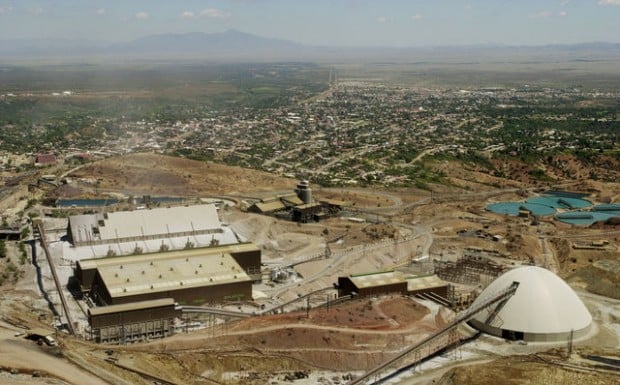
Trucks were burned, tear gas fired, and mining installations damaged as police tried to take back the gates to the mine, which strikers have occupied, the newspaper El Imparcial reported.
However, conditions have calmed down since the initial outbreak, said Oscar Hernandez, a city spokesman. “Everything is normal,” Hernandez said.
Cananea is a mining town about 100 miles southeast of Tucson. Workers at the mine have been on strike for more than five months, and have occupied the gates to the mine, shutting it down, as is traditional in strikes there.
Today’s events began unfolding after Mexico’s labor board ruled the five-month strike is illegal. Hundreds of state and federal police were sent into Cananea to enforce the ruling and re-take the mine’s gates from the miners.
People are also reading…
Police succeeded at re-taking one gate amid tear gas, rubber bullets and water cannon, said Juan Linares, head of the national miners’ union’s executive committee, by phone from Mexico City. Ambulance sirens were wailing as Manny Armenta, a Southern Arizona official for the United Steelworkers, spoke with union officials in Cananea, Armenta said.
The Cananea mine is owned by Phoenix-based Southern Copper Corp., which is owned in part by Grupo Mexico. Grupo Mexico SAB has lost about $600 million in sales as a result of the strike, Bloomberg News reported.
“We expect production to resume soon,” said Juan Rebolledo, a Grupo Mexico vice president, without giving a specific date.
Linares said the union plans to appeal the labor board’s decision declaring the strike illegal.
The Cananea mine is owned by Southern Copper Corp., a publicly traded mining company based in Phoenix that is majority-owned by Grupo Mexico.
Grupo Mexico also is the nominal owner of Asarco LLC, the Tucson-based company that owns copper mines and a smelter in Southern Arizona. However, Asarco is in bankruptcy, where a judge has appointed a board on which Grupo Mexico is a minority, leaving Asarco semi-autonomous.


 Second wall planned across Arizona as Trump administration doubles down on border