

LONDON — The British tolerate millions of surveillance cameras watching their every public move. They agreed to let roadside cameras record their vehicular movements and store the information for two years.
But when they discovered that their garbage was being bugged, they howled that Big Brother had gone too far.
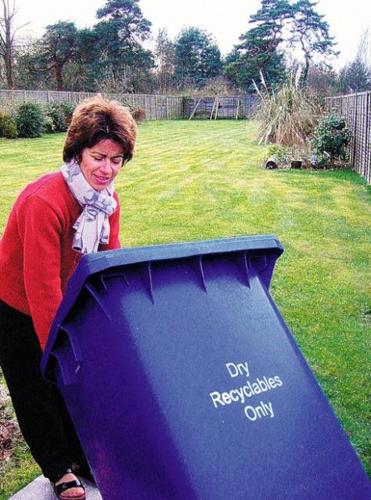
Local governments have attached microchips to 500,000 "wheelie bins," the trash cans that residents wheel to the curb for collection. The aim, they say, is to help monitor collections and boost the national recycling rate, among the lowest in Europe.
The public has reacted with suspicion and fury.
"Germans plant bugs in our wheelie bins," a Daily Mail headline announced in August. Two of the bin manufacturers are German. Newspaper letter writers have taken to calling it "Bin Brother."
People are also reading…
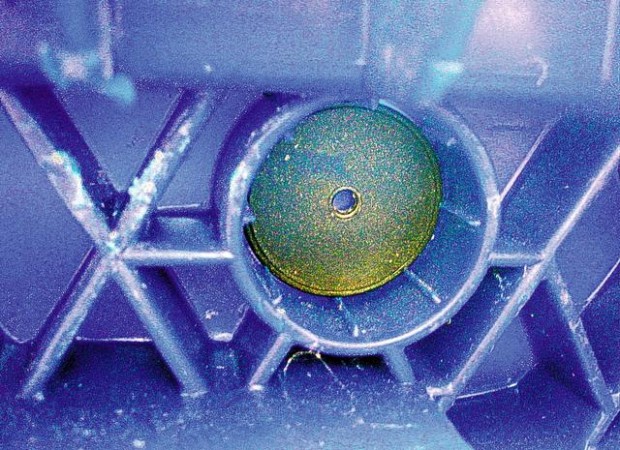
Small-scale revolts have erupted across the United Kingdom for months, as different localities adopt the technology. Some towns failed to mention the new feature, which is concealed under coin-sized plugs under the rims of their garbage cans.
In the coastal city of Bournemouth, Cyril Baker, 72, ripped the chip off his new bin the day he discovered it, then went on national television to show how he did it.
Thousands of his neighbors followed his example. "It was a very emotional issue. The whole town was in an uproar," he said.
Cameras are everywhere
It's a wonder that the tiny attachment has provoked such a response in Britain, home of the most monitored people in the Western world. An estimated 4.2 million closed-circuit TV cameras — one for every 14 residents — are trained on British streets and schools, parks and churches.
Cameras are planted in phone booths, on vending machines, at gas stations and inside every double-decker bus in London. An Englishman may be captured on cameras 300 times in a typical day, surveillance experts say.
Yet the microchips in the wheelie bins struck a nerve.
"I think people really see this as an intrusion into their personal space," said Bournemouth Councilman Nick King, a champion of the anti-chip cause.
Residents also fear that the little bug will nip them in the wallet. The microchips — radio-frequency-identification transmitters known as RFID tags — can't actually spy on the contents of a bin.
They're more like tiny digital name tags, but they hold lots of information and can be scanned from yards away.
In parts of Germany and Belgium, garbage trucks equipped with scales and scanners lift the tagged bins. The bins are weighed as they're emptied, and residents are charged for each pound they send to the landfill.
Bournemouth administrators swear that they intend only to monitor trash trends and return lost bins to their assigned homes.
Other cities said they wanted to identify heavy heapers to advise them on better rubbish management.
But residents suspect a plan to levy charges for garbage hauling, and some local officials have acknowledged that's their long-term aim.
The Orwellian aspect has been blown out of proportion, chip supporters say. "People think it's Big Brother watching them, and it's not. It's a system for weighing rubbish," said David Peel, communications manager for South Norfolk Council, which has a bin-chip project under way.
Civil libertarians worry about a day when every object has an embedded tag, and people don't know who's tracking their trash.
Put this technology in the hands of sanitation workers and it won't stop at just weighing the garbage, predicts Chris McDermott, an anti-chip activist.
"Before you know it, they'll be scanning the actual products, wrappers and other detritus that you throw away inside the bin, as these are also scheduled to be RFID-enabled in the near future," he warns on www.no tags.co.uk, his Web site.
Not likely, said Andy Shaw, business manager of Cambridge Auto-ID Lab, a university research center that's developing new uses for radio-frequency tags. The lab, according to its Web site, is creating a system that will enable computers to identify "any object anywhere in the world instantly."
But Shaw says, "Nobody is going to pay to put readers onto garbage trucks that can read everything. It's just too expensive."

 Lake Mead's drops raise prospect of unaffordable Hoover Dam electricity


