
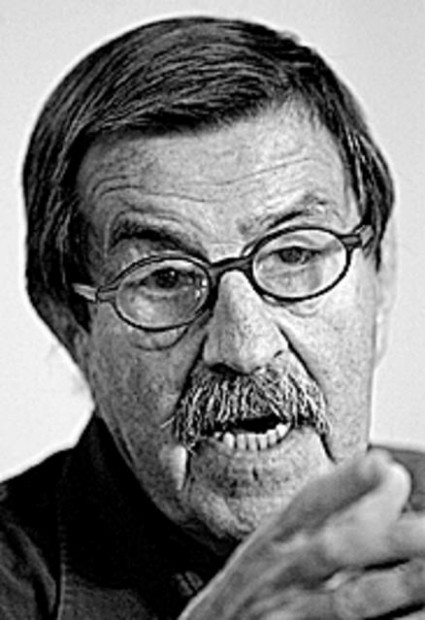
BERLIN — German novelist Guenter Grass admitted in an interview that he served in the Waffen SS, the combat arm of Adolf Hitler's dreaded paramilitary forces, during World War II, a German newspaper reported Friday.
Grass was asked why he was making the disclosure after so many years during an interview with the Frankfurter Allgemeine Zeitung, in which he discusses his new memoir about the war years to be published next month.
"It weighed on me," he said. "My silence over all these years is one of the reasons I wrote this book. It had to come out, finally."
Grass said he felt shame only after the war over having been in the Waffen SS. "At the time, no," he said. "Later this feeling of shame burdened me."
The Frankfurter Allgemeine Zeitung ran excerpts of the interview with the Nobel Prize winner on its Web site, ahead of a fuller version in today's newspaper.
People are also reading…
Grass, 78, is regarded as the literary spokes-man for the generation of Germans that grew up in the Nazi era and survived the war. He won the Nobel Prize for Literature in 1999 for works including his 1959 novel, "The Tin Drum," made into a Oscar-winning film in 1979. He has long been active in left-wing politics as a sometimes-critical supporter of the Social Democratic Party and is regarded by many as an important moral voice who has opposed xenophobia and war.
He was quoted as saying he had originally volunteered for the submarine service at age 15, but was not accepted, only to be called up at 17 to the Waffen SS 10th Armored Division "Frundberg," in Dresden, the article said.
Grass said he volunteered for military service to get out of the confinement he felt as a teenager in his parent's house. He had been in the Arbeits- dienst, a force of laborers helping the military.
"It happened as it did to many of my age," he said. "We were in the labor service, and all at once, a year later, the call-up notice lay on the table. And only when I got to Dresden did I learn it was the Waffen SS."
The SS, Schutzstaffel or "Protective Echelon" in German, started as a small personal bodyguard for Hitler headed by top Nazi Heinrich Himmler. It later became a huge organization that ran concentration camps and carried out mass executions of political opponents, Jews, Gypsies, Polish leaders, Communists, anti-Nazi guerrillas and Soviet POWs.
It included the Waffen SS, a combat force that took part in fighting alongside units of the regular army and gained a reputation as fanatical fighters.
Grass gave few details of his service in the version of the interview on the Web site. He said he managed to give himself jaundice to get out of training for several weeks.

 New Tucson lounge to embrace dark and cozy