

JEFFERSON CITY • The Missouri Board of Education approved a plan Friday that allows the state to take deeper and quicker action in its most troubled schools, while steering clear of more incendiary ideas it had wrestled with in recent months.
In so doing, the board appears to be yielding to the Legislature the more contentious aspects of the school transfer law, which triggered the migration of about 2,200 students from two unaccredited St. Louis area school districts to higher performing schools this year.
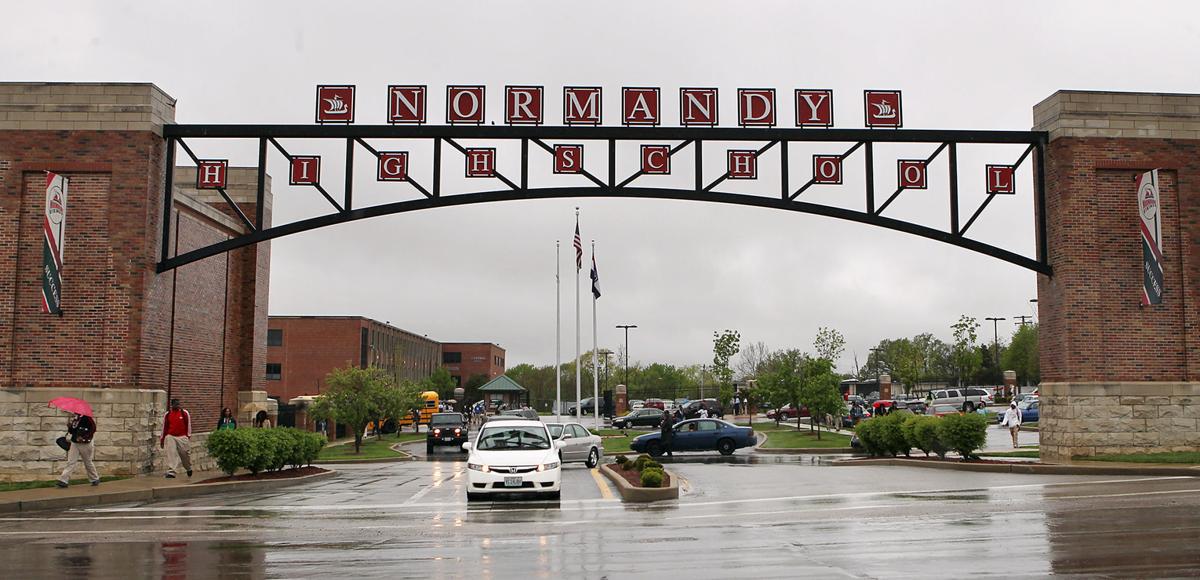
The transfers have left one of those districts — the Normandy school system — approaching bankruptcy due to the $15 million it owes this year in tuition and transportation costs. Lawmakers have debated more than a dozen bills aimed at reducing the number of transfer students and their costs on unaccredited districts.
The plan, put forth by the Missouri Department of Elementary and Secondary Education, would stop student transfers only in the event that a school district lapses — a vague designation that could be assigned as soon as a district loses accreditation, or after years of sustained academic and financial failure.
People are also reading…
Lapsing would dissolve the district. Under the plan, the state board could assign its schools to other school systems. It could contract with other districts — or outside organizations — to run the schools. It could place the schools under direct state control.
“This is not a one-size-fits-all plan,” said Margie Vandeven, deputy commissioner of education.
The board directed state education officials to begin developing plans for specific districts.
The plan is sure to play out first in the Normandy school system, where the education department has already named a 10-member transition task force to help determine the district’s future after July 1.
The plan approved Friday gives that transition team a blueprint from which to work.
About 3,000 children attend school in the Normandy district. About 1,100 transferred from the district to higher performing schools. If the district lapses, those transfer students may lose the option of staying in their new schools.
“Although students will no longer have a statutory right to transfer, one of the key goals of district reconstitution is to ensure access to quality educational options for students,” the plan says.
A state law adopted in 2013 gave the education department wide latitude in overhauling how an unaccredited district is governed.
Over the summer, Missouri Education Commissioner Chris Nicastro began exploring how the state board could use this new authority. State education officials held nearly a dozen public hearings. They considered various proposals from groups such as the Normandy School District, the Missouri Association of School Administrators, and an Indianapolis-based consultant CEE-Trust, short for The Cities for Education Entrepreneurship.
The plan reinforces the education department’s existing approach to rating schools using four tiers: accredited with distinction, accredited, provisionally accredited, and unaccredited.
It will not affect the vast majority of students in districts across the state. Seventy-nine percent Missouri’s 520 school districts are accredited or accredited with distinction. In those districts, the state would step in only if an individual school is considered to be failing.
The plan targets schools in districts that are struggling — earning 75 percent or less of the points available in the state’s annual performance reports.
The intention is for deeper and quicker state intervention in districts that are provisionally accredited, to keep them from slipping into unaccredited status. Eleven districts statewide are in the provisional category, including Jennings and St. Louis Public Schools.
Board Vice President Michael Jones of St. Louis said the state is moving to be more active in making sure districts perform.
“You see us moving to say that if we’re responsible for all children having a quality education in the 21st century, we need to exercise that responsibility in a proactive manner,” he said.
Under the plan, once a district’s performance score slips below 70 percent on its annual report, the state and school boards would agree to school performance contracts that would bind the districts to academic targets. More attention would be given to teacher quality and literacy plans. The state might require steps such as early childhood education or longer school days.
More than 62,000 students are enrolled in unaccredited or provisionally accredited school districts, state education officials say. The average graduation rate in the unaccredited districts is less than 70 percent and less than 30 percent of students enrolled in the unaccredited districts have scored proficient on statewide tests for math, communication arts, science or social studies.
Though the state has legal latitude in changing the governing structure of an unaccredited school district, the plan eliminates some of the uncertainty in what direction the state might take.
It lists four options — — allowing the locally elected school board to continue under terms set by the Board of Education; replacing the elected board with a five-member special administrative board; replacing the elected board with a governance structure that would report to the state education commissioner; and lapsing the district.
The plan does not call for placing failing schools in single a state-run “achievement district,” as many superintendents in the state had promoted. Nor does it emphasize the option of handing over school operations to nonprofit groups, such as charter operators, once a district loses accreditation. But it does allow that option once a district lapses.
The Associated Press contributed to this report.


