

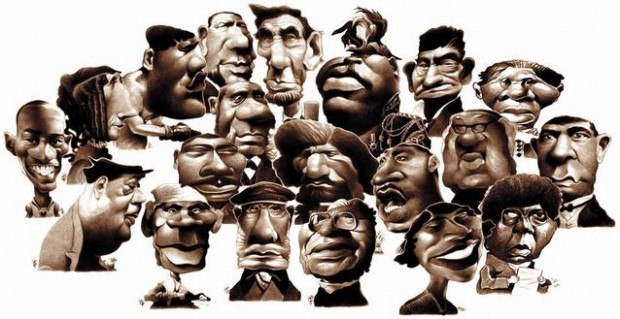
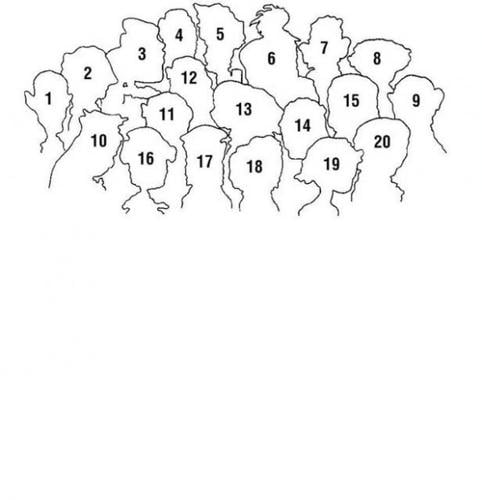
1. Jesse Owens: Olympic athlete
2. Harriet Beecher Stowe: author of "Uncle Tom's Cabin"
3. Joe Louis: athlete
4. Hiram R. Revels: first black U.S. senator
5. Abraham Lincoln: president when slaves were freed
6. Marcus Garvey: Back to Africa movement leader
7. John Brown: abolitionist
8. Harriet Tubman: abolitionist
9. Booker T. Washington: educator
10. Duke Ellington: musician
11. Granville T. Woods: inventor
12. Henry Highland Garnet: abolitionist
13. Frederick Douglass: abolitionist
People are also reading…
14. Martin Luther King: civil rights leader
15. Thurgood Marshall: Supreme Court justice
16. Sojourner Truth: abolitionist
17. Elijah J. McCoy: inventor; "The Real McCoy"
18. Rosa Parks: civil rights leader
19. Marian Anderson: singer
20. Barbara Jordan: politician
ANSWERS:
1. A; 2. B; 3. C; 4. C; 5. A; 6. B; 7. B; 8. B; 9. A.
10. False. When this country was founded, blacks were not considered equal. In fact, the government counted each black as only three-fifths of a person.
11. True. Years after the experiment, modest cash payments were given to survivors and their families. And in 1997, President Clinton issued a formal apology, saying the experiment was "racist" and "profoundly, morally wrong."
12. True. Karenga wanted to "give a black alternative to the existing holiday." At the center of Kwanzaa are its seven principles, which are represented by seven candles: umoja (unity), kujichagulia (self-determination), ujima (collective work and responsibility), ujaama (cooperative economics), nia (purpose), kuumba (creativity) and imani (faith).
13. True.
14. False. Howard University is located in Washington, D.C.
15. A. Malcolm X
B. Martin Luther King Jr.
C. Booker T. Washington
D. Marcus Garvey
E. W.E.B. Du Bois
F. Maya Angelou
G. Langston Hughes
H. Zora Neale Hurston
-
Martin Luther King Jr.
-
W.E.B. Du Bois
-
Malcolm X
-
Booker T. Washington
-
Maya Angelou
-
Zora Neale Hurston
-
Langston Hughes
-
Marcus Garvey


