

(If you haven't tested your soil yet, click here to see how to get started.)
It’s like the real estate adage — amend, amend, amend — every time you plant. Skip this step and your plants will struggle.
What to do if:
- Nitrogen is low: Add organic matter or aged manure. Blood meal is another option. During the growing season, use fish emulsion or manure tea to give plants a quick boost. To make manure tea, add a few scoops of aged manure to a big bucket or tub, add water and let it sit for a day or so. Stir, strain and water in around the plants.
- Phosphorus is low: Add bone meal or rock phosphate.
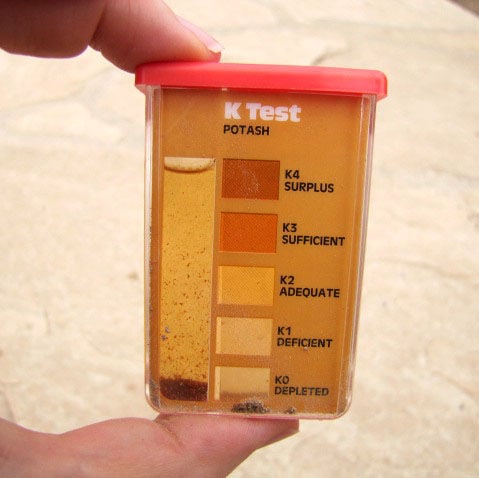
- Potassium is low: Our soil has plenty, so don’t worry about potassium, says Janet Gagnon, a volunteer master gardener with the County Extension Service of the University of Arizona. However, if have fill dirt or really poor soil, add greensand or sulfate of potash before planting. Top dress established plants with compost. For a faster cure, spray the leaves with fish emulsion.
People are also reading…
At Gagnon’s community garden plot, she uses 10 bags of composted manure twice a year in her 3-by-20-foot plot.
“It’s amazing how organic matter disappears here in the desert.”
I like to use a mix of composted manure, my own compost (or I'll buy it if I don’t have enough) and soil sulfur to cut the alkalinity. For high nitrogen feeders like corn, use a liquid fish emulsion or manure tea a few times during each growing season.
Adjusting pH:
- If pH is too alkaline (high): Add soil sulfur. Either mix it in with your soil amendments, or add a tablespoon or so to the bottom of each planting hole.
- If pH is too acidic (low): Not a problem here.
As a rule of thumb, add 1 pound of soil sulfur per 100 square feet to lower the pH by 1 point (a tip from organicgardening.com).
The findings:
I took four samples — one from each of my two community garden plots in midtown, and one from the front yard — formerly known as a grass lawn — and one from the backyard, where a pool had been filled in some years ago. That spot is now the site of a Three Sisters garden (corn, beans and squash), so it needed some serious amending.
With those samples, I found that the darker the soil, the longer the mixture took to settle out and clear up. Poor soil is a light tan and very dry; the garden mixtures were darker, moister and chunkier.
Surprising results:
When mixed with water, the amended community garden soil samples looked like chocolate milk, even hours afterward. The home soil, however, looked almost clear enough to drink — not a good sign.
One community plot was deficient in nitrogen; the other was fine. The pH was slightly alkaline in one plot and slightly acidic in the other. I had assumed they'd be the same, but now I'll be adjusting the amendments.
At home, the front yard had a surplus of phosphorus but was deficient in nitrogen and potassium, and it was slightly alkaline. The backyard plot was deficient in all three.
See the attached chart for the pH preferences of popular fruits and veggies.


